


 Shkruar nga Rebekah Koffler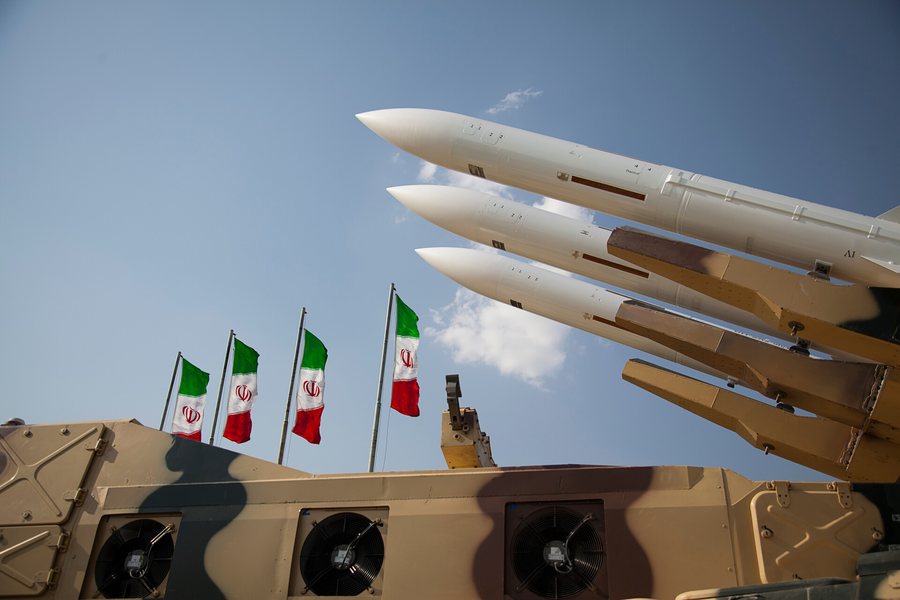
If Iran develops an ICBM-capable booster, it could reach as far as the continental United States if configured to do so...
When the militias it supports carried out a drone strike that killed 3 of our soldiers in Jordan last weekend, Iran crossed a "red line". This attack constitutes a clear escalation in the de facto war launched by Iran against the United States, in response to the October 7 terrorist attacks on Israel by Hamas, again supported by Tehran.
It is almost certain that Iran will increase its hostile actions against us in the coming days, weeks, perhaps even months. President Joe Biden's room for maneuver to contain Iran through strong action is closing rapidly, for the reasons I outline below.
First, Tehran most likely views the Biden administration as extremely risk-averse, and unlikely to engage in a direct, large-scale confrontation. Despite the continued escalation of the scope of influence and the scale of Tehran-backed attacks on US forces and bases in the Middle East over the past 100 days, Washington's response has been focused on proportionality and escalation control.
Instead of deciding to escalate, taking the war inside Iran, the White House only authorized a few periodic airstrikes against pro-Iranian militias in the region. From October 17 to January 29, the number of attacks by the latter targeting American military personnel reached 165.
Meanwhile, the number of injured Americans has reached 34, many of whom have to do with traumatic brain injuries. But the main message that has come out of the Biden administration has been: "We do not seek war with Iran." Everyone from Defense Secretary Lloyd Austin to National Security Councilman John Kirby to the commander-in-chief himself has been quick to tell Tehran that the president's primary goal is to avoid escalation and a wider conflict. , instead of protecting American troops and ending attacks on them.
A key tenet of the Western concept of war, proportionality, is culturally foreign to Iranians. Consequently, they interpret Biden's measured response as a sign of weakness and acceptance of aggression.
Second, Iran's aggression is almost certainly supported by its growing confidence in the viability of its nuclear deterrent. In early January, nuclear expert David Albright, who has been a weapons inspector for the United Nations in Iraq, released a shocking new report, estimating that Iran needs only a week to build its first nuclear weapon. after the leadership gives the order for this.
According to Albright, Iran has enough uranium to build 6 weapons in a month and 12 weapons in 5 months. Therefore, the Iranian regime is likely to calculate that its new status as a de facto nuclear power will be a sufficient deterrent to prevent Washington from launching a major retaliatory strike against Iran.
Tehran is likely to be closely watching the Biden administration's reluctance to fully support Ukraine in its fight against Russian aggression. Because of the threat — likely realistic in my estimation — of a tactical nuclear strike by Putin on the battlefield in Ukraine — President Biden ruled out the immediate deployment of US forces immediately after Russia attacked Ukraine.
Perhaps the Ayatollahs believe that Biden's fear of nuclear apocalypse, and of Iran's strategic partnership with Russia, will further influence the White House's decision-making calculus regarding the type of retaliatory measures it is willing to take against Iran.
Third, Iran believes it probably has a sufficient arsenal of missiles and drones to keep US forces in the region under threat. Iran's target list includes about 2,500 US troops in Iraq, 900 in Syria and the embassy in Baghdad.
According to a 2019 Defense Intelligence Agency (DIA) assessment titled "Iran's Military Power: Ensuring Regime Survival and Securing Regional Dominance," Iran has the largest and most diverse missile force in the Middle East. .
Designed to "asphyxiate US forces and our partners in the region", Tehran's "substantial" arsenal includes short-range, short-range and intermediate-range ballistic missiles that can strike targets across the region up to in 2000 kilometers from the borders of Iran, to Israel and to South-Eastern Europe.
Additionally, the Iranian state has prioritized modernizing its missiles, focusing on improvements to range, accuracy, mobility, warhead design, and survivability. The use of improved guidance and maneuvering technology has increased the lethality and accuracy of Iranian missiles, almost certainly encouraging the regime to act in a more provocative manner.
In its latest effort to further add to its ballistic missile arsenal, Iran on January 20 launched an advanced satellite, Soraya, into its highest orbit to date. Weighing 50 kg, Soraya was placed into orbit 460 miles above the Earth's surface, using a three-stage Qaem 100 rocket.
The launch, which was condemned by the UK, France and Germany in a joint statement, most likely allowed Iran to test an increased capacity of its space launch vehicle (SLV) technology - needed to placed an object in a higher orbit in space, which in turn is essential for developing a long-range strike capability.
Advances in its space program could shorten the time it takes Iran to build an intercontinental ballistic missile (ICBM), because SLVs use very similar technology. The DIA warns that if Iran develops an ICBM-capable booster, it could reach the continental United States if configured for that purpose.
The fact that Iran is deepening ties, including in the "field of military-technical cooperation" with Russia, a global leader in space launches and nuclear know-how, makes Tehran's progress in developing intercontinental ballistic missiles even more alarming. On Monday, Austin vowed that the US would respond to the deadly Iran-backed attack "at a time and place of our choosing". But the president does not have much time to discuss. Iran does not feel threatened by Biden's current counter-strategy, which tends to encourage the opposite, i.e. to escalate Tehran's actions.
Once Iran achieves the operational capability to launch a nuclear attack on Israel and Europe, and ultimately on US soil, it will be nearly impossible to restore deterrence without accepting the risk of a wider war. So the time to act is right now. / Adapted "Pamphlet" from "Fox News"
Note: Rebekah Koffler, military intelligence analyst and author of The Putin Handbook.







Lini një Përgjigje