


 Shkruar nga Pamfleti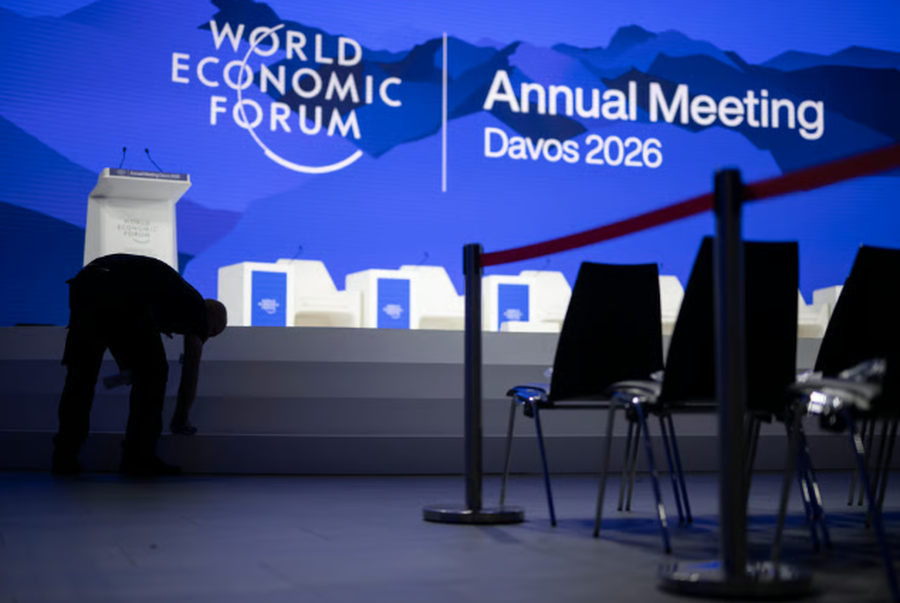
This year's World Economic Forum brought big names and a strong shift in focus.
The private jets are leaving. The pavilions are being dismantled. As the political and economic maelstrom of the World Economic Forum (WEF) closes its annual cycle and Davos empties, two things seem clear. After a period when the gathering of the global elite teetered on the brink of irrelevance, the Forum's future is no longer in doubt.
Meanwhile, the rules-based international order, the environment in which this forum was established and became important, is at best at risk, if not already disintegrating.
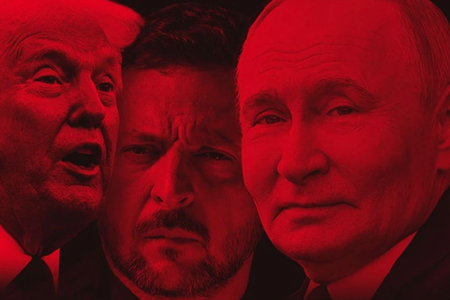
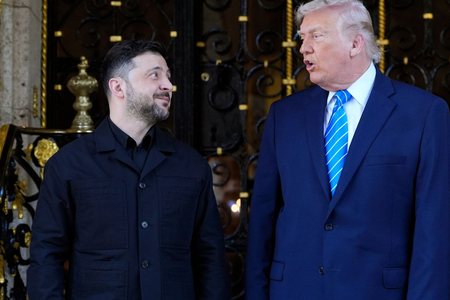
Over the past four days, the small Alpine town has become the scene of high-stakes geopolitical moves: from Donald Trump's statements on Greenland, to discussions on Ukraine, to the creation of the so-called "Peace Board," a structure that some fear the US president intends to use to bypass the United Nations.
However, unlike in the past when Davos served as a neutral space for global cooperation, this year’s Forum was increasingly perceived as a battleground. Leaders like Donald Trump and French President Emmanuel Macron openly clashed; high-intensity political dinners were accompanied by irony and walkouts; and Canadian Prime Minister Mark Carney declared the de facto end of the rules-based world order.
The mountain 'came down' to earth
“This is the largest gathering of global leadership in the post-COVID era,” Larry Fink, CEO of asset management giant BlackRock, said at the Forum’s opening. “But the harder question is: does anyone outside this room care?”
Fink, who took the lead in stabilizing the WEF after the tumultuous departure of founder Klaus Schwab, managed to restore Davos's luster by bringing in figures like Donald Trump, Ukrainian President Volodymyr Zelenskyy, as well as business leaders who usually shunned the platform, including Nvidia's Jensen Huang and Tesla's Elon Musk.
Yet, despite the return of global attention, Fink expressed concern about the Forum’s disconnect from people’s daily reality. “If we’re honest,” he said, “for many people this meeting seems out of touch with time: an elite in an age of populism, an institution in a period of deep mistrust of institutions.”
US Treasury Secretary Scott Bessent sharply criticized the previous years of what he called the "utopian consensus" and "kumbaya" spirit of the WEF, saying that "in that period, the asylum was run by the prisoners."
“This global elite benefited significantly from this system,” he argued, “while the rest of the world was pushed further and further down,” linking this to the resurgence of populism as a reaction to the liberal elitism that Davos once symbolized.
Wake-up call
In a week filled with tension, where social media posts, bilateral meetings, and a few sentences during speeches changed the dynamics of US relations with allies, the feeling is growing that Europe and like-minded countries are facing a new reality, where they can no longer blindly rely on either transatlantic relations or NATO.
Carney warned of "a breakdown of the world order" and "the end of a pleasant illusion," stressing that "middle powers must act together, because if we are not at the table, we are on the menu."
Zelenskyy sharply criticized Europe for a lack of determination, saying that it "seems lost in its attempts to convince the American president" and that it is perceived more as a historical concept than as a real political power.
European Commission President Ursula von der Leyen called for "a new and independent Europe," while German Chancellor Friedrich Merz stressed that "the new world of great powers is being built on power and strength."
Macron warned of "a shift towards a world without rules", noting that Europe, in his opinion, has been "too naive".
In another sign of this new reality, many leaders either avoided meetings with Trump in Davos or traveled directly to Brussels for an emergency EU summit. All but Hungary and Bulgaria boycotted the event launching Trump’s “Peace Board.”
Leadership questions
Delegates at Davos were convinced that Fink had saved the Forum from a leadership crisis and its declining influence. He has said he intends to stay at the helm for two years or less, until a permanent leader is found.
Christine Lagarde, president of the European Central Bank, was widely mentioned as a possible successor to Schwab, but that seems increasingly unlikely. Lagarde has denied that she will leave the ECB to take over the helm of the Forum.
Meanwhile, Fink signaled broader ambitions for the WEF. He proposed expanding the forum beyond Davos, to the places “where the modern world is really built.”
“Yes, Davos,” he said, “but also Detroit, Dublin, cities like Jakarta and Buenos Aires.”
"The mountain will come down to earth," Fink concluded. / Adapted from "Pamphlet", from "Politico"


Lini një Përgjigje