


 Shkruar nga Pamfleti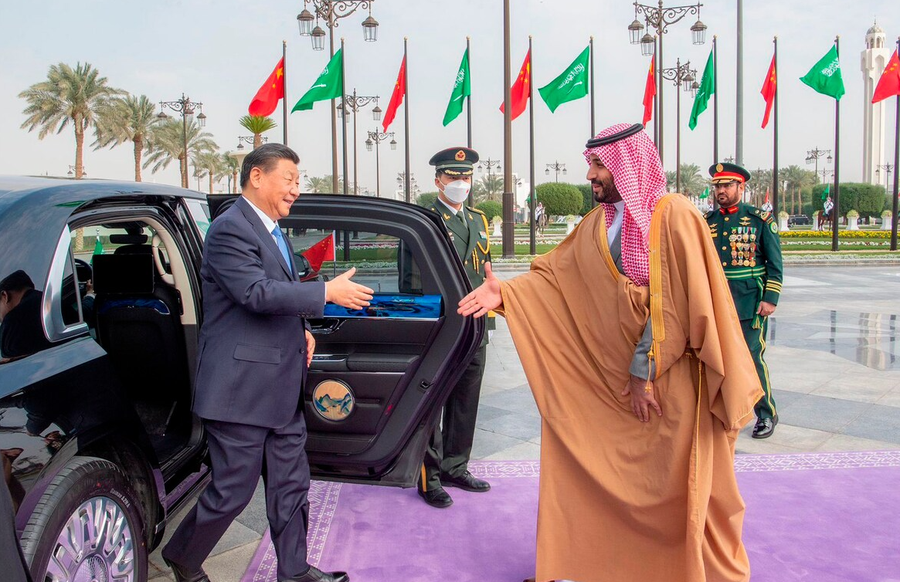
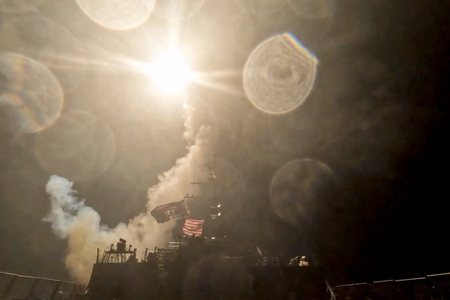
Trump chose this war and in doing so squandered tens of billions of dollars, squandered America's munitions, diverted military assets from Asia, upset allies, and demonstrated that even with America's great power, a flawed strategy and constantly changing tactics produce bad results...
As the war with Iran flares up and subsides by the week, one trend is clear: The biggest beneficiary of this conflict is China. Beijing didn’t need to shoot, spend big, or use political capital. But it has gained more from this crisis than any other in three decades. The war accelerated three of China’s long-held goals: a Middle East less dependent on America; a world more dependent on critical Chinese technology; and a reputation for Beijing as a serious and stable world power.
Beijing has not sought to replace Washington as the Middle East’s military guarantor; that would require costly commitments. Its goal has been simpler and more subtle: To pull the Gulf states somewhat out of the American orbit. President Donald Trump is doing much of this work for Chinese leader Xi Jinping.
America’s Gulf allies have watched Washington wage this war in a chaotic manner and without regard for the damage it has done to its cities, infrastructure, and economies. The Gulf is now dividing into two camps. The United Arab Emirates is moving closer to Israel and Washington. But a larger group, led by Saudi Arabia and including Qatar, Oman, and perhaps Iraq and even Turkey, is likely to seek long-term security through a balance: continued engagement with the United States, but also dialogue with Iran and better relations with China.
This is precisely the regional order that Beijing has favored. In 2023, China brokered the restoration of diplomatic relations between Saudi Arabia and Iran. Since then, Riyadh has resisted joining several American-led data center and computer chip projects. It has bought Chinese missiles and drones, held exercises with the Chinese navy, and explored domestic production of Wing Loong combat drones. Gulf countries accounted for more than 80 percent of Chinese defense exports to the Middle East from 2016 to 2025. No one is trying to replace America’s security umbrella. But they want opportunities, and opportunities reduce American influence.
China’s most impressive victory is geo-economic. At first glance, a country that imports about 70 percent of its oil should be among the biggest losers in the war. Yet China has weathered the shock better than most countries because it spent years preparing. It diversified its suppliers, built what is estimated to be the world’s largest oil reserves, continued to use coal, expanded nuclear power, and electrified its economy to a degree that no other major country has achieved.
Electricity now accounts for about 30 percent of Chinese energy consumption, almost 40 percent more than in the U.S. or Europe. China installed more than half of all new global wind and solar power capacity by 2024. For all these reasons, China was able to reduce its purchases of imported oil during the war by about 4 million barrels per day.
The war has become a giant advertisement for China’s critical technologies. Governments everywhere are looking to build their own solar power, batteries, wind turbines, electric vehicles and grids. China controls about 91 percent of global solar panel manufacturing capacity and 89 percent of lithium-ion battery capacity. Chinese firms produce at least 70 percent of nearly all clean energy technologies tracked by Bloomberg. The longer energy uncertainty persists, the more the world will buy up industries that China dominates.
The war also advances a key Chinese goal: weakening the dollar’s influence over global trade. Iran reportedly allowed some tankers to pass through the Strait of Hormuz on the condition that transactions be settled in Chinese renminbi (or cryptocurrency). China and its partners have effectively expanded renminbi-dominated trade to reduce exposure to U.S. sanctions. The change will be gradual, but the trend is now unmistakable—away from dollar dominance.
Finally, there is the unexpected reputational gain. The Trump administration entered this war with grand goals: regime change, destroying Iran’s nuclear program, eliminating its ballistic missile capabilities, and bolstering its regional allies. It has achieved nothing in a lasting way. Instead, it now hopes simply to open the Strait of Hormuz, which was open before the war began.
Trump chose this war and in doing so squandered tens of billions of dollars, squandered America's munitions, diverted military assets from Asia, upset allies, and demonstrated that even with America's great power, a flawed strategy and constantly changing tactics produce bad results.
China did surprisingly little. It continued to buy Iranian oil, maintained relations with the Gulf states, avoided the costs of defending Iran or policing the Gulf. This is Beijing's preferred approach, without dramatic confrontations, but rather the steady accumulation of influence.
Over the past 25 years, the United States has exhausted itself in three major military adventures in the Middle East, while China has amassed manufacturing power, technological capacity, and diplomatic relations. Washington acts; Beijing waits. China has paid the costs of this war, in higher energy prices, disrupted supply chains, and weaker global demand.
But power is always relative. Measured against the damage to America's goals, alliances, and credibility, China has come out on top. / Adapted from "Pamphlet" by "Washington Post"



Lini një Përgjigje