


 Shkruar nga *Ilana Bet-El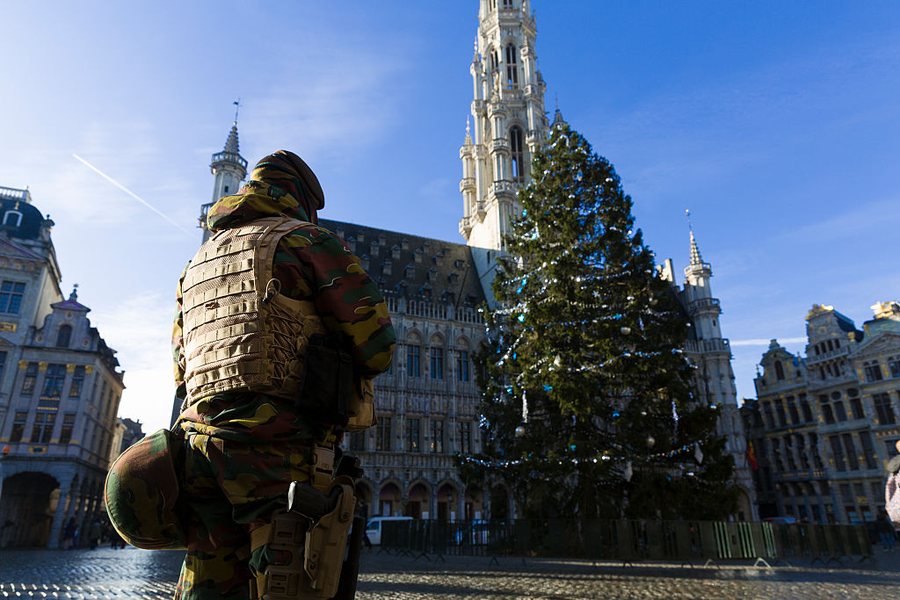
The first blockade in Brussels occurred on November 21, 2015. Given the sharp decrease in the number and magnitude of terrorist attacks over the past decade, it is worth reflecting on the successes of the security services in France and Belgium...
The first lockdown in Brussels had nothing to do with Covid, although it had a lot to do with fear and death. It began exactly ten years ago, on November 21, 2015, in the wake of the terrorist attacks in Paris on November 13. Police intelligence seemed to suggest a “serious and imminent” risk of a similar attack in Brussels, while one of the perpetrators of the Paris terror attacks, Belgian-born Salah Abdeslam, was thought to have returned to the city.
In response, the terror alert was raised to the highest level, 4, and the city was locked down for four days.
The day's images were bleak. It was Saturday and we had tickets for an afternoon screening of Spectre, the new James Bond film, at a cinema on one of the main streets of Brussels. It was cancelled, along with all the shows and concerts.
In need of some exercise and a little in disbelief that there was really a quarantine, my partner and I hit the main shopping streets. After all, this was a major shopping day just two weeks before the celebration of Saint Nicholas on December 6, a hugely popular day of gift-giving for children in Belgium.
Everything was closed: every shop, gallery and corridor, while armed troops in bulletproof vests and helmets patrolled the streets. There was practically no traffic, and the streets that were usually bustling with people, cafes and bars echoed with emptiness. A seemingly abandoned city, but full of police and soldiers.
It is often difficult to remember how widespread the threat and sheer terror of the Islamic State were after the US invasion of Iraq in 2003. From beheadings to the creation of a caliphate, the shock of its actions and the horror of its messages permeated the cyber world and mainstream media.
There had been previous hints of their intent to harm and disrupt Europe before 2015, particularly in France, but such attacks were often directed against Jews and were largely categorized as anti-Semitism. In May 2014, there was a shooting at the Jewish Museum in Brussels, in which four people died. The shooter, Mehdi Nemmouche, simply entered the museum and shot three people with a gun, then pulled a rifle from a bag and shot another.
Although clearly anti-Semitic, this was actually a warning of the attacks that would occur a year later in Paris and in March 2016 in Brussels. Nemmouche, a French citizen, had been repeatedly imprisoned for criminal offenses, where he had been radicalized. Before the Brussels shootings, he had spent a year with ISIS in Syria.
The connection between France and Belgium also became a central axis of the terror committed: Abdeslam and his Belgian accomplices were in Paris; Nemmouche was in Belgium, but was caught in Marseille during a routine drug check on the bus he had taken from Brussels.
This was not a failure caused by Schengen's open borders, but rather the reality of geography.
People have been moving across Europe in acts of war and crime for millennia; they will probably continue to do so. Indeed, the current surge in drug-related violence and shootings in Brussels has been linked to gang wars in Marseille.
The 2015 attacks in Paris and the 2016 attacks in Brussels occurred through the convergence of racial hatred, alienated youth, radicalism, easy access to guns and bombs, and terrible bad luck.
It seems that such a union has passed.
Yet there is a profound irony in the field of security: successes are largely invisible, because neutralized threats rarely make the news, while failures are catastrophic. Given the significant decline in the number and scale of terrorist attacks over the past decade, it is worth reflecting on the many successes of the security services in France and Belgium, and sparing a thought for those who make them possible.
In 2015, public gratitude in Belgium was expressed with characteristic surrealism.
In solidarity with the security forces' request to keep all footage of their activities off social media and in relation to the threat level of "quatre", which is pronounced similarly to the English word "cat", Belgian social media was flooded with images of brave cats during the days of lockdown.
After the event, police tweeted a photo of a bowl full of cat food, with a simple message: To the cats who helped us last night… Help yourself!
Lest we forget. /Adapted from EurActiv/
*Ilana Bet-El is a strategic advisor, writer, and historian.



Lini një Përgjigje