


 Shkruar nga Pamfleti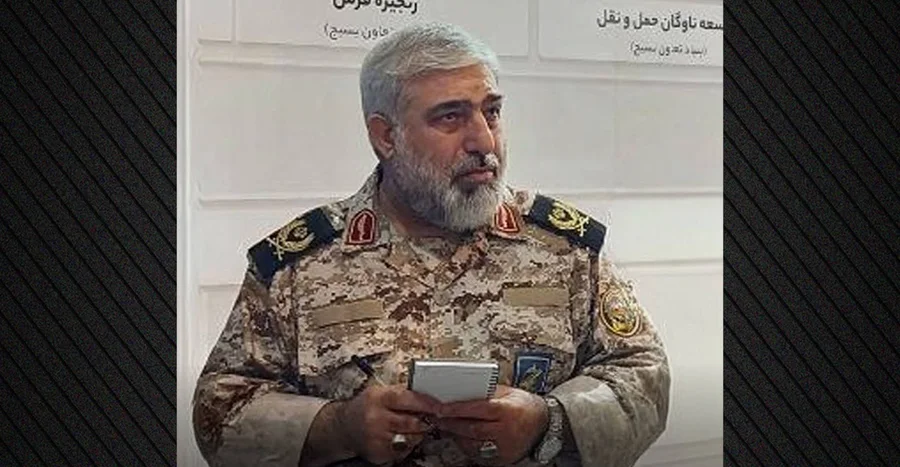
"The devil is dead."
With this laconic message, their opponents and supporters in Iran are spreading the information that the person whom the vast majority of Iranians hated to death is no longer alive.
We are talking about Asadollah Badfar, the commander of the Basij Revolutionary Guard paramilitary organization and responsible for tens of thousands of deaths and injuries of his compatriots.
Badfar is the one who, with an iron fist and cynical indifference to human life, essentially suppressed the anti-regime demonstrations that had taken the form of a sea of people across Iran last January.
Badfar, when the Iranian military cut off all forms of satellite and terrestrial communication (so that images of horror would not circulate around the world), ordered armed Basij paramilitaries to take to the streets, where people were demonstrating against Ayatollah Ali Khamenei.
Armed with rifles and knives, riding in pairs on motorbikes and moving in groups of 10 motorbikes, they didn't just open fire on the crowd. They targeted young women and men, who were either shot in the elbow with rifles, with the aim of amputating their arms, or blinding them.
The images from the hospitals are heartbreaking, and the shocking way the Basij operates "simply" adds to its countless crimes.
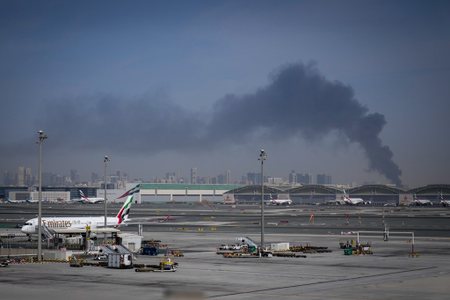
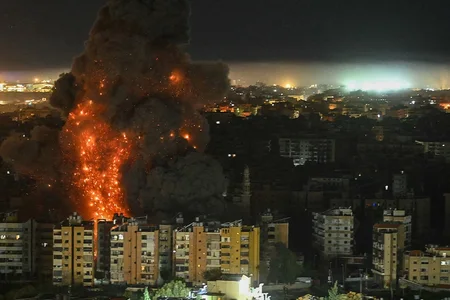
Although it is considered certain that Badfar, one of the staunchest supporters of Khamenei's regime and the Revolutionary Guard, is dead, there is confusion about how he lost his life. Iranian authorities announced that he was killed in a US-Israeli airstrike on Tuesday, while a video is also circulating on X that allegedly shows Badfar's house, from which a column of black smoke rises. However, Israeli sources suspect that the Basij commander was killed in a bombing, after it was reported that his funeral took place last Monday.
Devil is dead
— Baba Banaras™ (@RealBababanaras) March 10, 2026
Asadollah Badfar, commander of the Basij, Iran's internal security force, has reportedly been eliminated. Badfar was accused of overseeing the crackdown on Iranian protesters in January, during which tens of thousands were reportedly killed. pic.twitter.com/ildS2N97gC
The same sources point out that, while it is unlikely that Badfar is alive, it is highly likely that he tried the "medicine" himself.
That is, that he was executed at the hands of his comrades in the Basij, or in the ranks of the Revolutionary Guard in general.
It is therefore possible that Badfar was among the ten senior officials arrested on Monday on charges of espionage and treason against Iran. Apparently, the defendants were executed in... summary proceedings, in which the Basij, whose members are responsible for "maintaining order", have "specialized" for decades.
They are the ones who roam the streets and punish on the spot (with beatings, beatings, stabbings and even imprisonment in prisons or psychiatric hospitals) women for showing a strand of their hijab, or (and) men for judging that they had insulted Ayatollah Khamenei. Was this, was it some act of revenge by someone who... was waiting for Badfari around the corner, or is there simply confusion among Iranian authorities regarding the dates?
Photos of the coffin of Asadollah Badfar, a senior Basij commander at the General Headquarters of Iran's Armed Forces, appeared today. The Basij is a paramilitary militia in Iran founded in 1980 after the late Ayatollah Ruhollah Khomeini called for a mass volunteer force to… pic.twitter.com/Nt6rP6xVyv
— Basha (@BashaReport) March 10, 2026
Earlier, on March 5, bombings had killed two senior leaders of the Basij youth, Mohammad Mendi Ozgoli and Mohammad Mendi Sharifi, who were in charge of “security” and in fact the heads of the paramilitary organization’s executive branches at Tehran University and Amir Kabir University of Technology. The fearsome and powerful Basij is a paramilitary militia in Iran that was founded in 1980, following Ayatollah Ruhollah Khomeini’s call to create “a massive volunteer force for the defense of the Islamic Republic.”
It was created under Article 151 of the Iranian constitution, which requires the state to provide military training to citizens. During the Iran-Iraq War in the 1980s, the Basij mobilized millions of volunteers. Some fought on the front lines, while others performed security duties within the country.
Over time, the group has expanded its role in Iran. It has been used to patrol cities, enforce social norms, and suppress political protests. The Basij operates through local units, often stationed in mosques, schools, and workplaces, and is subordinate to the Islamic Revolutionary Guard Corps. Since the disputed 2009 presidential election, it has been one of the government's main forces used against opposition protests, although its ability to control prolonged periods of unrest has been questioned.



Lini një Përgjigje