


 Shkruar nga Pamfleti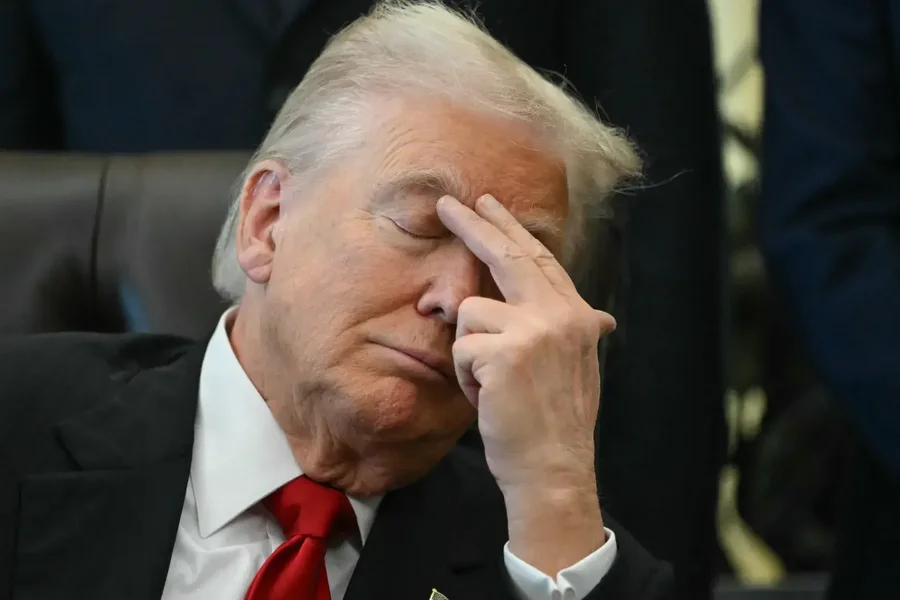
Republicans are united behind his “America First” agenda, and voters know the risks. With Democrats in control of Congress, we would see nothing but witch hunts, impeachment stunts, and partisan chaos. Holding a Republican Congress in 2026 would give President Trump the full four years he needs to finish the job he started for the American people.
The first election since President Donald Trump's re-election in 2024 could not have gone worse for Republicans.
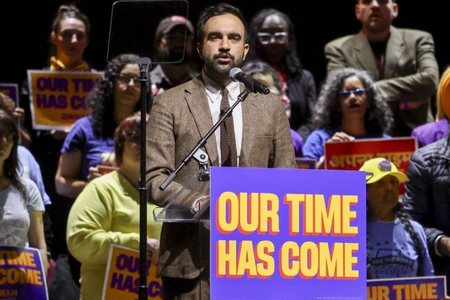
Democrats won gubernatorial elections in New Jersey and Virginia by large margins. The party retained control of three liberal judicial seats in Pennsylvania, won a redistricting measure in California, and lost two seats on the Public Service Commission in the volatile state of Georgia. Moreover, a Democratic socialist now serves as mayor of Trump’s hometown of New York.
These results carry weight, as they provide the first major referendum on Trump’s performance. They also raise long-term concerns about the Republican Party’s ability to maintain the MAGA coalition and the party’s grassroots turnout when their charismatic leader’s name will not appear on the ballot in the 2026 midterm elections and beyond.
"On Tuesday, Americans across the country resoundingly rejected Trump and his 'billions first' agenda, which has failed to lower costs for working families," Kendall Witmer, director of rapid response for the Democratic National Committee, told Newsweek.
"In just 10 months, Trump has destroyed the economy and failed to deliver on key promises he made to build a coalition in 2024, leading to major divisions among his supporters.
The Republican agenda is deeply unpopular among most Americans, and their voters did not show up for them, signaling disaster for the midterm elections and 2028.”
While there is much debate about the potential effects that the president's popularity had on these races, one thing is certain: Republicans turned out at a much lower level than with Trump at the top of the ballots.
This trend is evident in the two gubernatorial races.
According to data collected Thursday by the AP, more than 1.9 million people voted for Virginia Democratic candidate Abigail Spanberger, compared with more than 2.3 million who voted for Harris, a drop of nearly 22 percent. However, just over 1.4 million people voted for Winsome Earle-Sears, compared with nearly 2.1 million who voted for Donald Trump, a drop of nearly 45 percent.
The same is true in New Jersey. More than 2.2 million people turned out for Harris compared to more than 1.8 million people who supported Democratic candidate Mikie Sherrill, a 22 percent difference. On the other hand, nearly 1.4 million people turned out for Jack Ciattarelli compared to nearly 2 million people who turned out for Donald Trump, a 42 percent drop.
Democrats argue that Republicans who are not with Trump cannot replicate the coalition he has. They see the 2024 coalition as a group of scattered factions whose only connection is to the current president, whose charisma and lack of respect for traditional ideologies hold them together.
The first example is the tech executives in Silicon Valley, who favor economic deregulation and H-1B visas, and the MAGA Republicans in the heartland, who favor a minimum wage increase and oppose immigration.
Republicans, however, disagree with this analysis. They argue that Trump has achieved historic successes and that the full fulfillment of his agenda will come over time, putting future candidates with negative votes in a position to advance his vision, a vision that conservatives may realize could be thwarted if they do not run in 2026.
"President Trump is restoring freedom and prosperity for every American," Kiersten Pels, national press secretary for the Republican National Committee, told Newsweek.
"Republicans are united behind his 'America First' agenda, and voters know the risks. With Democrats in control of Congress, we would see nothing but witch hunts, impeachment stunts, and partisan chaos. Holding a Republican Congress in 2026 will give President Trump the full four years he needs to finish the job he started for the American people."
Trump has played a key role in brokering the end of eight conflicts around the globe, including the deadly war between Israel and Hamas, which has been a lightning rod in American politics. He has reduced illegal border crossings to historic levels and has successfully used tariffs to cut new trade deals. Yet voters often blame the president for the problems that lie immediately before them.
Republicans, including Vice President JD Vance, argue that it will take time for voters to see the effects of Trump's policies on affordability, but point to interest rate cuts and a record-breaking stock market as signs that their efforts are working.
They emphasize that the election results in "blue states" should not be overinterpreted.
Vance, in a statement on Twitter, acknowledged that “our coalition is ‘lower-leaning,’ which means we need to do a better job of engaging voters than we have in the past.” If the party doesn’t figure out how to stimulate that coalition without Trump on the ballot, then 2026 could look a lot like 2025. And once again, that election will be shaped by Trump’s effect on Democratic and Republican turnout. In 2028, however, that role will be filled by someone else.
Trump has all but named Vance and Secretary of State/National Security Adviser Marco Rubio as his two preferred successors. Vance, a son of Appalachia who once worked for Silicon Valley investor Peter Thiel's venture capital firm, could be the man to hold MAGA and big tech together.
Rubio, on the other hand, enjoys considerable credibility among the Republican old guard and could attract a larger number of Hispanic voters with his deep knowledge of Latin American issues and ability to win the support of deficit opponents.
However, none of them may have the ability to harness Trump's magic to attract the voters he has managed to gather. Changes in policies and messaging could be essential for the Republican Party to win without Trump at the top of the list. After all, no politician has yet been able to refute that the president is unique. And those who have tried to copy the Donald in swing states have more often than not fallen prey to their Democratic competitor. / Adapted from Newsweek /







Lini një Përgjigje