


 Shkruar nga Pamfleti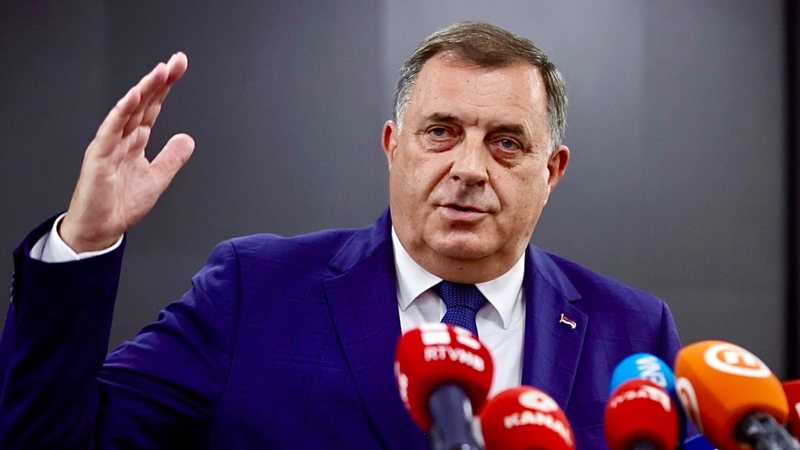
The President of Republika Srpska, Milorad Dodik, has threatened the independence of this entity from Bosnia and Herzegovina, if the high international representative in this country, Christian Schmidt, puts the law on properties into effect.
"Immediately after this, the National Assembly will convene and the status of independence of the Republika Srpska will be announced ," said Dodik on September 13 in Banja Llukë after a meeting with the representatives of the Republika Srpska (RS).
The territorial integrity and sovereignty of Bosnia and Herzegovina as a single state, with two entities and the district of Bërcko, are guaranteed by the Dayton Peace Agreement. This agreement and the Constitution of Bosnia and Herzegovina will not allow the entities to secede.
On March 2, the Constitutional Court of Bosnia and Herzegovina temporarily suspended the Law on Immovable Property used by public authorities in the RS, pending a final decision by the Constitutional Court.
During the press conference, Dodik said that they have agreed to include in the budget for next year an item that would provide income for the workers in the institutions of Bosnia and Herzegovina with salary compensation, if the representatives of the RS withdraw from the state institutions .
Dodik, the Serbian member of the Bosnian Presidency, Zelka Cvijanovic, the Prime Minister of the RS, Radovan Cishkovic, the President of the National Assembly of this entity, Nenad Stevandic, and the Minister of Justice of the Republika Srpska, Milosh Bujellovic, are under US sanctions due to the undermining of the Dayton Agreement.
The meeting in Banja Llukë was held two days after the Bosnian Court confirmed the indictment against Dodik and the acting director of the Official Gazette of the Republika Srpska, Milosh Lukić, who are accused of the criminal offense of failing to implement the decisions of the high representative in the state.
The indictment came after the Republika Srpska National Assembly passed two controversial laws on June 27, which Dodik signed and then published in the Republika Srpska Official Gazette.
These laws state that the decisions of the Office of the High Representative in Bosnia will no longer be published in the Official Gazette and will not be respected in this entity. Also, the decisions of the Constitutional Court of Bosnia and Herzegovina will no longer be valid in the Republika Srpska.
The High Representative in Bosnia, Christian Schmidt, on July 1 reversed these decisions.
Due to the decisions of the Republika Srpska Assembly, Schmidt has also decided to make changes to the state's Criminal Code, so that any illegal action that violates the constitutional order is considered a criminal offense. With the amendments to the Criminal Code, non-implementation of the decisions of the high representative is a criminal offense, for which a sentence of up to five years of imprisonment can be imposed./ REL





Lini një Përgjigje