


 Shkruar nga Pamfleti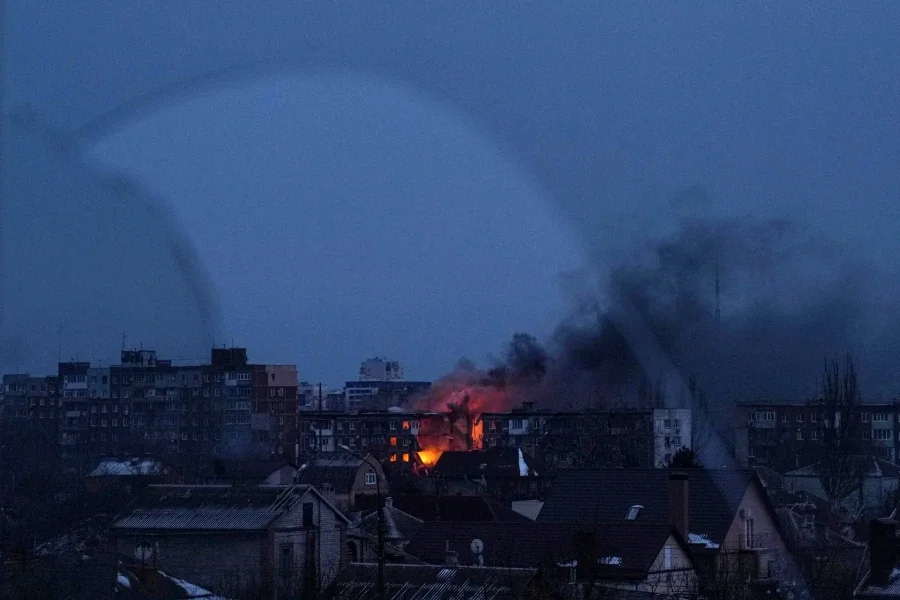
The 28-point US peace plan to end the Russia-Ukraine war is in the process of negotiation, but one key point remains a stumbling block.
Donbass, an industrial region in eastern Ukraine that is almost entirely controlled by Russia but which Ukrainian President Volodymyr Zelensky refuses to officially relinquish, has been the scene of fierce fighting for more than a decade.
Donbass is a vast mining and industrial region in Southeastern Europe. Its name comes from the Donets River, which flows through the region, which mainly includes the Ukrainian provinces of Donetsk and Luhansk, covering an area of approximately 52,000 square kilometers, comparable in size to Costa Rica.
Coal in the area was discovered in 1721, but its exploitation did not begin until the early 19th century and only gained significant importance after the arrival of the first railway in the area in 1869.
Ukrainian industrial machine
Historically, Donbass was the industrial heartland of the Soviet Union. By 1913, the region produced 87% of the Russian Empire's coal and 74% of its cast iron.
Before the Russian invasion in 2014, Donbass contributed about 15.7% of Ukraine's GDP and 14.7% of its population, according to the Centre for Economic and Business Research in London. The region was home to the country's major industrial enterprises, including metallurgical, coal and chemical plants with global export markets.
The region also has strategic value: productive agricultural land, important rivers, and coastline on the Sea of Azov. Mariupol, located south of Donetsk, has allowed Russia to create a land corridor connecting the Russian border with Crimea via the coast.
Population identity
The Donbas region was historically the most Russian-influenced region of Ukraine, with a significant percentage of Russian speakers. During the Soviet era, many workers arriving in the growing industrial cities came from Russia. Gradually, the urban centers of the Donbass turned into heavily Russified enclaves surrounded by rural Ukrainian territory.
Their political leanings have often been pro-Russian. However, the separatist conflict has fueled resentment against Moscow in the Ukrainian-controlled regions of Donbas. In the 2019 presidential election, voters in that region supported Zelensky by a significant margin.
The long-standing conflict
The region was plunged into conflict in 2014, after Yanukovych was ousted by mass protests and then fled the country. Following Moscow's annexation of Crimea, instability spread across eastern Ukraine. Russian-backed armed groups promoted the creation of self-proclaimed "people's republics" in Donetsk and Luhansk.
By early 2022, the separatist enclaves were experiencing intermittent fighting along a 420-kilometer front that ran through densely populated areas. The fighting also caused massive population displacement, with at least 2 million Ukrainians fleeing by 2021. More than 3 million remained and now live under Russian occupation.
The Russian "special operation" of 2022
In February 2022, Putin “recognizes” the independence of the self-proclaimed republics of Donetsk and Luhansk.
Three days later, Russian troops invaded Ukraine from Crimea, Belarus, and southwestern Russia. Putin called it a “special military operation,” claiming that Ukrainian forces were committing genocide against Russian-speakers in the Donbas.
When Russia failed to capture Kiev in the first months of the war, it refocused its efforts on achieving its main goal: the liberation of Donbas.
In September 2022, Putin announced the annexation of Donetsk, Luhansk, Kherson, and Zaporizhia, even though his forces did not fully control any of these regions.
The situation today
Today, Russia controls about 88% of the Donbas region: all of Lugansk and about 75% of Donetsk, according to open-source battlefield maps.
However, Ukraine holds several key strongholds in Donetsk, including the cities of Slavyansk, Kramatorsk and Kostyantynivka. These form Ukraine's "fortification zone", a 50-kilometer defensive line that runs through western Donetsk. Kiev has spent 11 years reinforcing this network of fortifications, trenches, minefields and anti-tank barriers. About 6,600 square kilometers of the Donetsk region remain under Ukrainian control, where more than 250,000 civilians still live.
Deadlock in negotiations
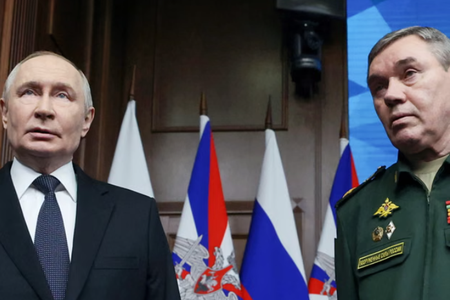
During the peace talks, the Russian president reportedly demanded that Ukrainian forces withdraw from Donetsk and Lugansk in exchange for a freeze on the front along the rest of the line. The proposals include recognizing Crimea, Donetsk and Lugansk as de facto Russian territory, with a "neutral demilitarized zone" in the areas of Donetsk currently controlled by Ukraine.
Zelensky has consistently refused to cede any territory under Kiev's control and also warns that abandoning Donbas, with its chain of fortified cities, would secure Russia.



Lini një Përgjigje