


 Shkruar nga Pamfleti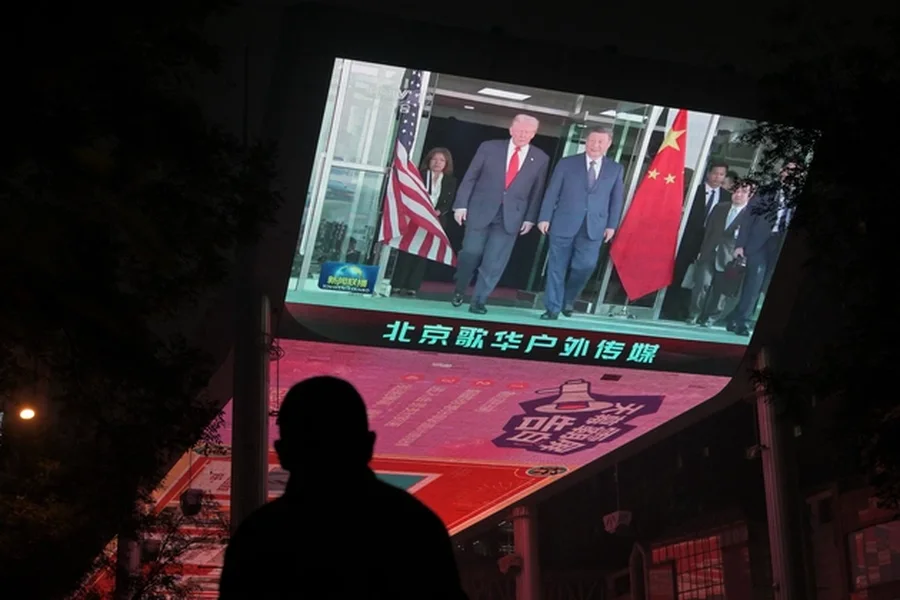
US president seeks concrete results from Beijing visit, administration avoids clash with Beijing
What President Donald Trump wants most from his upcoming visit to China is not a clash, but a victory.
The Trump administration includes many officials who take tough stances on China and who have pushed for a stronger disengagement from Beijing during their first 15 months in office. However, for next month's visit, Trump is not aiming for confrontation, but for concrete results.
This objective is so important to the president that administration officials have received clear instructions not to destabilize relations with China, especially ahead of the visit. According to sources, two key figures implementing this approach are Treasury Secretary Scott Bessent and White House deputy chief of staff Stephen Miller.
The goal is to give maximum space to Bessent and Trade Representative Jamieson Greer, who have been leading negotiations with China, to build on the existing ceasefire between the two countries.
“The American bureaucracy is under clear orders from the president not to break this ceasefire,” said a former Trump administration official. “Everyone is walking on eggshells. In practice, it is Bessent who has to enforce this ceasefire.”
Bessent has focused on achieving economic victories, including offering a path to a “grand bargain” with China if it agrees to rebalance its economy. That approach contrasts with other officials, such as trade adviser Peter Navarro and Deputy Defense Secretary Elbridge Colby, who have called for a more aggressive approach.
Bessent's allies portray him as a determined figure, but one who believes that rushing could be a strategic mistake. They say that undoing decades of economic dependence requires patience.
"We cannot quickly undo an entire generation of manufacturing displacement and product dependency. Such a move would cause major shocks and harm American workers themselves," a White House source said.
White House officials emphasize that every part of the administration is following the same line to maintain “consistency and discipline” in China policy. They also emphasize that Bessent is just one of the key figures in this process, along with Greer.
Trump's mid-May visit, postponed because of the war with Iran, comes at a sensitive time. The US has taken action against Iran and captured the leader of Venezuela, two countries with close ties to China. Meanwhile, the new American doctrine aims to strengthen influence in the Western Hemisphere and counterbalance China.
“There is a clear policy of strong, even aggressive, negotiations, but without confrontation,” said a source familiar with the situation, adding “this is essential at a time when the economy faces other pressures.”
Another source added that the US is continuing to engage with China cautiously, as part of a measured “détente” between the two countries. According to him, Trump is the architect of this approach, while Bessent is its implementer.
Bessent's central role suggests that the president sees the relationship with China primarily through an economic lens. "You have to solve the financial problem first," a White House source said.
According to Trump's allies, this approach serves a long-term strategy: reaching a deal now while the US strengthens its military and industrial capabilities for stronger competition in the future.
Alexander Gray, a former National Security Council official, said the president considers China a long-term threat but seeks a trade balance in the short term to buy time.
Greer has contributed to the drafting of a strategy known as "managed trade," which aims to gradually reduce American dependence on China in strategic sectors.
However, this approach does not find unanimous support. Critics warn that Beijing could take advantage of any opening.
“If China sees an open door, it keeps pushing further,” said a former administration official.
Many senior figures in the administration, including Secretary of State Marco Rubio and Vice President JD Vance, have described China as an imminent threat to the US.
The article notes that within the Republican Party, an approach that sees China as an ideological and strategic rival has strengthened. However, Trump's current policy remains focused on balancing competition and cooperation, with economic stability as a priority in the short term. /Adapted from Politico /




Lini një Përgjigje