


 Shkruar nga Pamfleti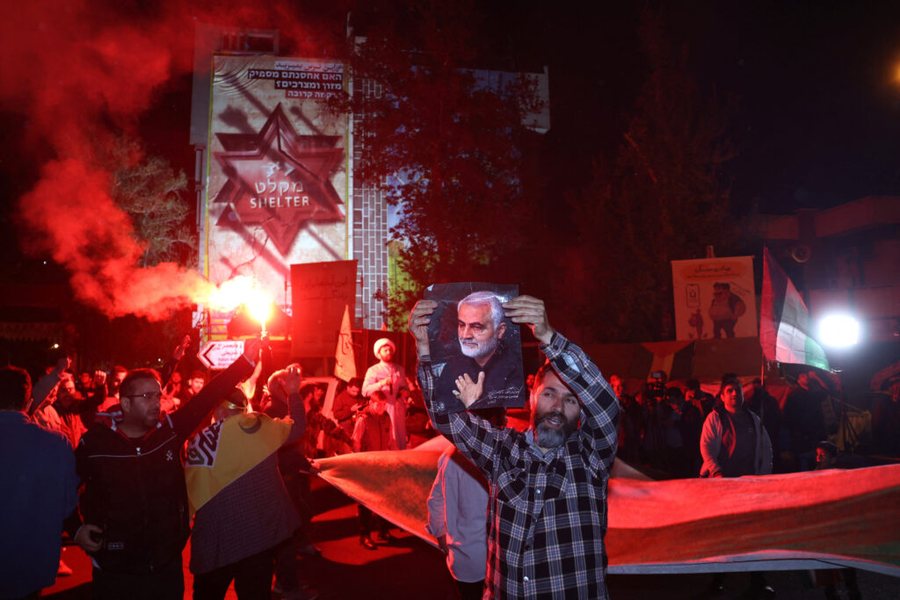
War is imminent. Using drones and missiles, Iran launched a large-scale attack on Israel on Saturday. Both countries have long been involved in a "shadow war". Iran has used missiles in the region supported and trained by it, while Israel has carried out specific attacks.
Recently, an Israeli strike in Syria killed several senior commanders from Iran's Islamic Revolutionary Guard Corps (IRGC), also leading to Iran's long-awaited response. But what will Israel do now? Has a wider regional war begun? What role will the United States play? Here's what some of the institute's experts think.
Jonathan Panikoff, former deputy national intelligence officer for the Middle East at the US National Intelligence Council: The Middle East, on the brink of a regional war that no one seems to want
Iran's launch of ballistic missiles, along with over 100 drones, puts the region on the brink of a wider war that nobody really seems to want. Even most of the actors - the United States, the Arab states, even Hezbollah - have tried to avoid it during the last 6 months.
But the reality is that this is not an extension of the war in Gaza. He is a consequence of it. But Iran's response to Israel's killing of Mohammad Reza Zahedi and 6 other IRGC officers in Syria nearly 2 weeks ago goes beyond a proportional response.
Because it is the first time that Iran has undertaken a direct attack on Israel.
At best, Israeli Prime Minister Benjamin Netanyahu will retaliate and take steps to attack Iranian targets, perhaps in Iran, in a way that will be specific and contained, and that will not lead to another response important of Tehran. At worst, the Israeli response will be strong, and will include bombing important targets in Iran.
Gina Abercrombie-Winstanley, former special assistant for the Middle East and Africa to the US Secretary of State: Saturday's attack produced two winners and one loser
The first winner: With more than 200 missiles and drones fired directly at Israel, the Iranians are satisfied. Iranian leaders have announced their intentions and publicly claimed responsibility for the attack. While the damage appears to be limited, the overwhelming response was very severe and has alarmed the entire international community. The next step should not be escalation.
The second winner of the recent developments is Israeli Prime Minister Benjamin Netanyahu, who got 3 things he really needed. First, Gaza will be out of the limelight, and he can hope that pressure will fall to end the war and ease the suffering of the Palestinians.
And that the third has encouraged American President Biden to return to the declarations of a "strong support" for Israel, even under his leadership. It may also have reunited Israelis in the face of danger, which will help his stay in power.
The big loser from this attack is President Biden, whose position has been greatly weakened. His team must work hard to contain the Israeli counterattack. US forces in the region remain at risk, and the possibility of a wider war is high. Now it appears that the United States is on the brink of direct conflict, which Biden (and Iran) have tried hard to avoid. A significant part of the coalition needed to re-elect him to office will not forget Gaza, nor will he welcome new support for Israel.
Danny Citrinowicz, served 25 years in a variety of leadership positions in Israel's Defense Intelligence: Why Iran's Unprecedented Attack May Not Lead to a Regional War
Israel and the United States had warned Iran not to carry out that attack. However, it seems that his leadership realized that the cost of not attacking is higher than attacking itself. Since in the first case, Iran would have to revise its deterrence and re-balance the equation of deterrence of Israel.
Many things will depend on the consequences of the attack. In any case, and regardless of the latter, this is an unprecedented event in the relations between Iran and Israel. Saturday's attack highlighted the need for Israel to work in coalition with partners against Iran
and not rely only on himself for defense but also in any offensive activity.
If Israel still prioritizes the elimination of Hamas and the release of hostages, any escalation of the current conflict will be counterproductive to these goals. However, a lot can change in the coming days.
Carmiel Arbit, member of Middle East Programs at the Atlantic Council: What will happen next will depend on 3 factors
Iran's direct attack on Israel represents a major escalation of the conflict between the two countries, moving from a covert confrontation to an open clash. What happens next will depend on 3 factors.
First, whether Iran's proxies, including the Houthis and Hezbollah, will join the fighting. Second, whether there will be casualties in Israel from these attacks and whether its defense systems combined with US support prevent major damage. Third, everything will also depend on how Israel chooses to respond.
Sulmet iraniane zhvillohen nën sfondin e zbehjes së simpatisë globale për Izraelin, dhe të tensionit në rritje në marrëdhëniet midis Joe Biden dhe Beniamin Netanyahut. Shtetet e Bashkuara, Mbretëria e Bashkuar, Franca dhe Gjermania kanë deklaruar mbështetje për Izraelin pas sulmeve të së shtunës.
Por siç ka ndodhur me Gazën, përshkallëzimi i mëtejshëm, mund ta zvogëlojë këtë mbështetje publike. Nga ana e tij Biden, e ka bërë të qartë se çdo acarim që mund të vërehet mes dy liderëve është vetëm retorik:Partneriteti i SHBA me Izraelin mbetet i hekurt.
Angazhimi i përbashkët për të adresuar kërcënimin e paraqitur nga Irani, është gjithashtu shumë më i thellë se çdo divergjencë që mund të kenë të dyja vendet mbi të ardhmen e territoreve palestineze. Megjithatë, SHBA-ja mund të inkurajojnë në prapaskenë Izraelin që të reagojë me vetëpërmbajtje, në një përpjekje të vazhdueshme për të parandaluar zhvillimin e një lufte rajonale.
Masoud Mostajabi, zëvendësdrejtor i Programeve të Lindjes së Mesme në Këshillin Atlantik:SHBA, aleatët dhe udhëheqësit rajonalë, do të motivohen ta anashkalojnë konfliktin në zgjerim e sipër
Sulmi i të shtunës nga Republika Islamike e Iranit ndaj Izraelit, ishte një përgjigje ndaj vrasjes nga Izraeli të një komandanti të lartë ushtarak iranian në konsullatën e saj në Damask më 1 prill. Ky i fundit, ishte në kundërshtim të hapur me të drejtën ndërkombëtare siç parashikohet në Konventën e Vjenës.
Ministria e jashtme iraniane, e bëri të qartë se veprimet e saj ishin një ushtrim i të drejtës së saj të natyrshme për vetëmbrojtje, duke përmendur nenin 51 të Kartës së OKB-së. Gjithsesi këto sulme, nënkuptojnë një fazë të re në konfliktin e vazhdueshëm midis dy kundërshtarëve rajonalë.
Dhe kjo ka të ngjarë të kapërcejë atë që prej vitesh është konsideruar si një “luftë në hije”, sidomos duke pasur parasysh faktin që ky është sulmi i parë direkt nga territori iranian. Para fillimit të këtyre sulmeve, Teherani arsyetoi se dështimi për të zbatuar qartë dhe në mënyrë të qartë masat parandaluese kundër veprimeve agresive të Izraelit, do t’i sinjalizonte këtij të fundit se akte të tilla armiqësore do të toleroheshin nga udhëheqësit iranianë në të ardhmen.
Deri tani, hakmarrja është disi e përmbajtur dhe ndoshta e orkestruar enkas kështu, për t’i dhënë Izraelit dhe SHBA-së fleksibilitet në anashkalimin e një konflikti më të gjerë. Në Izrael, vëmendja po kalon tek vlerësimi i dëmit nga kabineti i sigurisë tek vendimi se si duhet reaguar.
Teksa ky vend po vepron sipas mentalitetit të kohës së luftës, për shkak të konfliktit të vazhdueshëm në Gaza, shumë njerëz ka të ngjarë të argumentojnë se kjo paraqet një mundësi për Izraelin që të hakmerret në të njëjtën mënyrë ndaj Iranit, duke synuar potencialisht instalimet kritike ushtarake, energjetike dhe bërthamore.
If this line of reasoning prevails, a war of catastrophic proportions would become almost inevitable. For regional players, notably Saudi Arabia and Jordan - which are said to have intercepted Iranian drones - the argument will be that they are rightly defending their sovereign airspace.
However, if Saturday's attacks escalate into a broader Israel-Iran conflict, regional actors perceived as Israel's protectors may find themselves targeted and dragged into the regional flames to a greater degree than launching or toppling the some drones.
Given the incentives at stake, it is likely that regional leaders will be motivated to mediate between the two sides in order to end this confrontation as quickly as possible. The United States finds itself once again in prime position to work on preventing the spread of unrest. /Adapted from Pamphlet, received from the Atlantic Council



Lini një Përgjigje