


 Shkruar nga Pamfleti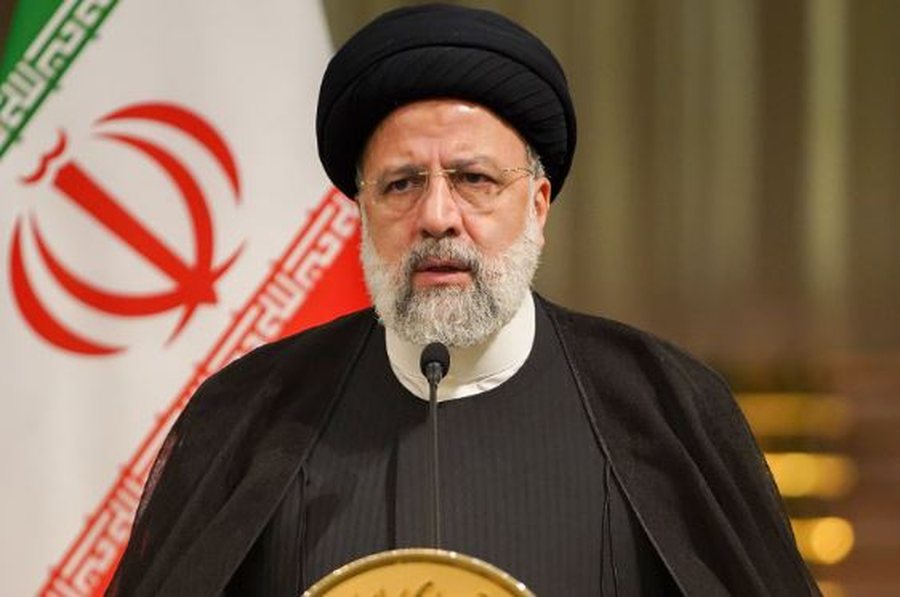
With Rais gone, Iran's political landscape faces deep uncertainty. He had been instrumental in managing Iran's complex relations with neighboring Arab states, Russia and China.
The sudden death of Iranian President Ebrahim Raisi has sharply exposed the fragile state of leadership in the country.
Raisi's death, in what is being called a tragic accident, leaves Iran facing a significant power vacuum at a critical juncture.
Raisi was seen as the frontrunner to succeed Supreme Leader Ayatollah Ali Khamenei. His rise to the presidency in 2021, amid widespread unpopularity, had been seen as a strategic move to position him as Ayatollah Ali Khamenei's successor.
With Rais gone, Iran's political landscape faces deep uncertainty. He had been instrumental in managing Iran's complex relations with neighboring Arab states, Russia and China.
Raisi's rise to power was less about personal charisma or political acumen and more about his unwavering loyalty to Iran's ruling system and its history of relentless oppression.
This complex legacy makes choosing his successor a very sensitive task.
The decision is not only about the appointment of a new president, but also about the formation of the future of the regime and the Velayat-e Faqih system. So far, the only prominent candidate for the next supreme leader is Ayatollah Ali Khamenei's son, Mojtaba Khamenei.
How Ayatollah Khamenei orchestrates the upcoming presidential election will reveal much about Iran's future leadership.
If Khamenei chooses to impose his chosen candidate and exclude others, it will significantly reduce voter turnout and reinforce the belief among Iranians that real change can only come from dismantling the current system.
The upcoming elections will thus serve as a crucial indicator of the regime's approach to governance and its willingness to engage with demands for reform.
One possibility is that Iran's regime could appoint an even more extreme hardliner to the presidential seat.
This would be in line with the regime's strategy since the 2020 parliamentary elections, relying on more reliable strongmen in key institutions and decision-making roles.
Currently, the candidates vying for the post of Rais are all trying to prove their hardline credentials.
This trend indicates the absence of a major figure capable of fulfilling the stabilizing role that Raisi was expected to play. The process of choosing his successor is likely to be influenced by the conflicting interests of various power centers within the regime, potentially reigniting ambitions for the position of supreme leader.
This situation could increase the prospects of hardliners associated with the Revolutionary Guard, further entrenching the regime's support in extreme elements.
The potential appointment of a more extreme hardliner could affect Iran's foreign policy and nuclear weapons ambitions.
A hardline figure in Iran's presidency will have profound consequences both at home and abroad.
Internally, the regime is likely to become increasingly intolerant of opposition groups, using tighter measures of social control.
This could intensify clashes between the regime and society, exacerbating the ongoing economic crisis, worsening living conditions and fueling spontaneous protests.
Such developments could plunge the regime into an internal crisis of legitimacy, widening the gap between the ruling elite and the masses. Externally, a change in hard line could result in a more confrontational attitude towards neighboring countries.
The influence of hardliners could also affect Iran's nuclear policy, especially amid demands to change its nuclear doctrine.
Such a shift could lead to a direct confrontation with the US and the West, escalating tensions and possibly drawing Iran into a costly conflict.
Another possibility is that the Iranian regime may allow reformists and moderates to participate in the June presidential election to make the race more competitive.
This strategy, if implemented, will aim to reduce political tension and increase voter turnout, which has reached record levels, especially in recent parliamentary elections with the lowest turnout since the 1979 revolution.
However, such a move would challenge the strategy of hardliners to monopolize power, a direction that Khamenei is unlikely to favor. The hard lines, which have successfully sidelined reformists and moderates from decision-making positions, are expected to hinder any efforts to reintroduce these groups into political life.
The most likely scenario is that the Iranian regime will impose a candidate who will continue Raisi's policies. During Rais' tenure, Iran made significant international gains despite limited domestic improvements due to enduring economic sanctions.
Although not confrontational with the West, the Rais administration tried to ease sanctions, making some progress.
Iran managed to maintain a balance of deterrence after confrontations with Israel and avoided regional war by opening communication channels with the US. Even on the nuclear issue, Iran engaged in indirect negotiations with the US, mediated by Oman.
Continuing this approach could help preserve the regime's external achievements and potentially improve its domestic situation, aligning itself with US interests in regional stability.


Lini një Përgjigje