


 Shkruar nga Pamfleti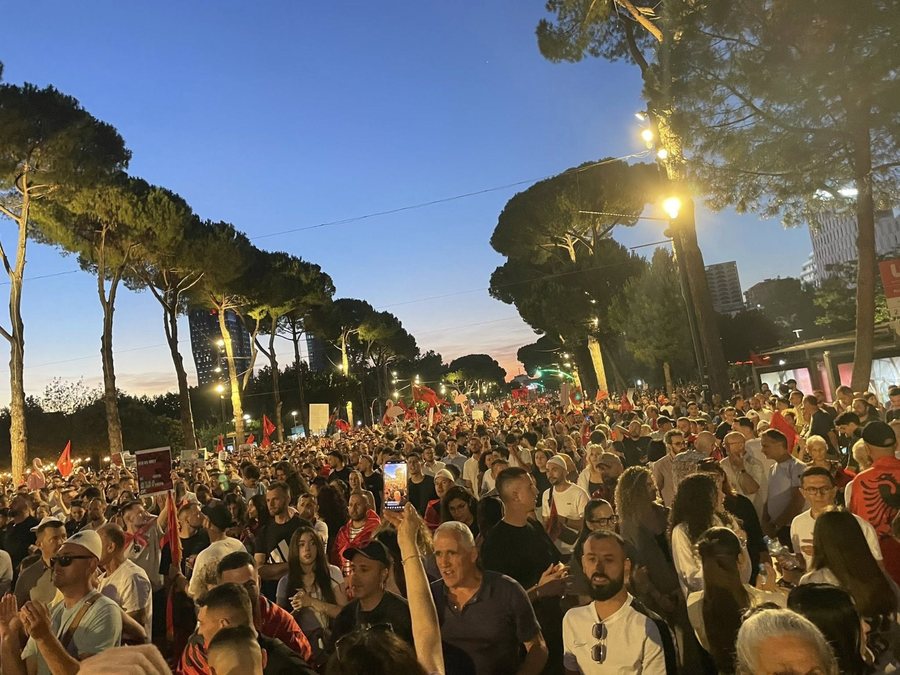
Fourteen days after the protests began, the boulevard continues to fill with citizens who reject both the government and the opposition. As Edi Rama goes on the offensive and Sali Berisha tries to politically capitalize on the movement, the protest is turning into a direct challenge to the entire political caste that has dominated the Albanian transition for more than three decades.
When the protest began two weeks ago as a reaction to controversial investments on the coast, few thought it would be able to sustain the momentum for 14 consecutive days. But what is happening in Tirana is gradually turning into a political and civic phenomenon that is embarrassing the entire Albanian political caste.
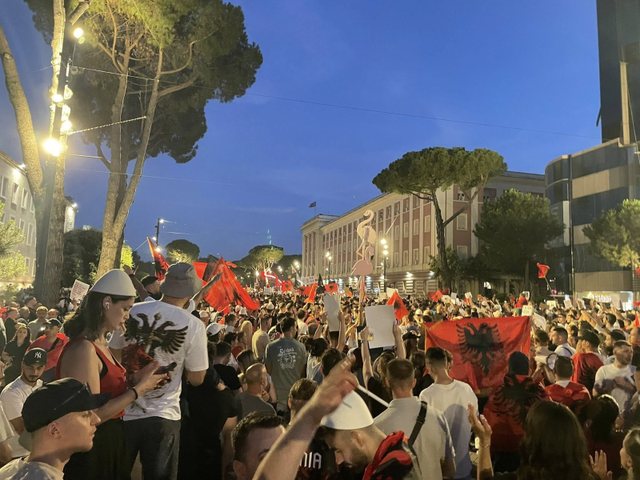
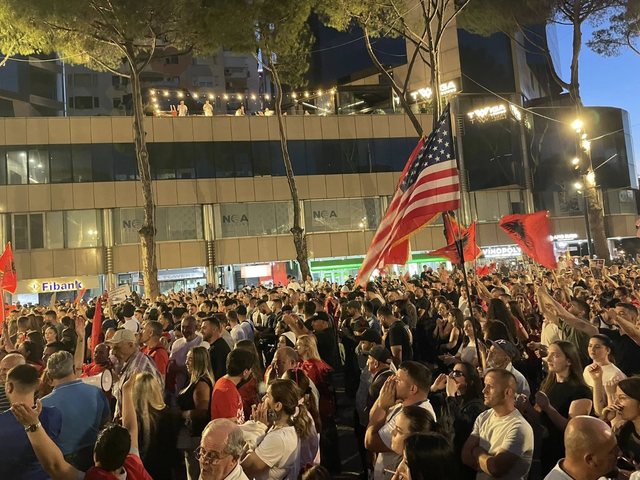
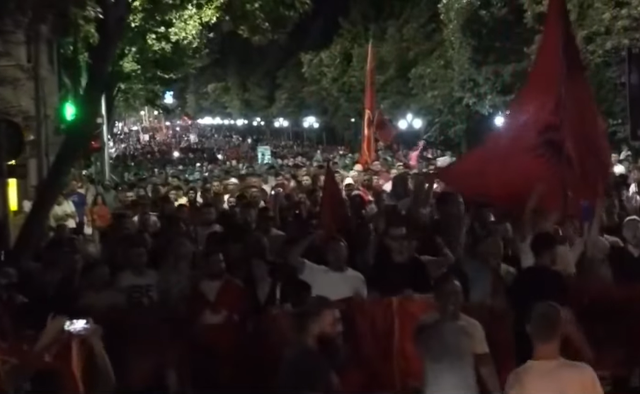
For the 14th day in a row, hundreds of citizens joined the protest in front of the Prime Minister's Office. Contrary to the predictions of many analysts and politicians, participation has not only not diminished, but according to organizers and observers on the ground, it has remained high, even increasing on certain days.
Extraordinary turnout today
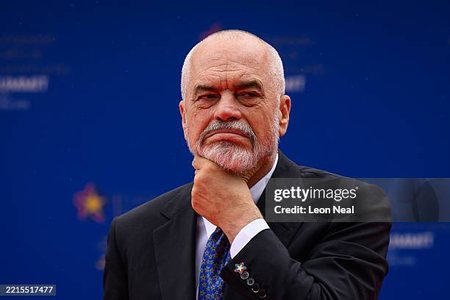
This consistency seems to have begun to produce nervousness in the political camps. Just a day ago, the Socialist Party organized its 35th anniversary celebration, an activity that took the form of a demonstration of political strength at a time when the protests were gaining ground in public opinion. Today, Prime Minister Edi Rama reacted with one of his harshest statements against the protesters, accusing them of pressure, intimidation and making comparisons with extremist movements of the past.
For many protesters, this reaction is the clearest sign that the government is no longer seeing the protest as a passing episode, but as a movement that is gaining ground and producing political effect.
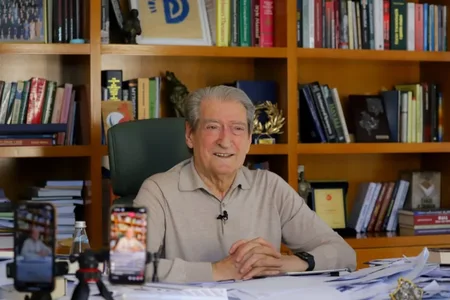
On the other side of the political spectrum, Sali Berisha is also trying to position himself alongside the protest. The leader of the Democratic Party has described it as a movement against Edi Rama's government and a confrontation with what he calls an "authoritarian dictatorship."
" It is the most powerful movement that is confronting the authoritarian dictatorship of Edi Rama ," Berisha declared.
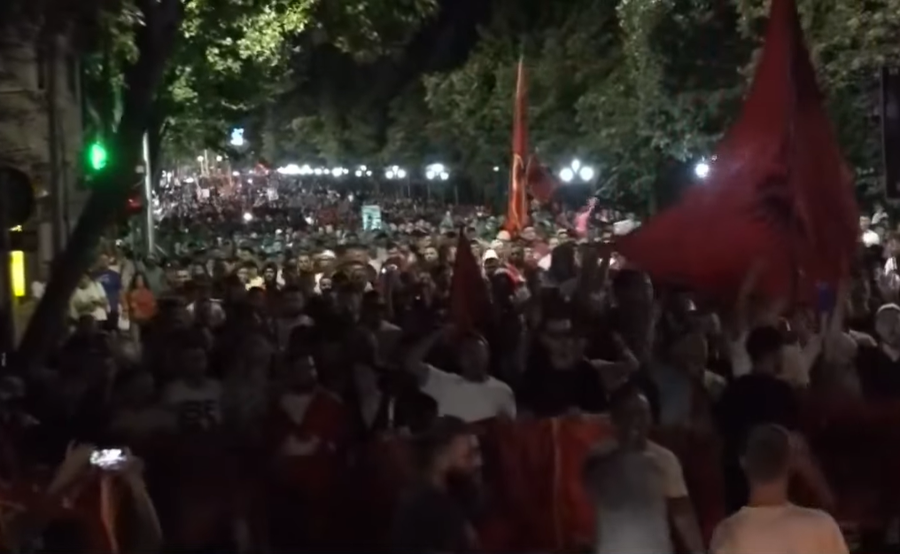
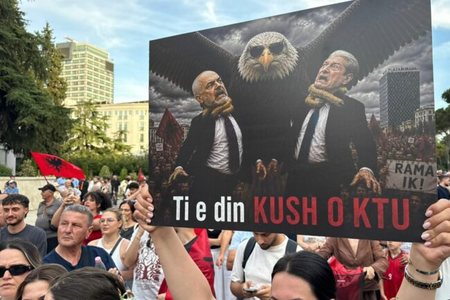
However, the opposition's attempt to politically appropriate the protest faces a visible reality on the ground. At the rallies, cries are regularly heard not only against Rama, but also against Berisha and the political class as a whole. Today, the cry "Rama in prison, Berisha in prison" echoed everywhere.
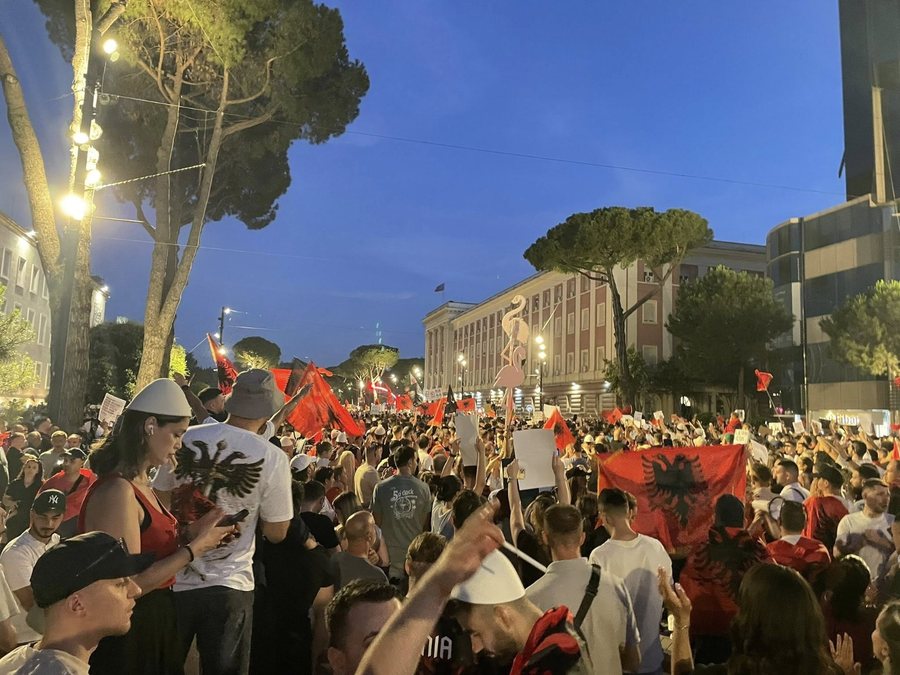
Asked about the slogans against him, Berisha called on supporters not to pay attention to them.
" Citizens are free to say whatever slogans they want, but those who try to manipulate them, they are pathetic. Ignore them and don't be impressed by those slogans ," he said.
But this protest, besides the thrill it gave Rama, showed that the opposition is not inspiring. Berisha has never gathered so many citizens and it seems that he is the problem. In short, they are together.
This is perhaps the most distinctive feature of the protests of these two weeks. For the first time in many years, the square is simultaneously hearing calls against the government, the opposition, and the entire political elite that has dominated the Albanian transition.
While Rama attacks it and Berisha tries to embrace it, the protest continues to insist that it is neither the government's nor the opposition's. And the fact that after two weeks, citizens continue to take to the streets is making it increasingly difficult for politics to ignore it. / Pamphlet





Lini një Përgjigje