


 Shkruar nga Corriere della Sera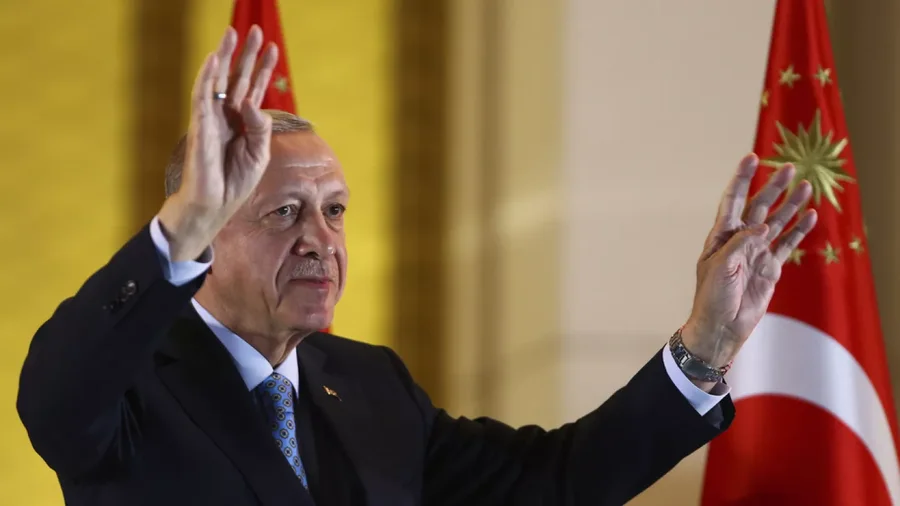
If, on the one hand, Erdogan rants against the Israeli prime minister, on the other hand, his country continues fearlessly to do business with the Jewish state...
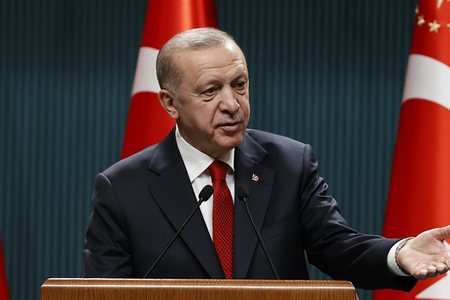
Playing with two gates. This would be the simplest way to explain the highly contradictory policy of Turkish President Recep Tayyip Erdogan.
A member of NATO, but close to Putin, with whom he shares the tendency of autocracy and allergy to any criticism. The Sultan, as his critics call him, is a tightrope walker for excellence.
The most recent example is the war that broke out in the Middle East after the horrific massacre committed by Hamas on October 7 in the Jewish state. If, on the one hand, Erdogan rants against the Israeli prime minister, yesterday he once again compared Benjamin Netanyahu to Hitler, on the other hand, his country continues fearlessly to do business with the Jewish state.
This was discovered by Turkish journalist in exile Metin Cihan, who documented a steady flow of Turkish ships to Israel. Despite the Gaza bombing, Ankara remained the world's largest supplier of steel to Israel, worth $43.9 million, according to data released by the Turkish Exporters' Assembly in November. Even in October, with the start of the war, Turkey is suspected of having sold numerous weapons and spare parts to Tel Aviv.
Cihan's findings also suggest government involvement, with the Sefine shipyard, owned by Kolin Holding, one of five companies considered to be very close to the Turkish president, implicated in the maintenance of an oil tanker that powers Israeli warplanes.
Added to this is the suspicion that İncirlik Air Base in Turkey, home to the 39th Air Force Base Wing of the US Air Force, may have been used by the US to provide military aid to Israel. In November, a US military C-130J Hercules transport plane took off from Incirlik for Akrotiri, a major British airbase in Cyprus, which is used as a point for moving arms to Israel. But the United States and Britain refused to reveal the type of goods being transported.
In Turkey, where the population is strongly pro-Palestinian, this news has caused great indignation while no one criticizes the fact that Istanbul is the center of financial operations of Hamas, which has a treasury of about two and a half billion dollars a year. The organization's leaders, such as Khaled Meshal, quietly shuttle between the megalopolis on the Bosphorus and Qatar, where they have their headquarters. On the other hand, Erdogan has never hidden his admiration for what he defines as an organization "composed of liberation fighters, not terrorists."
Melon in Turkey
Despite all these contradictions, Turkey remains central to the crisis between Israel and Gaza, as evidenced by the recent negotiations for the release of hostages, and that between Kiev and Moscow (just think of the wheat deal unlocked thanks to Ankara). And that is why the visit of Giorgia Meloni, her first as the next president of the G7, is based on details and nuances. So far the two leaders have only met at international summits and it is no mystery that when the prime minister was in the opposition, she always opposed Turkey's entry into the European Union. But today, as prime minister, Erdogan is a crucial partner not only in the Middle East and Ukraine, but also in energy, defense and trade. Not to mention immigration, the refugee deal with the EU dates back to 2016 and Libya, a country in which Ankara plays a strong role. For all these reasons, the meeting between the Turkish president and the Italian prime minister, which took place this afternoon in Istanbul without the pomp reserved for Mario Draghi, cannot have only a positive result. / Pamphlet


Lini një Përgjigje