


 Shkruar nga Yigal Chazan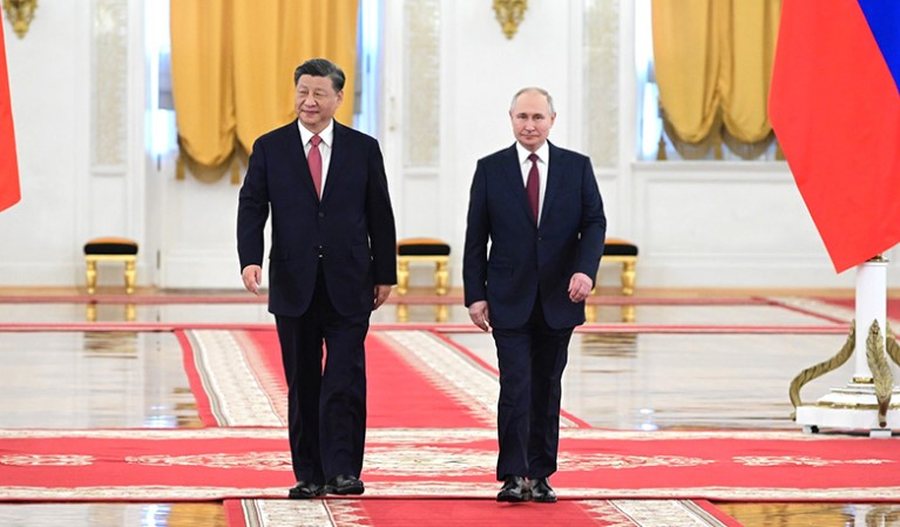
The invasion has only accelerated the geostrategic orientation, where President Vladimir Putin has found willing trade and investment partners who do not seem intimidated by the threat of sanctions...
Almost 2 years after the start of the Russian invasion of Ukraine, it is seen that the efforts of the United States and its allies to economically harm Moscow have quite a few flaws. The effectiveness of Western sanctions, and the export controls to verify their implementation, is being greatly undermined by significant sanctions evasion and Russia's growing economic ties to China and India.
While the trade restrictions have undoubtedly hurt the Russian economy, it remains resilient and appears to be continuing to support the war in Ukraine. At the end of last year, Moscow predicted an annual economic growth of 2.8 percent, after the decline it suffered in 2022, when the sanctions 'loop' was significantly tightened after the invasion of Ukraine.
An increase in defense spending, and high oil prices, have helped boost economic growth. Meanwhile, it seems that private Russian companies have also adapted well to the new economic realities. At the same time, the country has not experienced the exodus of Western business that was predicted at the beginning of the conflict.
Many Western companies chose to stay, some limiting operations and investment. However, they still contribute billions of dollars to the Kremlin's coffers. However, the underlying economic conditions are not good.
High interest rates and inflation, a weak ruble and severe labor shortages do not bode well, especially when the vast majority of foreign reserves have been frozen by the West, and most of the assets of the Russian banking system are under sanctions. .
It is true that the Russian economy is weaker than it was before the invasion of Ukraine. But Western policymakers will be disappointed to learn that Moscow's avoidance of sanctions and its orientation to the East have helped keep the country afloat.
An American study showed that in the fall of 2022, Russian imports had begun to rise after a sharp decline of several months as a result of the invasion. Soon after Western sanctions tightened, and as Russian forces advanced deep into Ukraine, Moscow tried to circumvent the restrictions.
It secretly created a fleet of tankers to avoid another punitive measure, a cap on the price of its oil, aiming to increase parallel imports, goods exported to unsanctioned countries that were then re-exported to Russia without its knowledge or consent. of producers.
Moska e zyrtarizoi këtë praktikë në maj të vitit 2022, duke filluar nga pjesët e makinave deri tek mallrat e konsumit, të cilat ishte e mundur të importoheshin në këtë mënyrë. Perëndimi, dhe në veçanti SHBA-ja, ka synuar të ushtrojë presion mbi vendet eksportuese, sidomos mbi Turqinë, Kazakistanin dhe Emiratet e Bashkuara Arabe.
Megjithatë, është e paqartë se sa efektive ka qenë kjo. Moska nuk duket shumë e shqetësuar. Ajo pretendoi në dhjetor se importet paralele arritën mbi 70 miliardë dollarë mallra gjatë 2 viteve të fundit. Ajo kishte nisur të zhvendosej drejt lindjes që përpara luftës në Ukrainë për të nxitur rritjen ekonomike.
Pushtimi vetëm sa e ka përshpejtuar orientimin gjeostrategjik, ku presidenti Vladimir Putin ka gjetur partnerë të gatshëm tregtarë dhe investimesh, që nuk duken të frikësuar nga kërcënimi i sanksioneve. Tregtia midis Rusisë dhe Kinës u rrit me gati 30 për qind, duke arritur në 200 miliardë dollarë në 11 muajt e parë të vitit të kaluar,
Ndërkohë eksportet kineze në Rusi u rritën me 50 për qind. Gjysma e eksporteve të naftës së Rusisë shkoi në Kinë në vitin 2023, dhe 40 për qind në Indi. Në përgjithësi, midis janarit dhe tetorit të vitit të kaluar, tregtia dypalëshe Rusi-Indi u dyfishua në mbi 50 miliardë dollarë.
Në aspektin ushtarak, Rusia i është drejtuar shteteve diktatoriale si Koreja e Veriut dhe Irani për të importuar armë. Po ashtu dyshohet se ajo po blen nga miq të tjerë teknologji me përdorime civile dhe ushtarake (që i nënshtrohen kontrolleve të eksportit), përfshirë Turqinë dhe Kinën.
Sipas shërbimeve sekrete amerikane, Pekini jo vetëm që i ka ofruar Rusisë një ndihmë shumë të rëndësishme ekonomike, por ka të ngjarë edhe teknologji ushtarake, dhe ato me përdorim të dyfishtë, përfshirë pajisjet e lundrimit, teknologjinë e bllokimit dhe pjesët e avionëve luftarakë.
Instituti kërkimor me qendër në SHBA, Atlantic Council, vuri në dukje kohët e fundit se të dhënat zyrtare të tregtisë tregojnë “një rritje të madhe të importeve të mallrave të prodhuara nga kinezët, me një përdorim të rëndësishme në sektorin ushtarak, të cilat kanë luajtur një rol kyç” në mbajtjen të pajisur dhe të furnizuar të ushtrisë ruse për t’i rezistuar kundërofensivës së fundit të Ukrainës.
Varësia e Rusisë nga Kina për të zbutur ndikimin e sanksioneve është aq e madhe, sa që 1/5 e importeve të saj deri në fund të vitit 2022, raportohet të jetë faturuar në juanin kinez, teksa Pekini e ka shtuar ndjeshëm përdorimin e monedhës së saj për të paguar mallrat ruse.
Dhe ndërsa Perëndimi është përpjekur të dobësojë investimet e huaja në Rusi, Moska i është drejtuar Kinës për të mbushur disa nga boshllëqet e krijuara. Pekini, që ka bërë thirrje për një lidhje më të madhe ndërkufitare, ka investuar në projektet ruse të infrastrukturës së transportit.
China has also agreed to cooperate on a major project in the mining sector, while considering the joint exploitation of oil and gas reserves, and plans to cooperate on the construction of a large oil processing and transportation complex. .
Economic ties between Moscow and Beijing seem to be getting stronger and stronger.
So much so that it is already being discussed whether or not Russia is becoming its vassal state. But for China, India and other smaller countries, which are interested in increasing the volume of trade with Russia, it seems that the opportunity to do more trade is the main driver. "The Russians have significant shortages of various goods. We will supply them but trying not to violate the imposed sanctions" - they can argue. The US and the European Union will continue to punish those who do this, but this may represent only a fraction of the illegal transactions.
Moreover, what to do with all the legal trade that is undeniably helping Russia cope with the sanctions regime imposed by the West? There is no doubt that these questions will constantly be on the minds of Western policymakers as Putin prepares to secure a fifth presidential term in March elections. / Adapted "Pamphlet" from " Geopolitical Monitor "



Lini një Përgjigje