


 Shkruar nga Andrea Muratore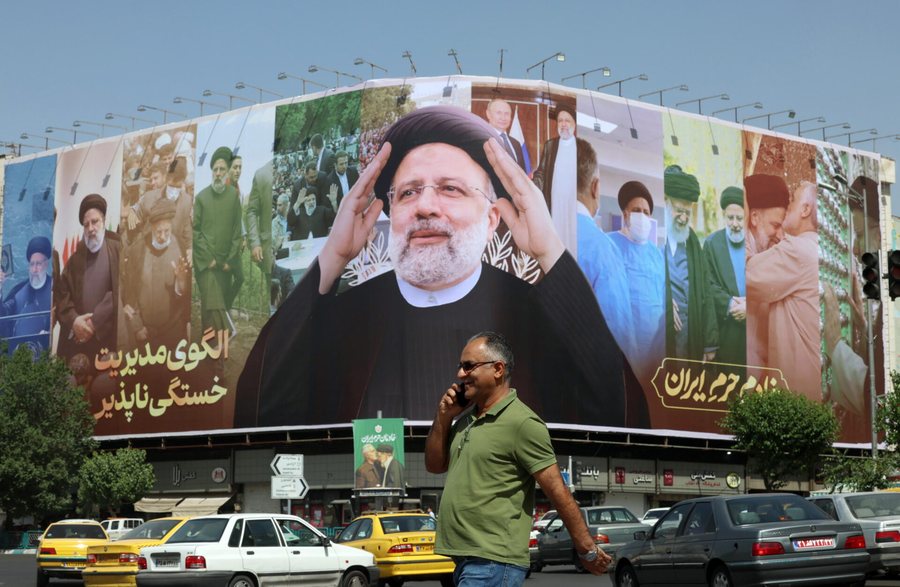
The situation is complex...
Negotiations on a US-Iran nuclear deal continue, with Tehran’s Foreign Minister Abbas Araghchi, who remains the Islamic Republic’s top figure under President Masoud Pezeshkian, arriving in Geneva on Tuesday, February 17, to take part in new talks coordinated by Oman with Washington’s envoys Jared Kushner and Steve Witkoff. Muscat will lead, with Switzerland hosting the talks, allowing for simultaneous discussions with Russia and Ukraine, which will absorb US diplomacy. And power structures will begin to be drawn up.
The US strengthens its military presence
The situation is complex. Tehran is negotiating, while the impact of the crackdown on protests in late December and early January, which angered the US and the West, is still unclear. This comes at a time when the demands of the Iranian opposition have long been ignored by US diplomacy. However, yesterday it was Donald Trump who brought the issue back into the spotlight, citing the idea that regime change would be the "best option" for Iran.
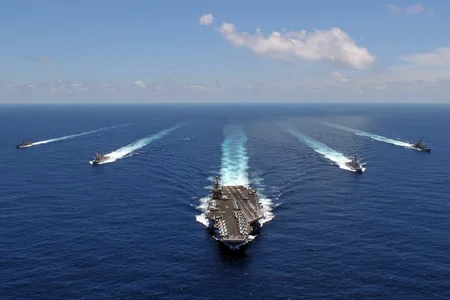
All this while the strike group from the aircraft carrier "Gerald Ford", long stationed off the coast of Venezuela, is arriving in the Persian Gulf to join that of the USS Abraham Lincoln, which has been operating there for several weeks to increase US military pressure. Iran has threatened to retaliate against US bases in the Middle East if attacked, while Secretary of State Marco Rubio says that a deal remains the best option for the United States.
Israel and Turkey have opposing positions on Iran
Israel’s position should be assessed: Prime Minister Benjamin Netanyahu has undertaken a quick mission to the US to try to pressure Trump to shift political pressure on Iran for a deal from nuclear weapons to ballistic missiles, weapons and support for allies, apparently without success. Iran’s National Security Council Secretary Ali Larijani accuses Israel of trying to sabotage the negotiations, while a repeat of the 12-Day War of June 2025 remains in the background, despite Tel Aviv having to carefully review its preparations, especially defensive ones, for a new conflict.
Turkey, which is at the forefront of efforts to bring the US and Iran back to the negotiating table and avoid war, continues to push for a deal. Ankara, through President Recep Tayyip Erdogan and Foreign Minister Hakan Fidan, has warned of the dangers of chaos in Iran since the protests began.
Fidan told the Financial Times on Thursday, February 12, that Washington has shown “flexibility” regarding Iran’s denuclearization and the possibility of giving Tehran the uranium enrichment facilities allowed under the Non-Proliferation Treaty for civilian purposes, adding that “the Iranians now recognize the need to reach an agreement with the Americans and the Americans understand that the Iranians have limitations.” The aim remains a return to a scenario similar to that of 2015, when President Hassan Rouhani and Iranian Foreign Minister Mohammad Javad Zarif negotiated the deal with the United States, the European Union, Russia and China to control nuclear proliferation.
Araghchi attacks Europe
Trump scrapped the JCPOA in 2018, and today the one who seems excluded from the negotiating game is precisely the European world, which has consciously chosen not to touch the ball in the case of Iran. Araghchi wrote about this in X. He considers the European path "disastrous."
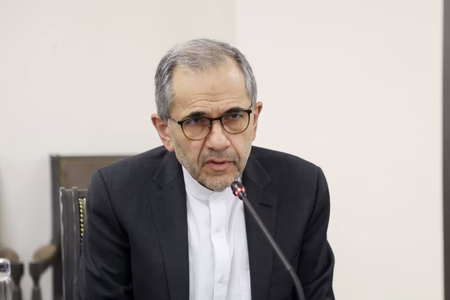
The E3 countries (France, Germany and the United Kingdom), according to Araghchi, seem confused, unable to understand what is happening in Iran, and for Tehran's chief diplomat, Europe, which was once a key interlocutor, has now disappeared. Much more effective, for Araghchi, is the role of regional countries, defined, and this is a novelty, as "friends". Countries like Turkey and Saudi Arabia, historically rivals of Tehran, or mediators Qatar and Oman, now seem more united with Iran in the name of the common goal of avoiding war. Meanwhile, Europe seems relegated, by its own choice, to a discouraging diplomatic periphery. And in the case of Iran, it is simply irrelevant. / Adapted “Pamphlet” from “ InsideOver ”


Lini një Përgjigje