


 Shkruar nga Pamfleti
Will the Islamic Republic of Iran's regime fall soon? Currently, the mullahs' army is at least escalating its rhetoric. A Revolutionary Guard general threatened: "every ship" in the Strait of Hormuz will be burned!
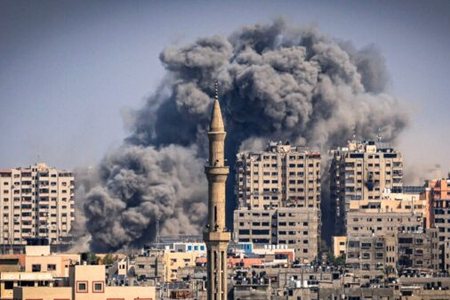
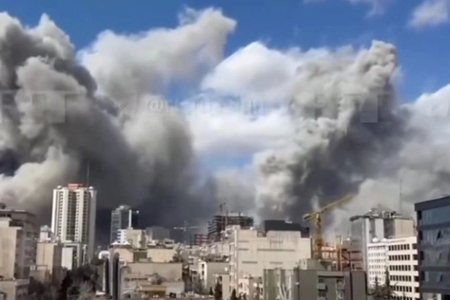
The security situation in the Middle East continues to escalate amid mutual attacks, military threats and concerns about the security of Iranian nuclear facilities. The International Atomic Energy Agency (IAEA) confirmed that the nuclear facility in Natanz has suffered "some damage" recently, but stressed that there were no radiological consequences.
IAEA: Damage at Natanz, but no increase in radiation
According to the UN nuclear watchdog, the Natanz facility has been damaged, but no increase in radiation levels has been recorded. This means that, according to current data, there have been no radiological consequences for the population or the environment.
The IAEA has not provided further details on the extent of the damage or its specific causes. There is also a lack of independent information confirming the circumstances of the incident.
Israel claims to have struck the presidential office
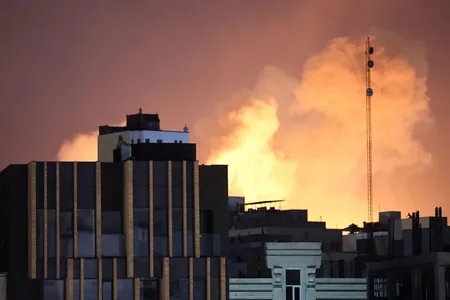
The Israeli military has stated that its air force has struck important state buildings in Iran, including the office of the President of the Islamic Republic and the building where the National Security Council meets.
There is no independent confirmation of the extent of damage or possible casualties. Iranian authorities have not released official details regarding these claims.
Threats to the Strait of Hormuz
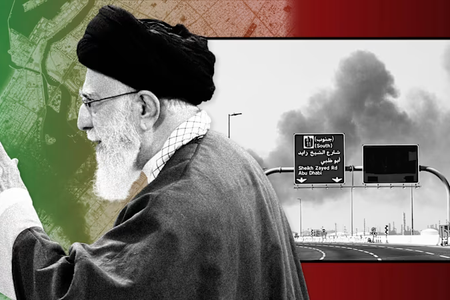
An Iranian Revolutionary Guard general, identified as Sardar Jabbari, has threatened via the Telegram network that any ship passing through the Strait of Hormuz will be “burned.” He also warned of attacks on oil pipelines and declared that “not a drop of oil will leave the region.”
The general added that the price of oil could reach $200 in the coming days, a statement that currently remains a prediction and not a fact confirmed by international markets.
The Strait of Hormuz is one of the world's most important energy corridors, and any disruption to traffic there could have wide-ranging global economic consequences.
Mullahs threaten Europe
The Iranian Foreign Ministry has warned European countries not to get involved in the conflict. Spokesman Esmail Bakaei stated that any action against Iran would be considered “collaboration with the aggressors” and an “act of war.”
On the other hand, France, Germany and the United Kingdom (E3) declared that they are “appalled” by Iranian missile attacks in the region and warned that they will take “defensive measures” if necessary. According to the joint statement, these measures could also include proportionate military action to neutralize Iran’s ability to launch missiles and drones.
However, German Foreign Minister Johann Wadephul ruled out Germany's participation in US and Israeli military strikes against Iran. He stressed that Germany would limit itself to self-defense if its personnel were attacked.
Risk to nuclear facilities
So far, according to the IAEA, the damage at Natanz has not caused any radiological contamination. However, security experts warn that further escalation of the conflict near nuclear facilities increases the risk of incidents with potentially serious consequences for the region.
Detailed assessments are lacking on the current security of other nuclear facilities in Iran and on the level of risk in the event of new attacks.




Lini një Përgjigje