


 Shkruar nga Pamfleti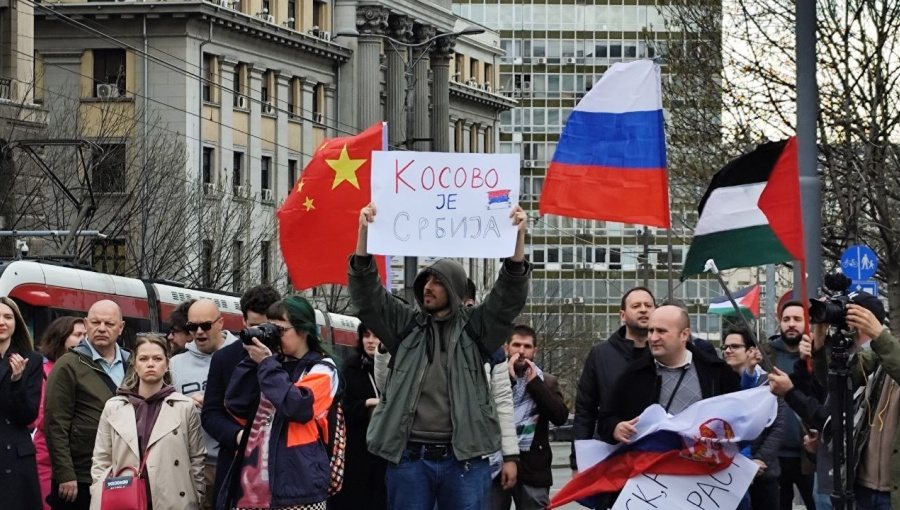
Support for European Union (EU) membership in Serbia has fallen to the lowest level in the Western Balkans, a new Eurobarometer survey showed, underscoring the country's strained ties with the bloc amid stalled accession talks and closer relations with Russia and China.
Only 33% of respondents in Serbia said they supported EU membership, compared with 91% in Albania and 69% in North Macedonia, according to the survey commissioned by the European Commission. Only 38% of Serbs said they had a positive image of the EU, the lowest in the region.
The findings highlight the deep ambivalence many Serbs feel towards Brussels, shaped by the legacy of the conflicts of the 1990s and more recent political frictions. NATO airstrikes in 1999 against Serbia and the recognition of Kosovo's independence by most Western states in 2008 cemented resentment, with Belgrade turning to Moscow for diplomatic support, writes Intellinews.
Russia and China have since expanded their influence. Russian support for the Kosovo issue and frequent state visits keep Moscow popular with nationalist and anti-Western groups, while Chinese investments in infrastructure and vaccine donations during the pandemic have strengthened Beijing's position.
At the same time, the EU has lost credibility among liberal and pro-Western Serbs, many of whom once saw membership as a guarantee of stability and prosperity. Critics say the bloc has tolerated President Aleksandar Vučić's power grab while sidelining the opposition in pursuit of its own interests, such as securing the bloc's access to Serbia's critical minerals.
Serbia began accession talks in 2014 but has not opened a new negotiating chapter for four years, with Brussels demanding reforms to strengthen the rule of law and normalize relations with Kosovo. The EU remains Serbia's largest trading and investment partner, but Belgrade has tried to balance ties by cultivating relations with Moscow and Beijing.
Elsewhere in the region, Montenegro and Albania are seen as frontrunners in the accession process, which may explain their higher level of public support for joining the bloc. North Macedonia's progress has been repeatedly delayed, first by a name dispute with Greece resolved in 2018 and later by Bulgaria over linguistic and historical issues. Bosnia and Herzegovina and Kosovo remain at an early stage of accession talks.
Despite declining public support, Serbian officials insist that EU accession remains a strategic goal. Analysts say, however, that delays and frustration with enlargement are pushing Belgrade to diversify its alliances.
Across the EU, the survey found that nearly two-thirds of respondents aged 15 to 39 supported enlargement, citing benefits in security, competitiveness and global influence, although 67% said they felt dissatisfied about the process.




Lini një Përgjigje