


 Shkruar nga Federico Fubini
European governments must choose between two unattractive scenarios: either take greater risks to support Ukraine against Russia, or accept the risk that Russia will gain political and military control of Ukraine in the coming years and begin to push even harder to destabilize the European Union.
Ukraine currently has enough money to continue funding its military and other vital state functions for another four months, but no more.
Therefore, the latest option being considered in Brussels envisages a smart solution: the European Union would issue debt for a loan to Kiev, ultimately guaranteed by frozen Russian reserves worth at least 140 billion euros.
Governments cold or hostile to Moscow's direct use of assets for Ukraine, Hungary, Slovakia, Belgium, but also Italy and France, could perhaps overcome their doubts. And the International Monetary Fund, with these assurances, could also issue an $8 billion loan to Ukraine through 2029.
But whatever the latest display of bureaucratic virtuosity, it is certainly not enough on its own. For the dilemma facing Europe for the first time since Vladimir Putin’s full-blown aggression is broader. European governments must choose between two unattractive scenarios: either take greater risks to support Ukraine against Russia, or accept the risk that Russia will gain political and military control of Ukraine in the coming years and begin to push even harder to destabilize the European Union.
If this second scenario were to materialize, Moscow would potentially command an army of at least two million men, trained in the most modern techniques of hybrid and open aggression. The threat alone would be enough to paralyze or scare away investment, raise interest rates across the eastern edge of the European Union, and inject unprecedented uncertainty into the future of the entire system, the institutions of Brussels, and the euro.
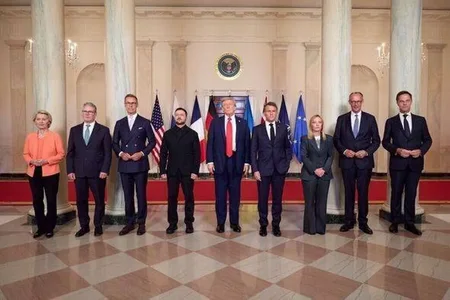
Also because, for the first time, Italy, Germany, France, and other governments in the region now find themselves in a unique situation in this war.
For years, they were sheltered by Joe Biden's American support for Ukraine (to the tune of at least 120 billion euros); then, sheltered by the idea that Donald Trump would bring about a ceasefire, to the point that the only real European plan - Emmanuel Macron's boots on the ground "readiness" - was based on it.
Today, these conditions no longer exist.
Trump has almost completely cut off American aid to Ukraine and, for the time being, even a commitment to a ceasefire. For the first time in four years, the responsibility for supporting Ukraine falls solely on the Europeans. And the costs are well known: about a hundred billion euros a year for military and civilian management, of which about ten would go to Italy if it decided not to draw on Russian reserves.
Against this backdrop, some European governments are acting as if they do not understand what is at stake. Italy is hesitating, due to friction within the majority and perhaps because it fears the seizure of accounts and facilities of Italian groups in Russia if Moscow’s reserves are tapped. Paris is making the release of frozen funds conditional on the purchase of French weapons, such as Caesar howitzers (Ukraine finds its own Bohdans more efficient, at half the price) and fears Putin’s retaliation by seizing France’s TotalEnergies’ multibillion-dollar stake in Russian companies Novatek and Yamal LNG. Germany, the Nordic countries and Poland are more sober, but in general, the Europeans are treating the Ukrainian issue as if it were a routine negotiation. Not a dramatic and urgent decision. Thus, they are not even doing anything to limit the departure of Russian oil tankers from the Baltic states, which account for 60% of Moscow’s crude oil exports.
The Kremlin's military campaign is not unstoppable. Russia is experiencing a sharp increase in bank defaults, while the economy is stagnating, inflation is rising and troops to be thrown on the front lines are becoming scarce. Providing funds to Kiev for two years and monitoring their use would send a message to Putin: at a certain point, he will have to choose between continuing the war and protecting the stability of his regime. Provided, of course, that Europe is willing to understand this./ Corriere della Sera


Lini një Përgjigje