


 Shkruar nga Pamfleti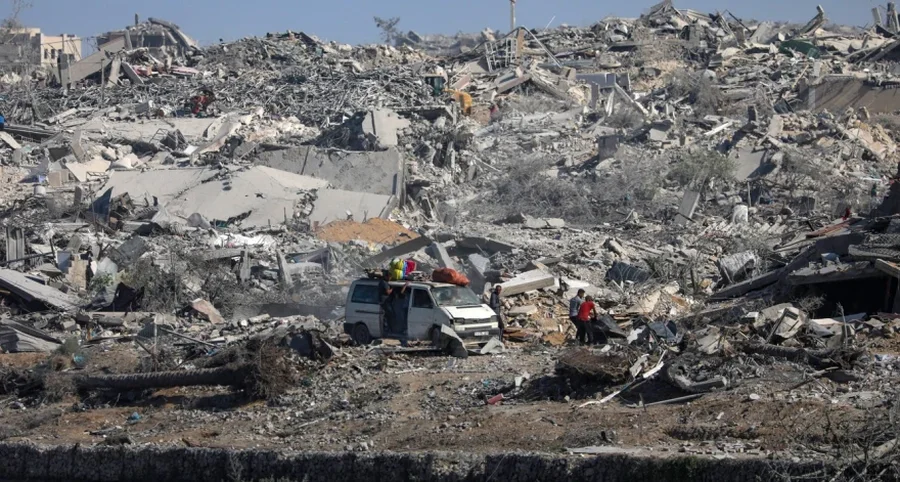
The list of potential commercial and industrial organizations wishing to be involved in the lucrative opportunities that will soon be offered in Gaza is large and growing.
Sooner or later, the regeneration of Gaza will have to be considered. Soon, assuming the ceasefire is respected, the nations that support US President Donald Trump’s peace plan will begin a reconstruction program – a task so vast in scale and cost that it almost defies imagination. In mid-October, the UN Development Programme, the World Bank and the EU jointly increased their estimate for full reconstruction to around $70 billion, replacing the previous estimate of $53 billion.
Preliminary steps, particularly in Gaza City, but also throughout the enclave, include removing mountains of rubble, clearing unexploded ordnance, and providing temporary shelter for families returning to common bombing sites.
After that, an early priority will be to build hundreds of thousands of new permanent housing units. Related to this will be the construction of necessary infrastructure, such as water and sewerage, electricity and gas networks, roads, telecommunications networks, shops and markets.
Egypt's widely supported plan for the reconstruction of Gaza, formally adopted and endorsed by the Arab League on March 4, remains a central blueprint for the coordinated multinational recovery agenda for Gaza. It envisions "a commercial port and an airport," along with industrial and commercial zones that include factories and warehouses.
The entire reconstruction project is expected to take at least a decade, and a US-backed Peace Board is being established to oversee the financing and contracting process.
Global market and fierce competition
WIRED, a respected monthly publication focused on how technology can positively impact culture, business, and science, unveiled a comprehensive plan for rebuilding Gaza on October 14. Conceived by a small group of entrepreneurs, it was, they claimed, shared with Trump administration officials. When discussing the lucrative contracts that will be offered once the program begins, it singled out more than two dozen multinational corporations, some of which told WIRED they were unaware they had been named.
In fact, the Gaza reconstruction environment is now a hotly contested global market. The reconstruction process has sparked intense lobbying and bidding by dozens of international consortiums. Leading Turkish and Egyptian construction firms are now openly competing for contracts against major players from the US, UK, EU, Gulf states and beyond.
Several Gulf states, notably Qatar and the United Arab Emirates, have pledged funds and are lobbying to influence the process. Western diplomatic efforts, such as joint investment conferences hosted by Britain, Egypt and the Palestinian Authority, underscore the competitive struggle for contracts in Gaza.
Egyptian contractors are aggressively positioning themselves for the reconstruction phase. Cairo-based firms are drafting bids and prequalification documents, aiming to take advantage of Egypt's proximity, supply chains and surplus of construction materials.
American firms are also expected to participate.
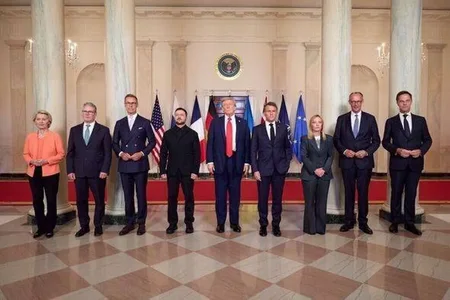
US special envoy Steve Witkoff confirmed that while “contractors from all over the Middle East” are already in discussions, US companies, particularly in technology, infrastructure and logistics, will have access through the Peace Board’s procurement process. Major pro-Trump tech investors are reportedly preparing to fund reconstruction-related ventures.
Erdogan's push
Turkey is also heavily involved in Trump’s peace plan, driven by self-interest, a mix of geopolitical ambition, economic opportunity, and domestic political gain. President Recep Tayyip Erdogan sees the peace initiative as a means to reassert Turkey’s regional power and strengthen its industrial sector. Turkish officials have said openly that they intend to play a leading role in rebuilding Gaza, and Turkish construction and aid organizations are already active.
Turkey’s IHH Humanitarian Relief Foundation has begun clearing debris and reopening roads in Gaza, and Turkish authorities have said they are ready to “mobilize companies, institutions and financial mechanisms” for broader reconstruction. Turkish firms are preparing bids for contracts covering infrastructure, housing, ports and services.
Erdogan’s ambition to dominate the Sunni Muslim world has long been an irritant in Arab circles. On October 20, Arab political commentator Ayman Abdel Nour said: “Erdogan is a master at… exploiting events, turning them to his own advantage and taking credit for them. Of course, the Gulf countries were not happy that Turkey took a leading role in Gaza, but at the same time, they wanted this conflict to end, to see a deal and to see Hamas sidelined.”
Lebanese analyst Sarkis Naoum said that while Arab states share an interest with Turkey in ending the war, the long history of Ottoman imperial rule in the region and Turkey's growing importance worry them.
The Turkish president's hostility to Israel has been widely demonstrated time and again. Yet, even as he publicly vilifies Prime Minister Benjamin Netanyahu, he has consistently demonstrated a calculated pragmatism. Turkish and Israeli contacts in the fields of defense and intelligence remain in place and functional, particularly in the fight against terrorism and energy coordination.
Important opportunities
In his new book on Turkish-Israeli relations, Joseph Epstein describes this dynamic as “collaboration through gritted teeth.” In essence, Erdogan, while publicly maintaining his anti-Semitic or anti-Zionist narrative, is actually pursuing a strategy, involving cooperation with Israel, aimed at securing geopolitical and economic benefits. His anti-Israel stance, Epstein says, is largely a public stance masking a strategy of transactional engagement.
Erdogan’s agreement to support Trump’s Gaza peace plan, for example, gave him renewed goodwill in Washington and helped lift U.S. sanctions, secure F-16 and F-35 fighter jets, and assume mediating influence in postwar Syria and Gaza. By publicly defaming Israel while cooperating with it under U.S. sponsorship, he satisfies nationalist and Islamist audiences at home, maintains strategic flexibility abroad, and repositions Turkey as an indispensable broker in the new Middle East order.
The list of potential commercial and industrial organizations eager to get involved in the lucrative opportunities that will soon be available in Gaza is long and growing. Companies such as Saudi Arabia's Saudi Tabreed (district cooling) and the United Arab Emirates' state-owned Masdar (renewable energy) are vying to benefit from the multibillion-dollar Gaza reconstruction plan.
In addition, sovereign wealth funds in the Middle East are accelerating investments in projects such as green energy, potentially essential to Gaza's future. American firms with expertise in post-conflict security systems are likely to secure contracts.
In short, the upcoming Gaza regeneration program offers significant investment, industrial and commercial opportunities for a wide range of potential players, both regional and international. The game is on./ Adapted from “Pamphlet” by “JerusalemPost”




Lini një Përgjigje