


 Shkruar nga Pamfleti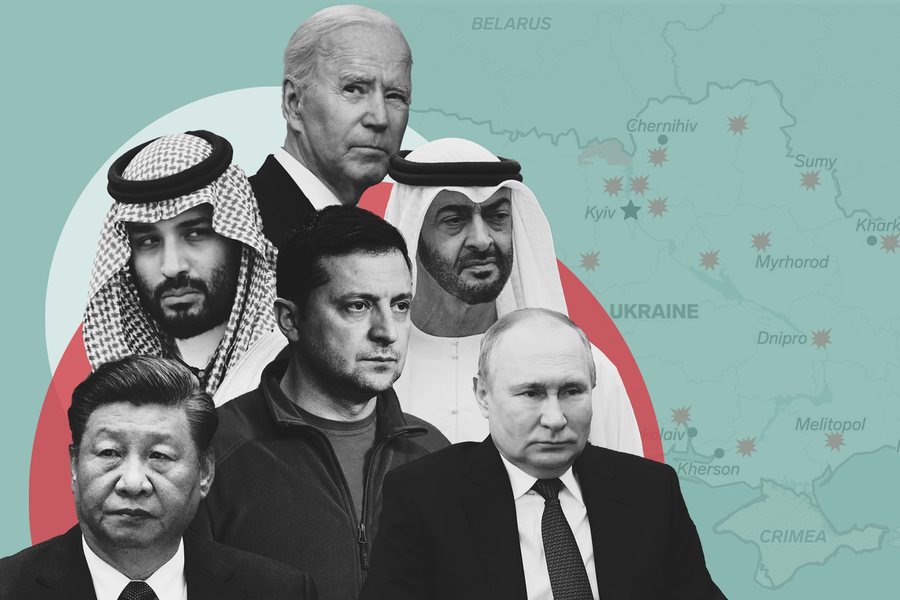
This is perhaps the most intense election year in world history.
2024 is the year of elections, as elections will be held in 76 countries. Among normal democratic countries in which elections have meaning and utility, in some other countries they are done as a pretext, because we know the result before they are officially held.
This is perhaps the most intense election year in world history.
European elections will be held in the European Union of 450 million inhabitants. Elections will also be held in India, a country of 1.4 billion, presidential elections in the US 342 million, in Indonesia 280 million, in Pakistan 245 million, in Brazil with a population of 218 million, in Russia, Mexico and Bangladesh.
About 40% of the world's inhabitants will go to vote.
Paradoxical as it may sound, many of these elections are not a "celebration of democracy", but rather a source of concern because they can lead to the undermining of democracy.
Paradoxically, in some countries elections are a danger to democracy and the rule of law. They are a geopolitical risk! Today, it is becoming clear that the global economy is not at risk from rising inflation, crashing markets or other "financial" risks.
The big threat is political risk. There are unprecedented concerns, such as the possibility of presidential elections affecting democracy in the US, a phenomenon unimaginable a few years ago.
However, other large countries have also moved into the zone of increased risk. Whether a business buys or sells in China, it cannot but seek to limit its dependence, seek diversification and other markets.
It is a huge market that is also facing unprecedented problems, such as youth unemployment, declining growth rates and an aging population.
But even democratic India is actually in danger. In some cities and regions the growth is impressive, but with a population of 800 million living in poverty and misery.
This situation becomes even more complicated because it coincides with two serious developments. The first is the climate crisis, which creates new challenges. Addressing their impacts is difficult and costly, as is eliminating gas emissions.
Complexity is also being added by technology and especially artificial intelligence.
It is the new field of competition for countries. Many countries are trying to protect the technology or gain an advantage by funding the creation of "national" applications.
In this global competition, not only the USA and China are active. Countries like Saudi Arabia and the United Arab Emirates are investing huge sums to attract scientists, while France, Germany, India and the UK are very active.
Especially in regulated sectors such as defense, health and banking, many countries do not want to rely on "foreign" applications. Additionally, applications of this type typically require the use of massive data that countries consider proprietary and sensitive information.
On the other hand, it is not reasonable to expect all these parallel systems to be efficient. It is quite certain that some of the funds spent by the states will turn out to be the wrong choice, but the governments will have done their "patriotic duty".
Is democracy in international danger? It will be saved if each country prevails over the party, if the mood for compromise prevails.





Lini një Përgjigje