


 Shkruar nga Pamfleti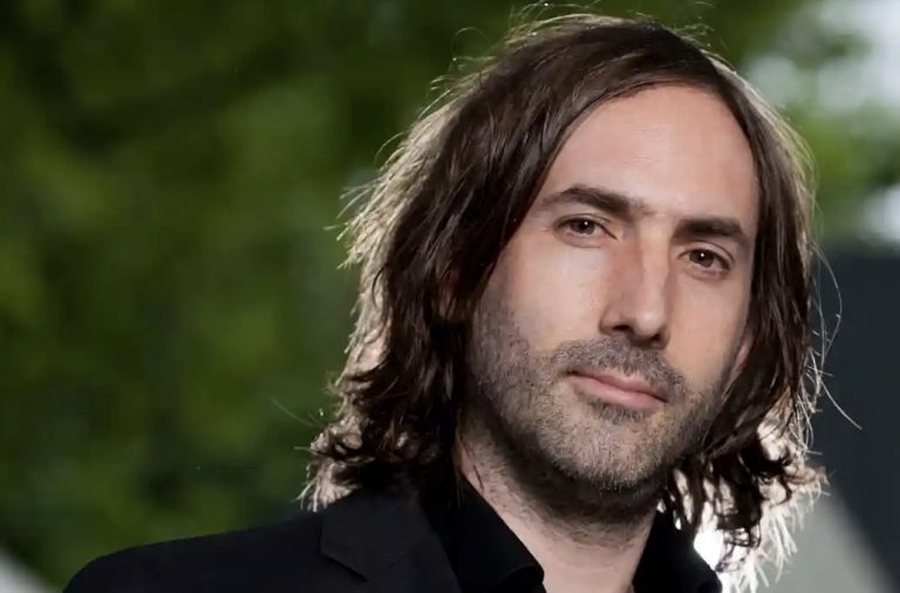
Lynch, 46, has been compared to McCarthy, Faulkner, Dostoevsky and Beckett for his epic and poetic prose and is the winner of the 2023 Booker Prize with the moving novel The Song of the Prophet.
The writer Paul Lynch has told an interview for "La Republika" he has shown details about his artistic life, specifically he has analyzed the touching novel "The Song of the Prophet".
Lynch, 46, has been compared to McCarthy, Faulkner, Dostoevsky and Beckett for his epic and poetic prose and is the winner of the 2023 Booker Prize with the moving novel The Song of the Prophet.
Interview:
When did you decide to become a writer?
"In Sicily. Autumn 2007".
Ah, tell us a little.
"Journalist, on vacation in Lipari, by taxi to the hotel. I look at the Tyrrhenian Sea. Suddenly, an epiphany, very strong. I realize that my life up until then has been a lie. Then convince yourself: I will be a writer. In an instant, all my fears disappear.”
And you started working right away?
"Of course, a story. I had it in my head for months, but never had the courage to dismiss it. Writing is failure, always: you have to give yourself the courage and permission to make mistakes.”
What story is that?
"It remained in the drawer. Now is not the time to publish it."
But you've just won the world's most prestigious award in the English language.
"Let's see. It was just a test, a draft…”.
Does the Booker Prize change your life? More pressure? Greater and oppressive expectations?
"They are inevitable, but it is not a problem. I am a very authentic person: this is the only way to find the deepest voice within us. As in the apocryphal Gospel of Thomas: "If you bring to pass what is within you, it will save you." If you don't make what's inside of you happen, it will kill you." I just need to be alone with my sentences and I'm ready to go. The problem is elsewhere."
Where?
"Next year I will have to travel a lot for "Song of the Prophet", but I am a very reserved, methodical person. Every day I write from 10:00 am to 2:00 pm, in two 90-minute sessions, which exhausts me. After that, the most I can do is read, pick up my two children from school and go shopping."
What is literature to you? Perhaps the only means to reach the truth, in a world increasingly permeated by extremism and disinformation, as stated in "The Song of the Prophet"?
"A novelist always seeks eternal truths. It holds a magical mirror to the world. In that moment small miracles happen: we identify images, symbols, metaphors that tell us who we are. It is a mystical, almost religious process. And it's essential in our age of constant noise. But we all retain a silent voice within us, a higher consciousness, the authenticity that saves us from loss. Yeats warned us: "When the hawk cannot hear the hawk, things fall apart."
In The Prophet's Song, things really fall apart: your Ireland is terrifying and claustrophobic, overrun by the far right, on the precipice of totalitarianism, while democracy and freedom are fading away.
"It's hard not to be pessimistic today. We are in a new era, with unknown implications, unraveling, especially in Europe. Recently, I re-read Hermann Hesse's Steppenwolf. It shocked me."
Why?
"I discovered it in 1998. Then I thought, relieved: luckily, everything belongs to the past. A while ago I picked it up again: pre-Nazi Germany, xenophobia, anti-Semitism… suddenly, everything about that book had become so topical. I trembled.”
Just last week in Ireland we saw far-right and racists surround Dublin and start hunting immigrants.
"It was a wake-up call for everyone, not only in my country. At the same time, the economic and social crisis brings out the worst instincts: my credit has increased by 75%. We live in an era in which even the middle class suffers every day."
Fertile ground for new, destructive extremism.
"Civilization is an ideal. But tribalism is an instinct. And instincts are more powerful. The spirit of the times is changing. It only takes one place to fall off the cliff and anything can happen. Like in Germany in the 1930s".
In "Song of the Prophet", you reinforce the concept of "radical sensibility".
"It means identifying with the other, understanding why, for example, thousands of people risk their lives on a boat. A similar dilemma occurs with the protagonist of my novel, Ellish Stack, who finds herself alone with four children after the state kidnaps her husband. Together with literature, only empathy can save us".
The struggle for survival is also central to his four other remarkable novels Beyond the Sea, the debut Red Sky in the Morning, Black Snow and Grace.
"Correct. It's my main theme: souls chasing dignity, the end of suffering. It is the meaning of life: to make sense of our existence in a world that seems to have no more time for us. Today our soul asks questions that religions are no longer able to answer, much less current society. Only literature can".
In the last year, you also had many difficulties: the long Covid, a divorce, kidney cancer, which fortunately you got through well.
"We writers are sensitive people. Pain makes us express ourselves better. But the most important thing is that... yes, I'm still here." / la repubblica – bota.al








Lini një Përgjigje