


 Shkruar nga Clea Caulcutt & Giorgio Leali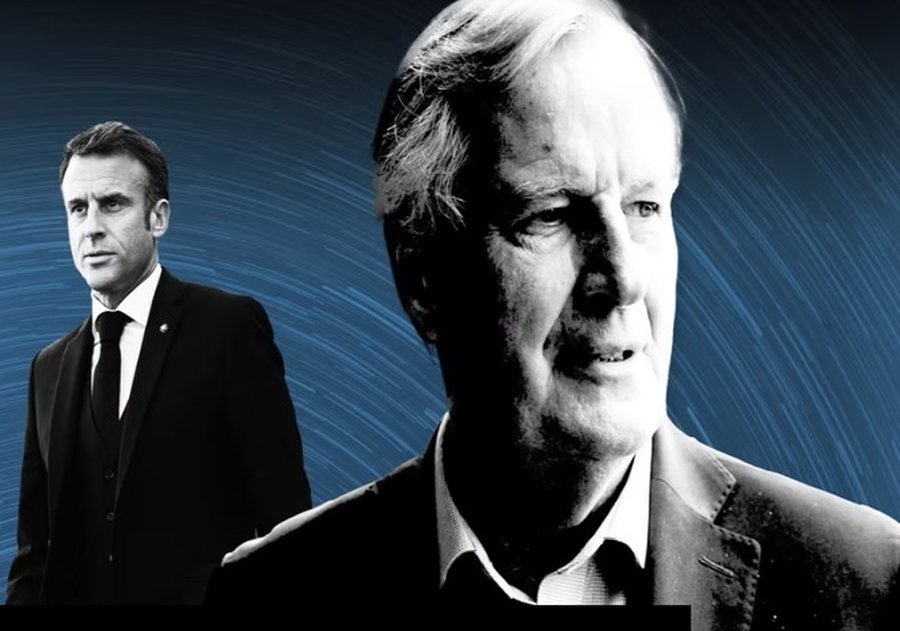
Will there be new elections under these conditions? No. The ball will be back in Macron's court.
The end of Michel Barnier's extremely short tenure as France's prime minister looks imminent as his government faces a no-confidence motion this week, which it is expected to lose. This vote could also cause a financial crisis for the second largest economy of the Eurozone, and scare the entire bloc.
The French Prime Minister has tried to calm the markets and approve a budget that will fill a black hole in French finances. But these efforts may turn out to be futile. On Monday, Barnier, the EU's former chief Brexit negotiator, used a controversial constitutional maneuver to bypass parliament and pass a bill to fund social security.
In response, the left-wing opposition presented a no-confidence motion, which will be put to a vote today or tomorrow. Opposition forces, including the leftist New People's Front coalition and the far-right National Rally, have warned they will vote to topple the government.
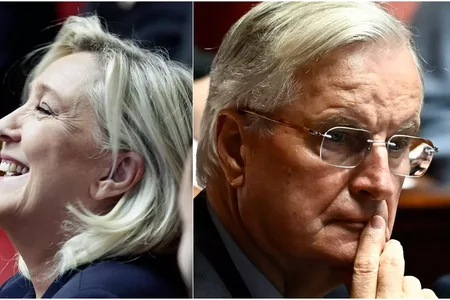
"Enough with the mistreatment of the French... We can't leave things as they are" - the leader of the National Rally, Marine Le Pen, told reporters on Monday. If parliament ousts Barnier, it would be the first time a French government has fallen since 1962.
Another far-right leader, Jordan Bardella, has said that the government will fall, unless "a last-minute miracle" happens. Barnier was appointed by President Emmanuel Macron in September in a last-ditch effort to find a way out of the political crisis, which was triggered by the French president himself calling early elections after losing the European elections.
But Barnier had only the fragile support of Macron's coalition and the conservatives in parliament. With the New Popular Front, which won the most seats in early elections, vowing to topple the government, Barnier's survival depended on far-right leadership.
But now Le Pen is sure to torpedo the current government. Will there be new elections under these conditions? No. The ball will be back in Macron's court. The president, whose mandate runs until 2027, could resume talks on appointing a prime minister and a new government.
But even if he wanted to, Macron cannot call new parliamentary elections, as he called a pair in July. According to the French constitution, he cannot call new elections before next summer. And this means that political uncertainty and unrest can last for weeks and even months.
But things could change if Macron himself resigns, which would trigger new presidential elections. He has firmly denied this scenario, but more and more voices are calling for his departure.
"It is an idea that can start gaining ground. Marine Le Pen can topple any government until Macron resigns," says Benjamin Morel, political scientist at Panthéon-Assas University in Paris. On the other hand, appointing a new prime minister is not so simple.
Because the National Assembly is divided into 3 political blocs: Macron's centrists, the far-right National Rally and the left-wing coalition. They are poles apart in politics, and refuse to work together. So this means that any new government can be overthrown within a few days.
Macron could appoint another right-wing prime minister, much like Barnier, who would have the support of centrists and conservatives, and who, like Barnier, could try to win Le Pen's support. But he will be forced to make major concessions to the far-right leader.
Is France headed for a debt crisis like Greece? Not yet, but the situation could deteriorate rapidly. The political crisis has appeared at a very bad moment. France has been weakened by a huge deficit, which Barnier is trying to curb with deep spending cuts and tax hikes.
The possible fall of his government is spooking financial markets, so much so that on Monday Greek bonds had a higher value than French ones. In recent weeks, Barnier's allies and analysts have repeatedly warned that France's political crisis could turn into a new eurozone crisis.
The stock market index of the country's 40 largest companies, the CAC40, fell 0.2 percent on Monday. However, investors say France is not yet on the brink of a financial crisis, or at least not yet. The rating agency S&P said last week that "the country's economy remains stable, despite the political uncertainty".
If the Barnier government is ousted this week, its budget plans for 2025 will also be scrapped. However, Barnier or his successor could ensure France has a budget for next year, thanks to several stop-gap mechanisms.
The most important of them concerns the issuance of a "special law", which allows the government to keep the last year's budget for several months, until a new budget is approved. This law will be introduced by France's new or outgoing government. But this scenario is likely to worry Brussels and the financial markets, which want Paris to reduce its debt./ Adapted "Pamphlet", from "Politico.eu".





Lini një Përgjigje