


 Shkruar nga Pamfleti
The US president has set unrealistic goals for how to stop the war in Ukraine from the start. For at least a month, he has found himself in a trap from which it will be difficult to escape.
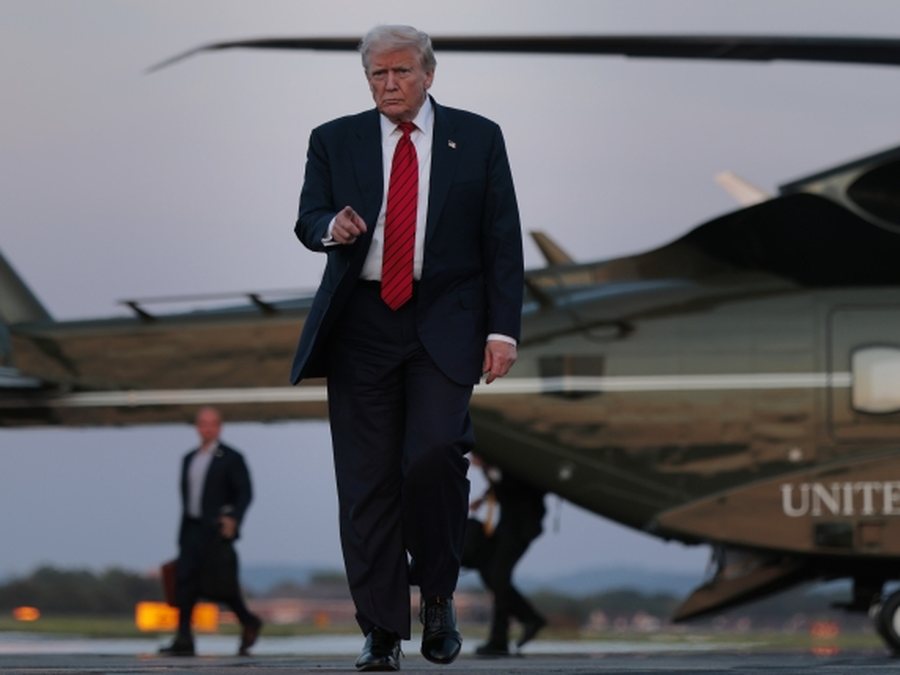
Donald Trump's latest move appears to be an attempt to set a trap for his NATO allies, forcing them to make an important and potentially dangerous choice in international relations. In a letter sent to 31 other Alliance partners and later reposted on his "Truth" platform, he announced that he is ready to impose tough sanctions on Russia, but only if all NATO countries agree and stop buying oil from Moscow.
He goes even further, demanding that his allies impose "50 to 100% sanctions on China," the country that is the largest buyer of Russian hydrocarbons, claiming that only this way can the war end.
Trump's move appears to be a pushover for his allies, but it also reflects his usual strategies for avoiding major international responsibilities and shifting them to other hands. Once again, he is proposing a scenario that forces other states to decide the fate of their relations with the US's two biggest rival powers, Russia and China, and requires a solidarity that may be too dangerous to achieve.
An EU spokesperson, moreover, immediately clarified yesterday that "the Union is ready to cooperate with the United States on sanctions against Russia, but that European sanctions "do not apply extraterritorially, following a long-standing principle."
In other words: we cannot target China because it buys oil and gas from Moscow.
At this point, even Trump's move risks ending in nothing, even though he claims to have "lost patience with Putin." It's a phrase we've heard many times in recent months. And, for now at least, the White House leader has yet to break the sad streak of setbacks, setbacks, and failures that has marked his relationship with the Kremlin.
Of course, Trump's problem is that he set unrealistic goals from the beginning. Starting with the election campaign, in the summer and fall of 2024: "I will end the war in 24 hours."
In reality, Trump has vacillated wildly and continues to do so, confusing his own cabinet ministers and allies, but apparently not the United States' adversaries. It is worth remembering that at least until last April, the US president was more focused on delegitimizing Volodymyr Zelensky's position than Putin's.
Then, after his “confession” with the Ukrainian leader during Pope Francis’ funeral in St. Peter’s Basilica on April 26, Trump seemed to have corrected his stance, moving toward Zelensky. But again, he tried to reconnect with Putin, offering his terms to effectively secure Ukraine’s surrender.
For at least a month, the American leader has been trapped in a trap from which it will be difficult to escape.
On the eve of his summit with Vladimir Putin in Anchorage, Alaska, he declared in sharp tones: either there will be a ceasefire, or I will adopt severe sanctions against Russia. The ceasefire has not materialized. Nor have the sanctions happened.
The turning point seemed to have arrived in mid-August.
Putin accepted the invitation for a face-to-face meeting with Trump, which was supposed to be followed by a triangular meeting between the leaders of Moscow, Kiev and Washington. A few weeks later, it became clear to Trump as well that
Putin had no intention of engaging in direct talks with Zelensky. Indeed, from that moment on, Russian missiles and drones began attacking the Ukrainian civilian population with even greater violence.
Finally, the drone incursion into Polish territory a few days ago. The Trumpian pendulum swings again: on the one hand, he downplays the "incident", dismissing it as "a possible mistake". On the other, he announces that he is "fed up" with Putin.
However, for the moment, the results achieved are still zero. Meanwhile, Russia has slowly seized more ground from the Ukrainians and has tested the military and political stability of the Atlantic Alliance. Trump has been unable to intervene. Or, according to another school of thought, he did not want to. This is the great doubt that, apparently, will follow us for a long time. / Adapted from Corriere della Sera





Lini një Përgjigje