


 Shkruar nga Pamfleti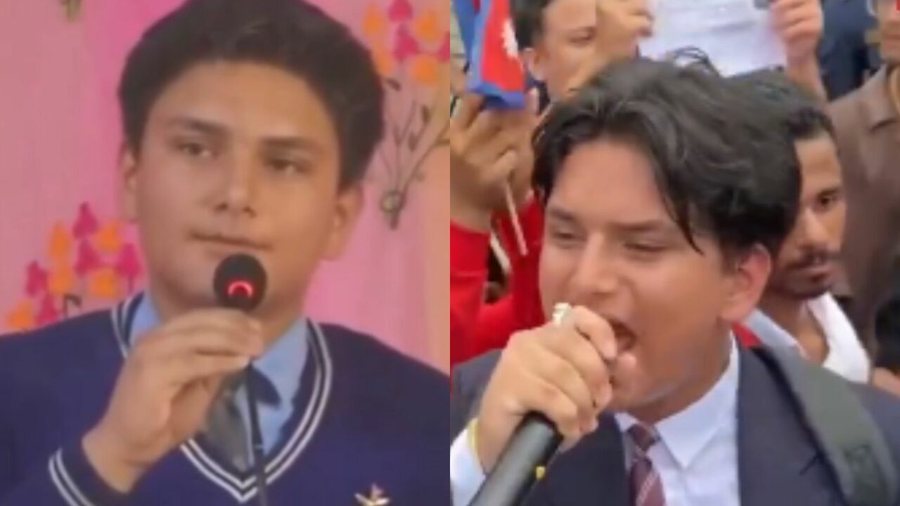
Nepal, a land of high mountains and deep cultural soul, is experiencing a rare shake-up in its political foundations. At the center of this movement that has taken to the streets and shaken state institutions is not a traditional political figure, nor a rebel commander, but a 16-year-old unknown to public opinion until a few months ago: Avishkar Raut.
Avishkar, a simple student at Holy Bell English High School in Kathmandu, emerged on the national stage in the most unusual way. During a routine school function, he delivered a speech that would turn the tide of popular anger. His speech was not a political rallying cry in the traditional sense, it was a heartfelt, emotional and powerful outburst that spoke to an entire generation tired of injustice, corruption and shattered hope.
His words, loaded with metaphors but direct as a call to action, spread rapidly on social media. For thousands of young Nepalis, he was no longer an ordinary student but the symbol of an awakening generation. In less than a week, the speech went viral, translated into dozens of languages and used as an audio challenge on TikTok, Instagram and other platforms that usually avoid political topics.
After this moment, the protests that had begun as sporadic expressions of discontent took on a new rhythm. Young people, organized through social media, filled the streets of cities and towns. In a scene reminiscent of the “Arab Spring” movements, crowds of young people faced tear gas and police beatings as they marched with Raut’s speech recorded on portable loudspeakers.
At the height of the protests, government buildings in Kathmandu and other cities were burned, ministers were lynched in public, and the government, caught off guard, began to collapse under the weight of the popular revolt. Some cabinet members resigned, while others faced immediate prosecution. Although the government used harsh repression, ordering mass arrests and dispersing protesters with rubber bullets and even firearms in some cases, the anger did not subside. It had passed the point of no return.
Avishkar Raut, though young, did not cower. He faced pressure, was interviewed by international media and refused political protection. He became the voice of conscience of a people who were tired of being silent. Without party, without power, without personal interest, but with a pure passion that touched the hearts of the people, he revived a nation that had fallen into apathy.
In a society dominated by political dynasties and endemic corruption, a two-minute speech by a teenager restored citizens' dignity and the courage to demand change. Avishkar did not call for violence, but for awareness. He did not articulate ideological platforms, but moral appeals.
In the eyes of the people, he is now more than a student, he is a torch that illuminated the darkness. And even if Nepal will face new political challenges in the wake of this outbreak, one thing is clear: the younger generation is no longer silent. They have their own voice, and Avishkar Raut was the one who woke them up.





Lini një Përgjigje