


 Shkruar nga Pamfleti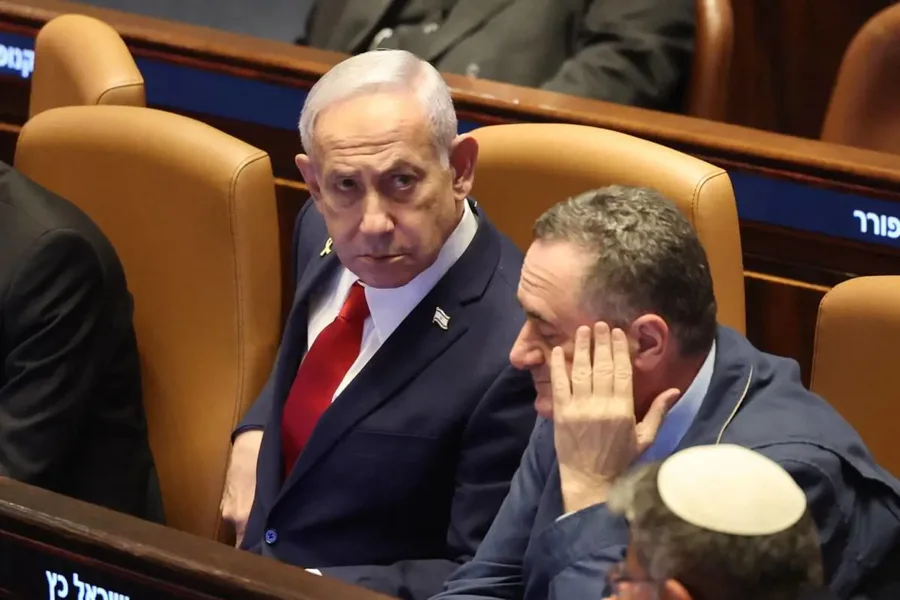
A silent but profound clash, where political ambitions and opposing visions for the future of the Jewish state intertwine...
In an Israel racked by the winds of war and internal tensions, Prime Minister Benjamin Netanyahu finds himself at the center of a contest that is taking place not only on the borders of the Gaza Strip, but also in the most secret corridors of power. Generals, intelligence chiefs accustomed to striking from afar, and judges determined to maintain the country's balance, are closely following his every move. It is a silent but profound clash, where political ambitions and opposing visions for the future of the Jewish state intertwine, while in the background, the conflict with Hamas and international uncertainty dictate the timing of the most difficult decisions.
The ranks of the IDF include commanders hardened by decades of conflict, tough on the ground but not in line with the plans of the prime minister and his ultranationalist allies. At the head of the intelligence services are men capable of striking at Israel's enemies everywhere, but alarmed by the concentration of power in the hands of the prime minister. In the courts, the judges are determined to protect the democratic and secular nature of the state and seek a stable balance with its Arab neighbors.
The current political conflict is rooted in the idea of a "Greater Israel" that Netanyahu has cultivated since his inception. Since 1996, when he surprised Shimon Peres by winning the elections, his slogan has been "from the river to the sea," a formula that includes all the occupied territories. With the support of Donald Trump, today the prime minister sees the annexation, full or partial, of the West Bank and Gaza within reach.
The main domestic opponent is Chief of Staff General Eyal Zamir, who has led the IDF since last March. A veteran of the 2002 Jenin operations, Zamir does not oppose the fight against Hamas or the release of hostages, but he doubts the possibility of a lasting occupation of Gaza. Also opposed to Defense Minister Israel Katz's plan to create a "humanitarian city" in Rafah to concentrate a large part of the enclave's population, he has called it "unfeasible" and a prelude to a mass expulsion, a stated goal of ultra-fascist leaders Itamar Ben Gvir and Bezalel Smotrich. However, Katz has recently come to Zamir's defense, accused by Israeli Prime Minister Yair Netanyahu's son of being behind a "rebellion and an attempted military coup."
Zamir continued to warn against the consequences of a full-scale invasion of the Gaza Strip. "The operation will seriously endanger the lives of the hostages and cause significant losses to the armed forces," he declared, explaining that he supports "the approach of encirclement and targeted raids on control positions to weaken Hamas, but opposes a total invasion that would also include areas where hostages are being held." The general added that "such an operation could last for months, increasing the pressure on the regular army and reserves."
Resistance also came from the Shin Bet. Director Ronen Bar, already under pressure for failing to predict the October 7 attack, reported to the Supreme Court that the prime minister had secretly asked him to investigate citizens protesting against judicial reform. Netanyahu called him a “liar” and fired him, but the court suspended the order. The same fate befell Attorney General Gali Baharav-Miara, the first woman to hold the post, the daughter of a Palmach hero and a staunch opponent of judicial reform. She too was dismissed and later reinstated by the judges, who dismissed the government’s accusations of a “judicial coup.”
Supreme Court Chief Justice Isaac Amit, in office for only a few months, now finds himself managing the most serious institutional crisis in Israel's history. The government considers his appointment "illegal" and Justice Minister Yariv Levin has ordered a boycott. Amit will have to decide on a reform aimed at limiting the autonomy of the judiciary, a key issue in Netanyahu's internal battle.
The prime minister, determined to "clean up everything" both domestically and in Gaza, must also deal with defections within the coalition.
He has already lost the support of the leader of United Torah Judaism, Yitzhak Goldknopf, and the Shas party is threatening to leave. The split is over the exemption from military service for yeshiva students: the religious right is now divided between those who simply want to study Torah and those who aspire to fight. / Adapted from Il Giornale /







Lini një Përgjigje