


 Shkruar nga Anne-Sylvaine Chassany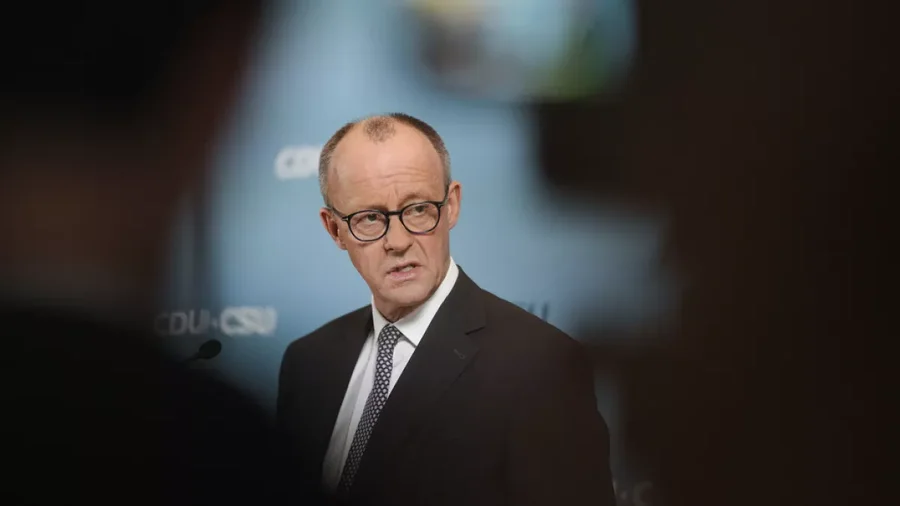
There will no longer be a lack of financial resources to defend freedom and peace on our continent. Germany is back.
Germany's incoming Chancellor Friedrich Merz has agreed a deal with the Green party to inject hundreds of billions into the country's aging military and infrastructure, paving the way for his spending package to be approved by parliament next week.
The Greens, who earlier this week had threatened to block the deal, secured concessions from Merz, including more investment in the green transition and expanding additional defense spending to cover support for Ukraine, civil protection, information technology and intelligence agencies.
" There will no longer be a lack of financial resources to defend freedom and peace on our continent. Germany is back. Germany is making a major contribution to defending freedom and peace in Europe ," Merz said on Friday.
In a further sign of support for Merz's plans, the country's constitutional court on Friday rejected legal challenges from the far-right Alternative for Germany (AfD) and far-left Die Linke parties seeking to block a parliamentary vote on the package.
The Greens' co-leader in the German parliament, Katharina Dröge, said her party wanted to ensure that the borrowed money was invested in the future, in a modern economy. As part of the compromise, a fifth of a planned €500 billion infrastructure fund to be provided over the next 12 years would be allocated to the green transition.
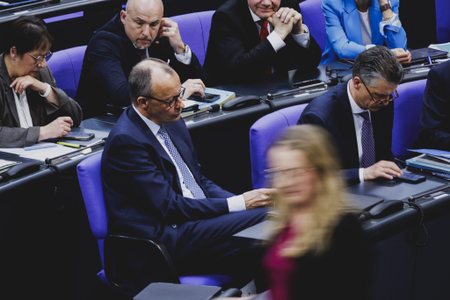
Merz needed the support of the Greens to pass his stimulus package with a two-thirds majority in an emergency session of the old parliament on Tuesday.
His Christian Democrats (CDU/CSU) and its potential coalition partner, the Social Democratic Party (SPD), still command a supermajority with the Greens in the old assembly – but they no longer do so in the new Bundestag, which was elected in February and will take office this month.
Merz last week agreed with the SPD to loosen the country's strict constitutional borrowing limit for defense spending and create a 500 billion euro fund to modernize Germany's transport, energy, healthcare and communications infrastructure - a move that reverses more than two decades of fiscal conservatism.
The plan, which requires constitutional changes, would boost Europe's largest economy, which has been stagnant for more than five years, and send a signal to Europe that Germany is ready to play a bigger role in the continent's security, economists and defense experts said.
“Essentially, it creates significantly more room for manoeuvre for the government in both infrastructure and defence ,” said Armin Steinbach, a professor at HEC. The new fiscal ceiling for Germany’s budget will be EU fiscal rules, no longer the German debt brake.
German borrowing costs have risen since Merz outlined his spending plan, which allows unlimited borrowing for defense spending, as investors bet on a massive increase in bond issuance and brighter economic prospects for Germany.
Yields on 10-year Bunds rose to 2.94 percent on Friday, their highest level since October 2023. The euro rose 0.4 percent to $1.089, extending its gains against the dollar this year to more than 5 percent.
The Greens earlier this week said they would oppose the package, prompting Merz to signal he was ready to make concessions.
" This compromise was probably the biggest mountain Merz had to climb, but more mountains remain next week ," Steinbach said.
On Friday a crucial legal hurdle was overcome when the constitutional court ruled that the outgoing Bundestag could adopt such fundamental decisions.
However, the constitutional changes must also be supported by the Bundesrat, the upper house of parliament, which represents the country's 16 states, with a two-thirds majority. The Bundesrat will vote on the package on March 21.
The CDU, SPD and Greens, who together do not have a two-thirds majority in the Bundesrat, will have to win over either the conservative Free Voters, which governs in Bavaria with the CDU’s sister party, the CSU, or the liberal FDP, which is in coalition governments in two states. Both the FDP and the Free Voters are traditionally opposed to easing the country’s debt curbs. /Adapted from “Pamphlet” by “Financial Times”



Lini një Përgjigje