


 Shkruar nga Pamfleti
The Thirst That Kills: How Turkey, the Climate Crisis, and Diplomatic Silence Are Killing Millions in Iraq and Syria
The year 2025 has turned into one of the darkest moments for Iraq's water resources in a century. According to the Ministry of Water Resources in Baghdad, water reserves have fallen to just 10 billion cubic meters, far below expectations of 18 billion, marking the lowest level in the last 80 years. The cause? Lack of rainfall, scant snowmelt and drastic interruptions in flows from Turkey to the Tigris and Euphrates rivers.
In southern Iraq, water flows have decreased by 27% compared to a year earlier. This has accelerated the intrusion of saline waters from the Shatt al-Arab, with salt concentrations reaching up to 40,000 units, making the water unusable for agriculture or consumption without sophisticated treatments.
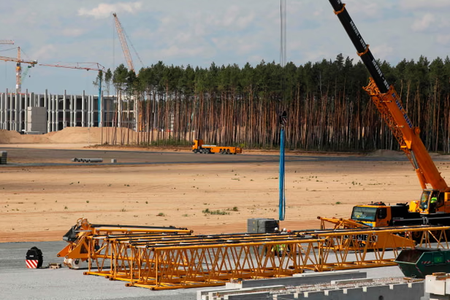
In Syria, the contrast between international agreements and the reality on the ground is stark. Turkey, which controls over 90% of the flow of the Euphrates and a large part of the Tigris, is accused by Damascus of violating a 1987 agreement that guaranteed 500 m³/s of water at the Syrian border. In reality, at many times, the flow has been well below this limit. Meanwhile, Turkey continues to expand its mega water project, the “GAP”, with the Ilısu Dam now operational and with a capacity of 10.4 billion m³. The construction of the upcoming dam in Cizre is expected to further increase Turkey’s water control capacity, at the expense of Syria and Iraq.
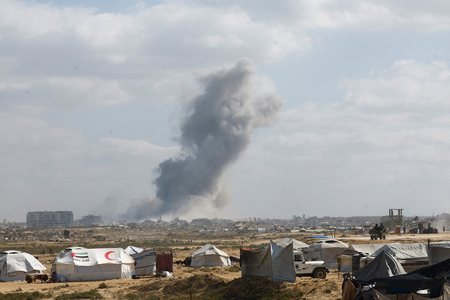
In northeastern Syria, the Tishreen Dam has become a symbol of the conflict. Between December 2024 and January 2025, Turkish airstrikes disabled this strategic facility, leaving around 413,000 residents in Manbij and Kobani without water and power. Popular protests against the Turkish intervention ended with 25 people killed and over 200 injured, including medical personnel.
In Iraq, the city of Basra has become the most severe example of a water sanitation crisis. Increased salinization has wiped out up to 30 species of freshwater fish, led to the extinction of over 2,000 beekeeping farms, and reduced honey production from 30 to just 6 tons per year. Since 2018, when over 118,000 people were hospitalized due to contaminated water, the situation has only worsened. Plants like Abul Khaseeb's are operating at only half capacity, covering only 50% of the area's needs.

Water scarcity has become a direct threat to health: the use of unfiltered water leads to outbreaks of diarrhea, hepatitis, parasites and other water-borne diseases. The increase in dust in the air due to desertification has increased the incidence of respiratory diseases; in summer, pollution levels (PM₂.₅) have reached up to 190 µg/m³ in southern Iraq.
Agriculture is collapsing. In Dhi Qar province, falling water levels have displaced thousands of families and dried up the historic marshes of Mesopotamia. Farmers who once had 120 buffaloes now barely keep 50, due to a lack of pasture and water. In Syria, over 14.5 million people are food insecure, 9.1 million in deep crisis and 5.4 million at risk of famine. Wheat yields have fallen by 40% compared to last year.
When water is scarce, it becomes a weapon. Low river levels increase the concentration of chemical and microbiological pollutants. Distribution systems are outdated, broken, and lack effective chlorination. Cholera has returned to Syria since 2022 and has seen outbreaks in 2023 and 2024. In Iraq, in 2024 alone, over 1,200 confirmed cases were recorded with several deaths. Communities are forced to use shallow wells and contaminated springs, a recipe for epidemics. Children and the elderly are most at risk, with severe cases of dehydration and acute diarrhea.
The asymmetrical relationship between Turkey and its neighbors is an undeniable fact. In the summer of 2025, Baghdad accused Ankara of having promised 400 m³/s, but having only delivered 120 m³/s. The agreements of the 1980s are outdated and without guarantees for public health. Every new dam in Turkey is presented as “modern management”, but for the peoples of Iraq and Syria it means: hunger, disease and displacement.
Solutions are not lacking, but they require political will: binding agreements on minimum flows, real-time data transparency, humanitarian waterways during crises, investments in modern networks and an integrated epidemiological surveillance system. / Adapted from "Pamphlet" by "Inside Over"






Lini një Përgjigje