


 Shkruar nga Pamfleti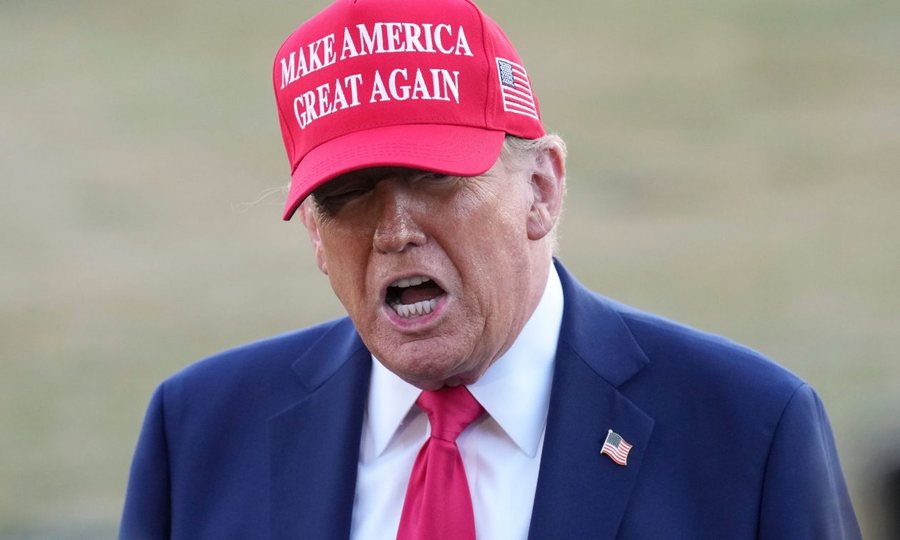
China announced today that it will impose new tariffs on a range of agricultural imports from the United States next week, in response to Washington's tariffs. The Chinese Ministry of Finance said that additional tariffs of 15% will be imposed on chicken, wheat, corn and cotton, with additional tariffs of 10% on sorghum, soybeans, pork, beef, aquatic products, fruits, vegetables and dairy products.
Beijing has imposed broad tariffs on American food imports and said 15 American companies will no longer be able to buy from China without a special license, including Skydio, which is the largest American drone manufacturer and a supplier to the US military and emergency services.
Lu Qingjian, a spokesman for China’s National People’s Congress, criticized the United States for violating World Trade Organization free trade rules. “By imposing unilateral tariffs, the US has violated WTO rules and undermined the security and stability of the global industrial and supply chain,” he said. President Trump says his tariffs are crucial to stem the flow of fentanyl, a synthetic opioid that has caused hundreds of thousands of overdose deaths in the United States.
The US imposition of tariffs “will deal a serious blow to dialogue and cooperation in the fight against drugs,” Lin Jian, a spokesman for the Chinese Foreign Ministry, said at a news conference. Trump has now imposed additional tariffs of 20% on almost all products from China since he took office in January.
It announced 10% tariffs on February 4 and followed up with a new round of 10% tariffs on Tuesday. At the same time, it also imposed 25% tariffs on Mexico and Canada, after a month-long delay.
China responded to the February tariffs by immediately announcing that it would begin imposing additional tariffs on liquefied natural gas, coal and agricultural machinery from the United States six days later. But those tariffs together hit only about 1/10 of American exports to China, making them much more limited than Trump's overall tariffs.
China’s action on Tuesday was much broader. China is the main overseas market for American farmers, exerting significant influence on prices and demand in Midwestern commodity markets. Targeting food imports, Beijing repeated its response to tariffs imposed by Mr. Trump during his first term. China imposed tariffs on American soybeans in 2018 and shifted most of its purchases to Brazil.
But the strategy backfired: Trump responded by imposing more tariffs on Chinese products. Because China sells far more to the United States than it buys, it quickly ran out of American products to impose tariffs on. And American farmers were able to find other markets for their crops.
China has potential “trade weapons” that go beyond food tariffs. In early February, Beijing implemented restrictions on exports of critical minerals to the United States, many of which are used in the production of semiconductors and other technology products.
Blocking key materials from reaching the United States, a tactic known as supply chain warfare, poses significant risks for China. Beijing is struggling to attract foreign investment. China’s leaders have also said that trying to boost its domestic economy, which is burdened by the fallout from a devastating real estate slowdown, is a priority.
Beijing may make it even harder for American companies to do business in China, but that could also hurt foreign investment. In addition to effectively barring 15 companies from buying Chinese products, China's Ministry of Commerce on Tuesday added 10 more American companies to what it calls an "unreliable entity list," preventing them from doing any business in China.




Lini një Përgjigje