


 Shkruar nga Pamfleti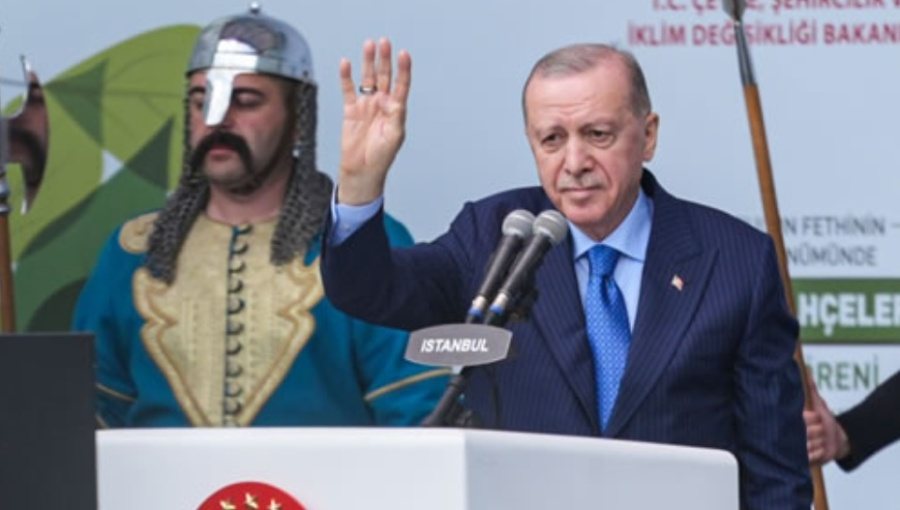
As the only leader these young people have ever known, he once seemed timeless, a fact of life. But not anymore: his mistakes have doomed him. Polls suggest that if elections were held tomorrow in Turkey, he would not win. Whatever the future holds, Erdogan's legacy is likely to be defined by his decision to imprison his main opponent.
Turkey's authoritarian populist leader, Recep Tayyip Erdogan, is fighting for his political survival, says an academic and analyst at the Council on Foreign Relations in an article published by Foreign Affairs titled "The End of Erdogan: How the Turkish Leader Engineered His Own Destruction."
Seeing Erdogan’s “difficult situation” in the early hours of March 19, he “orchestrated a raid on the home” of Ekrem Imamoglu, the popular mayor of Istanbul and his main political rival, who was arrested and indicted on “highly dubious charges, including baseless accusations of corruption and terrorism.”
Henri J Barkey argues that “the charismatic and competent Imamoglu could be a uniquely threatening rival. But in truth, Erdogan’s decision to arrest Imamoglu did not create this crisis. It reflected a growing weakness.”
“ Erdogan was already facing growing public fatigue with his presidency. His arrogance and domineering leadership style have eroded once-widespread enthusiasm for his rule, making him increasingly desperate to curb a now-irrepressible discontent.
A Pew Research Center poll in March 2024 found that 55 percent of Turkish adults had an unfavorable opinion of Erdogan, and his party lost the 2024 municipal elections.
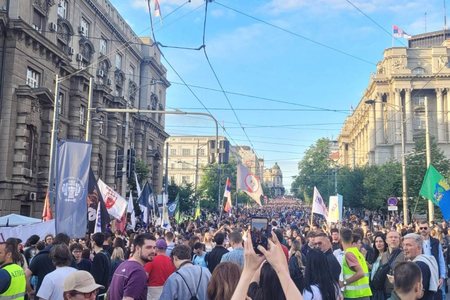
“The depth, scope and duration of the recent protests against the decision to imprison Imamoglu are unprecedented: demonstrators combined their street protests with organized boycotts of pro-Erdogan businesses, online activism and civil disobedience. Imamoglu’s arrest also brought new instability to Turkey’s already struggling economy.
“Erdogan has responded by doubling down and arresting, in a sustained manner, hundreds of Imamoglu’s associates, including colleagues, friends, former business partners, members of the Turkish business community and family members. But these crackdowns now look less like the acts of a powerful authoritarian and more like the beating of a threatened, insecure and vulnerable man.”
Although Imamoglu remains in prison, it is Erdogan who is trapped, says Barkey, arguing that his growing unpopularity has reduced his ability to change the constitution or force early elections, the two legal options he could pursue to find a path that would allow him to extend his presidential term.
Four years from now, when his current presidential term ends, Erdogan will almost certainly no longer be president, Barkey predicts. “The fact that so many young Turkish citizens dared to demonstrate against him reflects the irreversible degradation of his popularity.”
“As the only leader these young people have ever known, he once seemed timeless, a fact of life. But not anymore: his mistakes have doomed him. Polls suggest that if elections were held tomorrow in Turkey, he would not win. Regardless of future developments, Erdogan’s legacy is likely to be defined by his decision to imprison his main opponent – and will serve as an example of how even the most fearsome authoritarian leaders can overstep their bounds.”
According to Barkey, “by the time Imamoglu arrived on the scene, Erdogan had managed to turn outbursts of public opposition or the emergence of competitors into excuses to further strengthen his authority.”
He adds: “Although he cultivates an image of omnipotence and infallibility, Erdogan is remarkably weak. Turkish prisons are now filled with politicians, journalists, academics and citizens whose words or actions have been interpreted as offensive or oppositional.”
“ Individuals often languish in detention for months, awaiting trial for alleged criminal offenses as trivial as a social media post from years past that is deemed insulting to the president. Between 2014 and 2020 alone, Erdogan’s government investigated approximately 160,000 Turks for insulting the president and prosecuted 35,000.”
Imamoglu, Barkey notes, “is the first politician in years to seriously threaten Erdogan’s hold on power,” and Turkey’s leader of 22 years now wants to survive the crisis provoked by his imprisonment “by relying on brute force, as he did during the Gezi Park protests of 2013. But his overreach has inadvertently united and empowered the Turkish opposition. Labeling protests and economic boycotts as terrorism or treason, or banning marches, is less successful today because the opposition now has an attractive leader in Imamoglu, as well as a unifying idea: that Turkey deserves a chance to build a democracy.”
" The longer Imamoglu remains imprisoned, the more his stature grows. It is only a matter of time before comparisons are made between him and figures such as Malaysian Prime Minister Anwar Ibrahim or Czech playwright Vaclav Havel," Barkey said.
And he concludes: “The fact is that the intransigent Erdogan has run out of room for maneuver. By choosing the time and manner of his departure, he can help ease the transition to a new leader and ensure that Turkey is at peace with itself. He can still shape his legacy.”
“ However, his personality suggests that he is unlikely to undertake such a change. If he sticks to his typical approach, there is a considerable risk that the Turkish public will turn decisively against him – and that his long and eventful tenure in office will be remembered more simply as an era of autocracy.”
Henry J Barkey is Professor Emeritus of International Relations at Lehigh University and Senior Fellow for Middle Eastern Studies at the Council on Foreign Relations in New York. / Adapted Pamphlet/



Lini një Përgjigje