


 Shkruar nga Rafael Pinto Borges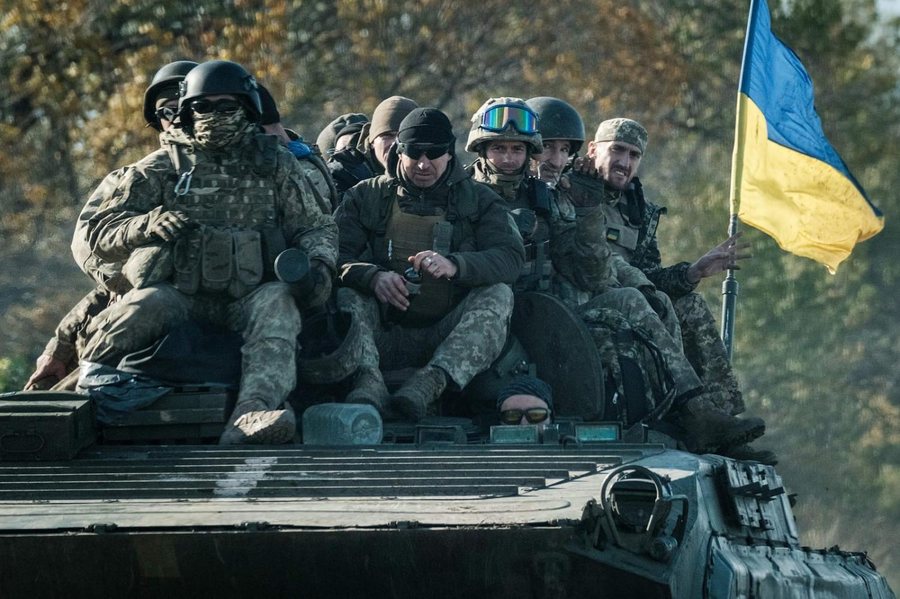
The war could go on forever...
Under current conditions, only Ukraine's withdrawal from the remaining 4 regions already annexed by Russia can avoid complete collapse and worst-case scenarios...
It's a scenario that European leaders would do well to consider as Kiev enters the Washington-sponsored peace process with great disappointment: while the White House is determined to end the war in Ukraine, the Europeans are telling Zelensky that there is no need for peace.
The war could go on indefinitely, they say; and if the Americans want to leave, Europe could step in to fill the void. But Zelensky would be foolish to believe that the Europeans will save him from the forces of reality. Europe, the last bastion of the once-impregnable pro-war consensus, is a continent of beakless hawks. Ukraine cannot defeat Russia with European support alone.
In such a scenario, it would capitulate. Ukraine’s current predicament reminds me more and more of that of the Second Spanish Republic, after its defeat at the Battle of the Ebro in late 1938 destroyed any remaining hope of changing the course of events.
The equivalent of the Ebro in Ukraine was its disastrous counterattack in 2023. Since then, Kiev’s position has become increasingly unstable. As the public loses its will to fight and the political squabbles in Kiev become too loud to ignore, the conditions are increasingly ripe for a breakdown of order, and for a very serious internal crisis.
In March 1939, convinced that the war was lost and that its prolongation was causing an unnecessary and useless loss of human life, Spanish Republican officer Segismundo Casado overthrew the pro-war government of Juan Negrín, leading to the collapse of the Republic and the complete and unconditional victory of General Franco.
Such fears seem even more serious when you consider that Zelensky is now a deeply unpopular leader. Polls show that he would lose the new election against former general Valeriy Zaluzhniy by 25-75 percent of the vote.
And this is a scenario that European leaders would do well to consider. The massive demoralization of soldiers and society puts the country on the brink of collapse. As the Russian Empire in 1917, or Germany in 1918, showed, military and political collapse occurs gradually, then accelerates suddenly.
Whether through an escalation of political warfare in the capital, due to a major advance of Russian troops, an attempted coup, the start of large-scale protests, it is not impossible to imagine a scenario in which Kiev's military experiences a breakdown, enabling not a negotiated end to the war that secures at least a Ukrainian buffer zone for Europe, but a complete triumph for Russia.
In this case, Moscow’s forces would likely march on Odessa, annex 30-50 percent of Ukrainian territory, and likely establish themselves on large parts of the Ukraine-EU border. This development would not only be a severe blow to the EU’s image, but would also shift the balance of power across the continent in a direction that is very negative for the interests and security of member states.
But what are our leaders thinking? Most likely, they are not thinking at all. Europe is stubbornly adhering to a policy of self-deception, telling the Ukrainians to continue a war that is long lost.
The only sensible policy would be the opposite of what Macron, Merz and Starmer are aiming for. For now, Ukraine’s true friends would tell it the truth: that a withdrawal from the areas still controlled by Ukrainian armed forces in the Kherson, Zaporizhzhia, Luhansk and Donetsk regions, together with geopolitical neutrality, limitations on its military and significant political and cultural concessions to Moscow – namely on the status of the Russian language and the Moscow-affiliated Ukrainian Orthodox Church – is still preferable to any possible alternative, and that rejecting this reality would mean compromising Ukraine’s very existence as a state.
We all remember how Josep Borrell, Kaja Kallas’ predecessor as EU High Representative for Foreign Affairs, once told us that the war in Ukraine would be “won on the battlefield,” and that negotiations with Moscow would be “appeasing” the aggressor. This foolish approach has guided policy toward Ukraine ever since.
A toxic mix of audacity and self-deception led Zelensky to ban by decree any peace talks with the Russians. A self-deception that he has now been forced to break. But the path of dialogue seems increasingly urgent for Kiev. Not pursuing it now could lead the country to disaster, and the EU to its gravest strategic defeat ever recorded.
If Zelensky were to accept peace now, he would also have to admit that he was wrong to refuse to sign the relatively much more generous peace agreement proposed to him by the Russians in Istanbul, in early 2022. Had the war ended a few weeks after it began, Ukraine would not have lost any new territory.
The only significant concession was the withdrawal from NATO membership. Three years later, Ukraine's NATO membership is not even on the negotiating table. Ukraine is devastated. The UN estimates that its population will fall from 52 million in 1990 to 15 million by 2100.
Now Zelensky's political survival is tied to continuing the war and avoiding new presidential elections that he is very likely to lose. It is therefore no surprise that, with European sponsorship, the Ukrainian president is doing his best to sabotage the US-Russia talks, while declaring that the end of the war is "still very far away."
Although Europeans are concerned about the direction the war in Ukraine has taken, the fact is that they do not have the cards to dictate the trajectory. France is paralyzed by a divided parliament. There is strong opposition there, from both the left and the right, to any Ukrainian adventure. Plans to double the continent’s defense spending may sound good on paper, but where will the money come from?
The country's public debt is at 3.3 trillion euros, or 112 percent of GDP. The budget deficit has spiraled out of control, as a new political crisis looms. New parliamentary elections could be held this year, and Macron's resignation cannot be ruled out.
So without US involvement, the end of Ukrainian resistance is a matter of time. Talk of a major remilitarization of Europe may seem admirable, but the financial realities are what they are. Either Europeans will commit economic suicide through ever greater debt, or they will agree to dismantle their generous social welfare systems. They will do neither. / Adapted from "Pamphlet" by "Brussels Signal"


Lini një Përgjigje