


 Shkruar nga Pamfleti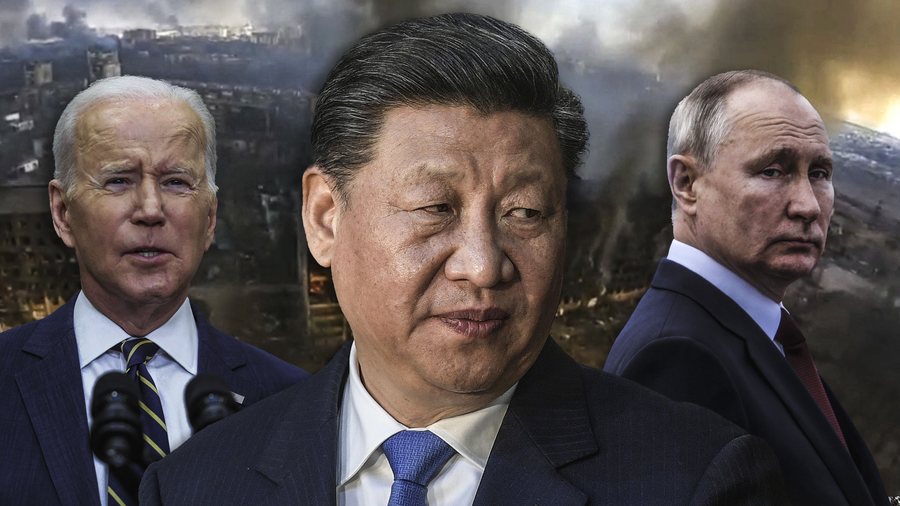
The world is in danger of being destroyed by interrelated conflicts, which may merge into a single...
The post-Cold War era began in the early 1990s, with a vision of world peace. But this peace ended three decades later, where the risks of a world war have increased.
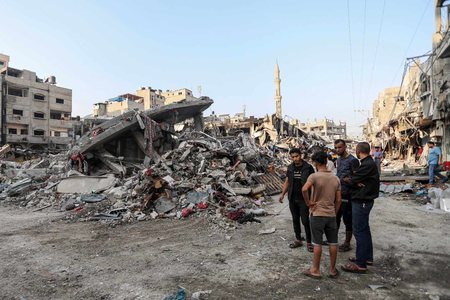
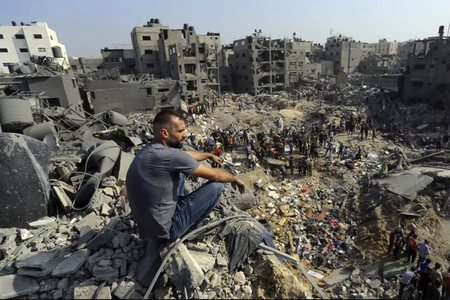
Today, Europe is experiencing its most devastating military conflict in generations. A brutal battle between Israel and Hamas is sowing violence and instability across the Middle East.
East Asia, thankfully, is not at war, but it is far from peaceful as China coerces its neighbors and amasses military power at a historic pace. If many Americans don't realize how close the world is to being destroyed by violent, interconnected conflicts, maybe it's because they've forgotten how the last world war happened, reports Foreign Affairs.
World War Two
When we talk about world war, we often think of the Second World War, which was fought in a bloody battle between the rival alliances of the planet. But it wasn't like that from the beginning.
World War II began as three separate, loosely connected conflicts for primacy in key regions stretching from Europe to the Asia-Pacific. Conflicts that eventually culminated and coalesced into a massive conflict.
The history of this period reveals the darkest aspects of strategic interdependence in a troubled world. It also draws uncomfortable parallels to the situation facing Washington now.
The United States does not face a formal alliance of adversaries, as it once did during World War II. They probably won't see a repeat of a scenario in which authoritarian powers occupy huge swaths of Eurasia and its shores. However, with wars in Eastern Europe and the Middle East already raging and ties between revisionist states becoming stronger. All it would take is a flare-up in the contested areas of the western Pacific to reveal another grim scenario in which the region is embroiled. The conflicts are fueling a global security crisis reminiscent of the 1940s. A world in danger and instability could quickly turn into a world at war, reports Foreign Affairs, adding that the United States is unprepared for the challenge.
American memories of World War II are indelibly marked by two elements. First, the United States entered the war too late, more than two years after Hitler shocked Europe by invading Poland and more than four years after Japan began the Pacific War by invading China.
Similarities
The parallels between this past era and today are striking. Today, as in the 1930s, the international system faces three serious challenges.
China is rapidly amassing military power as part of its campaign to push the United States out of the western Pacific and, perhaps, become the world's greatest power.
Russia's war in Ukraine is the murderous centerpiece of its long-term bid to regain primacy in Eastern Europe and the former Soviet space.
In the Middle East, Iran and its proxies—Hamas, Hezbollah, the Houthis, and many others—are waging a bloody war for regional dominance against Israel, the Gulf monarchies, and the United States.
Once again, the fundamental commonalities that bind revisionist states are authoritarian rule and geopolitical grievances. In this case, a desire to break a US-led order that deprives them of the greatness they desire. Beijing, Moscow and Tehran are the new powers that are fighting against Washington and its allies.
Hamas's attack on Israel last October allowed Tehran to trigger an intense conflict that is creating violent spillovers in the region.
Meanwhile, Iran is moving toward nuclear weapons, which could fuel its regional revisionism by indemnifying its regime against an Israeli or American response.
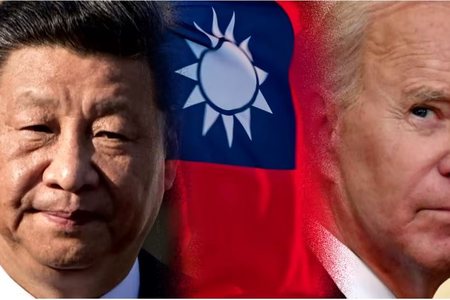
In the western Pacific and mainland Asia, China still relies primarily on coercion outside of war. But as the military balance shifts on sensitive points like the Taiwan Strait or the South China Sea, Beijing will have better options and perhaps a greater appetite for aggression.
A fundamental difference between the 1930s and today is the degree of revisionism. As evil as Putin and Iran's Ayatollah Ali Khamenei are, they have not gobbled up large swaths of critical territory. Another fundamental difference is that East Asia still enjoys tenuous peace. But with U.S. officials warning that China could become more bellicose as its capabilities mature, perhaps in the second half of this decade, it's worth considering what would happen if this region explodes.
Such a conflict would be disastrous in many ways. /Adapted "Pamphlet" from "Foreign Affairs"



Lini një Përgjigje