


 Shkruar nga Pamfleti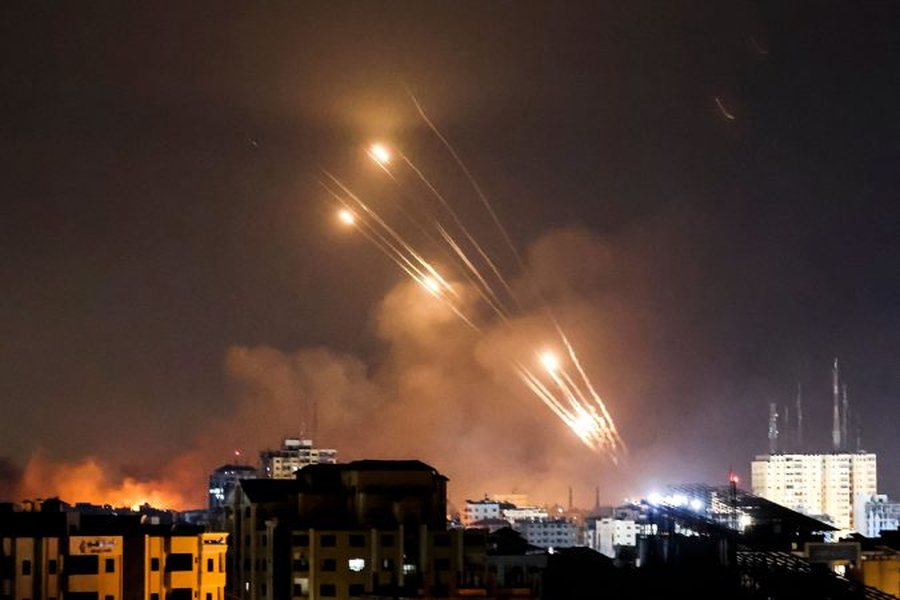
When the extremist group Hamas launched its unprecedented attack on Israel, it also targeted efforts to forge new regional security partnerships that could threaten Palestinian aspirations for a state of their own and the ambitions of Iran, the group's main backer. .
Saturday's attack, the biggest incursion into Israel in decades, coincides with U.S.-backed moves to push Saudi Arabia toward normalizing relations with Israel in exchange for a defense deal between Washington and Riyadh, a move that would to curb the Saudi kingdom's rapprochement with Tehran.
Palestinian officials and a regional source said the gunmen who attacked Israeli cities were also sending a message that if Israel wanted security, it could not ignore the Palestinians and that any deal with Saudi Arabia would prevent its softening of relations with Iran.
"All the normalization agreements you (Arab states) signed with (Israel) will not end this conflict," Ismail Haniyeh, the leader of Hamas, which controls Gaza, told Al Jazeera television.
A regional source with knowledge of developments related to Iran and the Iranian-backed Lebanese group Hezbollah added: "This is a message to Saudi Arabia, which is taking steps towards rapprochement with Israel, and to the Americans who are supporting normalization and support Israel. There is absolutely no security in the entire region as long as the Palestinians remain out of the equation." "What happened is beyond all expectations," said the source. "Today is a turning point in the conflict."
The Hamas attack comes after months of escalating violence in the West Bank, with escalating Israeli raids and Palestinian street attacks. Living conditions for Palestinians have worsened under the right-wing government of Prime Minister Benjamin Netanyahu. The peace process has been stalled for years.
Meanwhile, Saudi Arabia and Israel have given signs that they are getting closer to a normalization agreement.
Laura Blumenfeld, a Middle East analyst at Johns Hopkins University in Washington, said Hamas may have launched the attack after anticipating that it could lose influence in the face of a possible improvement in Israeli-Arab relations.
"Seeing that the Israelis and the Saudis were getting closer to an agreement, Hamas decided: If we don't have a seat at the negotiating table, we will sabotage the agreement," she says.
Determination of the moment of attack
Osama Hamdan, leader of Hamas in Lebanon, told Reuters that Saturday's operation should make Arab states realize that accepting Israeli security demands would not bring peace.
"For those who want stability and peace in the region, the starting point must be the end of the Israeli occupation," he said. "Some (Arab states) unfortunately began to think that Israel could pave the way for America to protect their security."
Mr Netanyahu vowed "revenge for this black day" after launching Saturday's attack, which came exactly 50 years after the start of the Yom Kippur War in 1973, when Israel was attacked by Egyptian and Syrian forces and fought for its survival. his.
Duke kujtuar luftën e vitit 1973, zyrtari i Hamasit Ali Baraka tha për sulmin e së shtunës: “Ishte e nevojshme që udhëheqja e rezistencës të merrte një vendim në kohën e duhur, kur armiku ishte i shpërqendruar”. Ai tha se sulmi nga ajri, toka dhe deti ishte “një tronditje për armikun dhe dëshmoi se agjencitë izraelite të zbulimit nuk arritën ta parandalonin këtë operacion”, pasi Izraeli u kap në befasi.
Në dekadat që nga viti 1973, Egjipti nënshkroi një traktat paqeje me Izraelin dhe disa shtete të tjera arabe po ashtu kanë normalizuar lidhjet, përfshirë disa shtete arabe të Gjirit pranë Arabisë Saudite. Por palestinezët nuk u janë afruar aspiratave për të siguruar një shtet, një perspektivë që duket më e largët sa kurrë.
“Ndonëse nuk ka të ngjarë që ky të ketë qenë motivimi kryesor i sulmeve, veprimet e Hamasit janë një kujtesë e qartë për sauditët se çështja palestineze nuk duhet të trajtohet vetëm si dytësore në negociatat e normalizimit”, thotë Richard LeBaron, një ish-diplomat amerikan i Lindjes së Mesme, aktualisht me Këshillin e Atlantikut.
Një zyrtar i lartë i administratës së presidentit të Shteteve të Bashkuara, Joe Biden u tha gazetarëve se është “e parakohshme të spekulohej” për efektin që mund të ketë konflikti mes Izraelit dhe Hamasit në përpjekjet drejt normalizimit saudito-izraelit.
“Unë mund të them me siguri se grupe terroriste si Hamasi, nuk do ta pengojnë një përfundim të tillë. Por ky është një proces i gjatë”, shtoi zyrtari, duke folur në kushtet e anonimitetit.
Kryeministri izraelit Netanyahu ka thënë më parë se palestinezët nuk duhet të lejohen të vënë veton ndaj një marrëveshjeje të mundshme paqeje mes Izraelit dhe shteteve arabe.
Një burim rajonal me dijeni për negociatat mes Arabisë Saudite, Izraelit dhe Shteteve të Bashkuara mbi normalizimin dhe një marrëveshje të mundshme për mbrojtjen e Riadit, thanë se Izraeli kishte gabuar që kishte refuzuar të bënte lëshime për palestinezët.
Pas sulmeve të së shtunës, Arabia Saudite bëri thirrje për një “ndërprerje të menjëhershme të dhunës” midis të dyja palëve.
Irani, ndërkohë, nuk e ka fshehur mbështetjen, financimin dhe armatosjen e Hamasit dhe një organizate tjetër militante palestineze, Xhihadit Islamik. Teherani e quajti sulmin e së shtunës një akt vetëmbrojtjeje nga palestinezët.
Yahya Rahim Safavi, këshilltar i udhëheqësit suprem të Iranit, Ajatollah Ali Khamenei, tha se Teherani do të qëndrojë pranë luftëtarëve palestinezë “deri në çlirimin e Palestinës dhe Jeruzalemit”.
Një zyrtar palestinez, i afërt me grupet militante islamike, tha pasi filloi sulmi i Hamasit me një breshëri të madhe raketash të lëshuara nga Gaza: “Irani ka dorë në çdo raketë që hidhet në Izrael”.
“Kjo nuk do të thotë se ata e urdhëruan sulmin (e së shtunës), por nuk është sekret se Hamasi dhe Xhihadi Islamik e kanë përmirësuar arsenalin e tyre, falë Iranit”, tha zyrtari, duke folur në kushte anonimiteti.
Iran's support for Palestinian groups is part of a wider network of militant groups and armed groups that Tehran supports across the Middle East, enabling a strong presence in Lebanon, Syria, Iraq and Yemen. , as well as in Gaza./ VOA




Lini një Përgjigje