


 Shkruar nga Giulio Ucciero
The game of tariffs usually ends badly and therefore has its own risks: whoever uses tariffs is hurt by them.
"Today we are like in the 16th century!". Gulio Tremonti, who has been Minister of Economy several times in Silvio Berlusconi's governments and today holds the position of chairman of the Foreign Affairs Committee of the Chamber of Deputies from the ranks of Fratelli d'Italia, the party of Prime Minister Meloni, has been intervening for years in the most debated issues today at a global level: rearmament, isolationism, trade wars.
In his new book, "War or Peace," he sees parallels with the difficult situation in the 1500s, criticizes the European Commission for changing its mind within a month, and issues a warning about tariff wars: "They always end badly!"
Let's start the conversation with the rearmament of Europe and the 800 billion euro plan proposed by Ursula Von Der Leyen's commission?
I'll start the answer with a little background: Today we are like in the 1500s. At that time, there were several revolutionary developments: the discovery of America, the invention of the printing press, the first global financial crisis, and the Muslim invasion from the east.
Even today, 4 revolutionary events are happening in parallel: the discovery of China's economic and political life, the spread of the Internet, the risk of plunging into a new global financial crisis, and the war from Ukraine to the Red Sea.
The difference is that in the 16th century, revolutionary events took place in a century, while these latter ones took place within 30 years. The world still remains global, containers move across oceans and ideas float on the web, but the utopia of globalization is over.
You talk about all of this in your latest book. What is your opinion on the rearmament of Europe?
We are seeing a major shift in the policy of the European Commission. The stability pact, revised in 2024, did not mention defense, even though we had already been at war for 2 years. In January, the EC presented the “Compass for the Future” which revolves around competitiveness, but at no point does the word “war” appear. A month later, the Commission goes to the opposite extreme, talking about armaments and not about defense.
Von Der Leyen has proposed an 800 billion euro plan. How will it be financed?
Today we are talking about 800 billion for defense, but last month the same figure was promised for economic competitiveness. Perhaps the money is not ready. And given the difficulties in finding funds, we could turn to savings. But the transformation of popular savings into such capital would be devastating for Europe. This scenario must be avoided at all costs.
Loans, clauses. Somehow the funds will be found. You have been a strong supporter of Eurobonds. Could this be the solution?
I remember that in 2003, the issue of the European contribution to defense was raised. When Italy held the presidency of the Council, there was already the idea of issuing Eurobonds for infrastructure and the military industry. But it was rejected by the Commission led by Romano Prodi. And now it seems that that scenario will be realized.
Do you yourself agree with the rearmament plan?
It is right and absolutely necessary to start talking about this. Thesis, hypothesis and synthesis: there will undoubtedly be a discussion, and we are only at the beginning.
Did the US make us aware of the incompleteness of the European project?
The United States has been calling for years for a greater commitment to NATO, and European governments have committed to achieving this. The Italian government itself, as early as 2003, raised the problem of the shift in US focus from the Atlantic to the Pacific, with the need for greater European responsibility.
Germany is moving very fast. The main parties have agreed to change the constitution and spend 500 billion euros on defense...
The recent elections in Germany were an extraordinary success of democracy, with a very high voter turnout, unlike the European ones. In fact, it is following its path. Surely there is also an alternative there between a self-inflicted crisis and the prospect of developing other industries, such as the military, which brings about GDP growth.
So rearmament could increase the Gross Domestic Product of many European countries?
Yes, it is one of the factors. In Germany and in Europe in general, it is a discussion that needs to be had, but very carefully.
This is also because our economy will suffer the impact of American tariffs. Is it right to respond in kind?
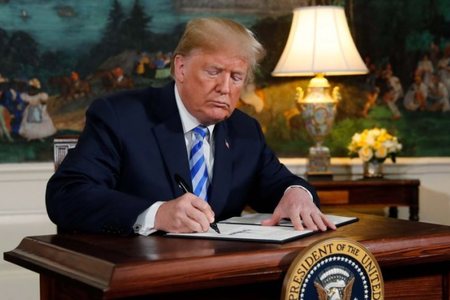
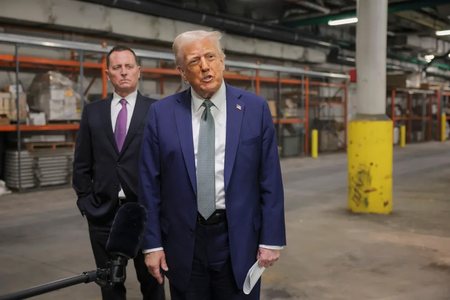
To understand Trump's tariff war, you need to read Vice President JDVance's book "American Elegy," which shows what happened to the East Coast of the United States with globalization, with factories moving to Asia, and with Wall Street getting much richer than the vast majority of the population.
Is a trade war possible?
It must be avoided. Because the confrontation will not only be customs, but through a mechanism of actions and reactions, it will move from tariffs to exchange rates to interest rates. But we are only in the initial phase, let's wait and see.
The game of tariffs usually ends badly and therefore has its own risks: the one who uses tariffs is hurt by them. Do you know who imposed the first continental blockade? Napoleon to bankrupt the kingdom of England. But as we know, things did not end well for the French emperor.
And who is Napoleon today?
Who knows, some games are unpredictable and they have just begun./ Adapted from "Pamphlet" by "Huffington Post Italia"


Lini një Përgjigje