


 Shkruar nga Pamfleti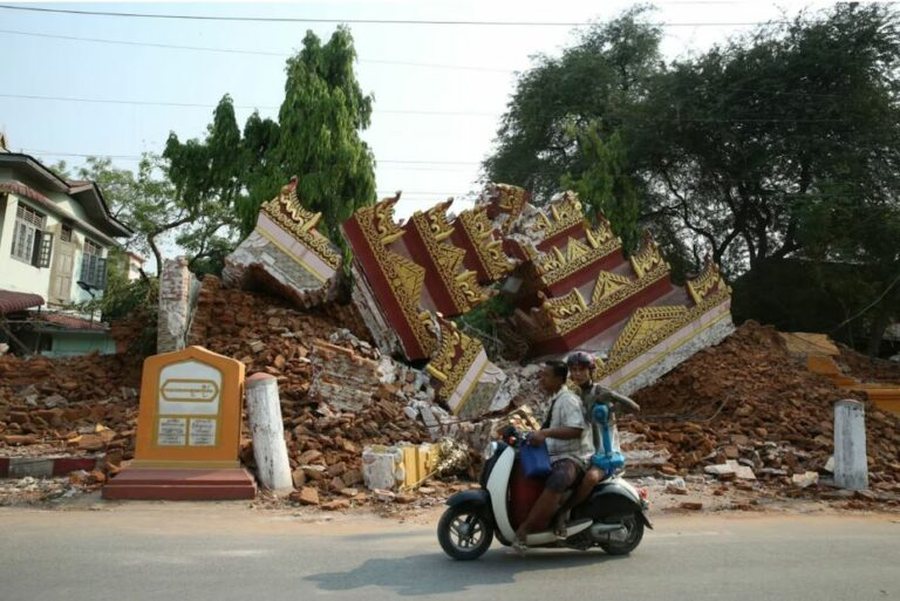
The death toll from a powerful earthquake in Myanmar has continued to rise. Days after the event, state media reported that 3,354 people had died, with 220 still missing. Another 4,850 people were injured.
Aid agencies have been warned of the risk of serious diseases, including cholera. The UN High Commission for Human Rights has accused Myanmar's ruling military junta of restricting aid supplies to communities that do not support the regime. The military has not yet responded to the accusations.
The challenges to providing healthcare are acute, due to the consequences of the civil war that has engulfed the country. Since the fall of Aung San Suu Kyi's government in 2021, over three million people have been forced to flee their homes. Healthcare has always been a problem, and now many people are at risk due to hunger. The UN reports that a third of the population is in urgent need of humanitarian assistance. The 7.7-magnitude earthquake, which occurred on March 28, was among the most powerful to hit Myanmar in a century, causing the collapse of many buildings, including hospitals, and the near-total destruction of several communes.
Meanwhile, the head of the military junta, Min Aung Hlaing, went to a regional summit in Bangkok, sparking strong protests in the neighboring country. To facilitate aid distribution and reconstruction, the junta declared a temporary ceasefire on April 2, 2025. However, the UN reported on April 3 that the ceasefire was not being respected, as the military had carried out at least 16 airstrikes since mid-week, including attacks on earthquake-hit areas.








Lini një Përgjigje