


 Shkruar nga Pamfleti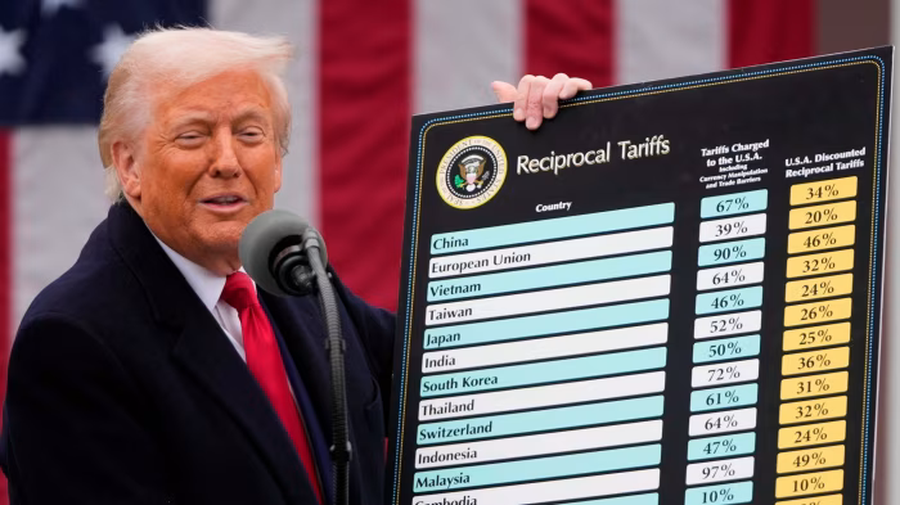
Countries like Japan, Germany, Australia, Canada, and Britain have often had doubts about the wisdom of particular U.S. policies. But they have stuck with America because they believed, in the end, that their alliances were based on a solid foundation of shared interests and values.
Donald Trump prides himself on his unpredictable, transactional approach to life. These are tactics that might work well in a real estate deal or a debt restructuring. But when it comes to international politics, Trump's transactionalism is likely to be very costly for the United States itself, as well as for global stability.
One of the great advantages the US has over China or Russia is that it has a global network of allies, built over the long term. Countries like Japan, Germany, Australia, Canada, and Britain have often had doubts about the wisdom of particular US policies. But they have stuck with America because they believed, in the latter case, that their alliances were based on a solid foundation of shared interests and values.
The tariff war launched by the US – combined with the often hostile language of the Trump administration – has shaken that trust to its core. Mark Carney, Canada’s new prime minister, says the US is “no longer a reliable partner”. Friedrich Merz, Germany’s incoming chancellor, has called on Europe to “achieve independence” from America. Anthony Albanese, Australia’s prime minister, says the Trump administration’s tariffs on Australia are “not the act of a friend”.
The White House may be inclined to dismiss such statements as empty sentiment. And it is true that many governments, hit by tariffs, may now try to make a deal with Trump to try and mitigate the damage to their economies. But they are also likely to make long-term adjustments to their policies – aimed at reducing their vulnerability to American bullying. This, over time, will have long-term consequences for America’s own wealth and power.
There are economic and strategic implications. One notable impact could be on US arms sales. With the US threatening Greenland, a territory of NATO ally Denmark, efforts to “buy European arms” are growing within the EU. One of the justifications put forward by Trump for his protectionist agenda is the need to reindustrialize America. But it would take a brave foreign investor to commit to a long-term investment in the US, when tariff policies change frequently and when any increase in American support could be seen as potential leverage to exploit.
Then there is the geopolitical cost of Trump's willingness to surround his allies. The president's entourage seems to believe that America has little strategic stake in Europe's future, so they may not mind losing the trust of their transatlantic allies.
The Trump administration, however, appears to be very committed to containing Chinese power in the Indo-Pacific. The Biden administration, which shared that commitment, did a good job of building America’s network of alliances and friends in the region. But Trump’s tariffs are a major blow to America’s most important allies in Northeast Asia – Japan and South Korea. Shigeru Ishiba, Japan’s prime minister, has called Trump’s tariffs a “national crisis” and called for urgent cross-party talks.
Japan, South Korea, and Australia have been prepared to work with the U.S. to contain and manage Chinese power because they believed that, in the last resort, the U.S. would fight to protect them. But Trump’s transactional, unpredictable, and increasingly hostile actions are eroding that trust. America’s alliance system will also now be under great strain—to China’s benefit.
The US president has profoundly changed the Republican Party and the image of America itself. In a matter of days, he has undone trusted global relationships that took decades to build. The task of reviving such trust, even after Trump is no longer in office, will be gigantic – if at all possible./ Adapted from "Pamphlet" by "FinancialTimes"





Lini një Përgjigje