


 Shkruar nga Diplomatico | Pamfleti.net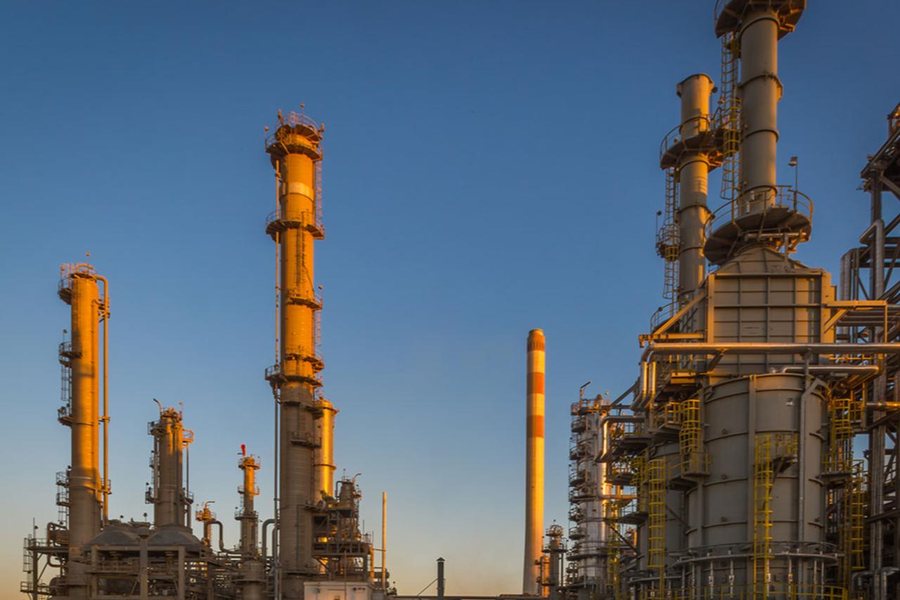
The attack on the joint Aramco and ExxonMobil refinery marks the expansion of the Iran-Israel clash across the Gulf, putting global oil and gas markets on alert...
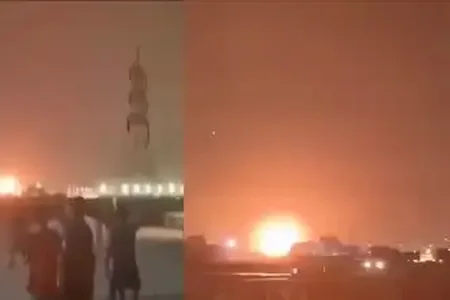
An Iranian drone struck the SAMREF refinery in Yanbu, on the Red Sea coast, today, drawing Saudi Arabia directly into the new wave of attacks that are shaking the Gulf's energy infrastructure.
According to Saudi authorities, the damage is still being assessed and full details on the operational impact have not yet been made public.
The SAMREF refinery is a strategically important facility, linked to Saudi Aramco and ExxonMobil, with a capacity to process over 400,000 barrels of oil per day. It produces a wide range of derivatives, from oil and diesel to marine fuel and sulfur. An attack on such a node has not only military value, but also a political signal: Iran is showing that it is ready to strike the energy arteries of the region.
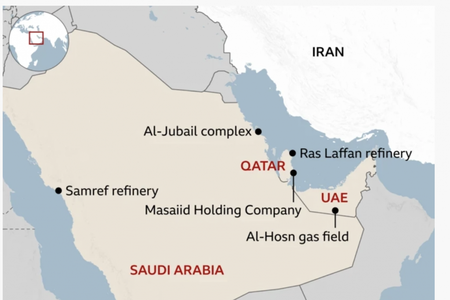
The attack in Yanbu is not an isolated incident. It follows a string of Iranian strikes on energy facilities in Qatar, Kuwait and the United Arab Emirates, in retaliation for the Israeli attack on Iran's giant South Pars gas field. Reuters and the AP report that energy infrastructure in the Persian Gulf has now become a central target of regional escalation.
In Qatar, Iranian attacks caused extensive damage to the Ras Laffan liquefied natural gas facility, while in Kuwait, strikes were reported on the Mina al-Ahmadi and Mina Abdullah refineries. The Emirates also suspended operations at several energy facilities after defensive airstrikes. This shows that the conflict is no longer limited to the Iran-Israel axis, but is directly involving key energy-producing states in the region.
For Saudi Arabia, the strike on Yanbu has double significance.
First, it affects a critical industrial center. Second, because Yanbu has become a sensitive hub for Saudi exports at a time when tensions in the Strait of Hormuz have increased uncertainty about traditional supply routes.
Reuters also reported that the port of Yanbu was also targeted by an airstrike, although the initial impact was described as limited.
The geopolitical message is clear: Iran is trying to shift the cost of the war from its own territory to the energy economies of its Arab neighbors and, through them, to world markets. Any strike on refineries, ports, or LNG terminals is not just news of war; it is direct pressure on energy prices, global supply chains, and the West’s strategic calculations.
The consequences on the market were felt immediately.
Reuters reported that oil prices rose above $115 a barrel as attacks on energy facilities in the Persian Gulf fueled fears of a deeper supply crisis. This transforms the conflict from a regional military confrontation into a threat with global economic consequences.
The attack on SAMREF is a signal that the new phase of the conflict is moving from symbolic strikes to targets of economic and strategic importance. If the pace of attacks continues, Gulf countries will face pressure for a more coordinated military and diplomatic response, while Western powers will increase efforts to protect energy corridors. /Pamphlet





Lini një Përgjigje