


 Shkruar nga Pamfleti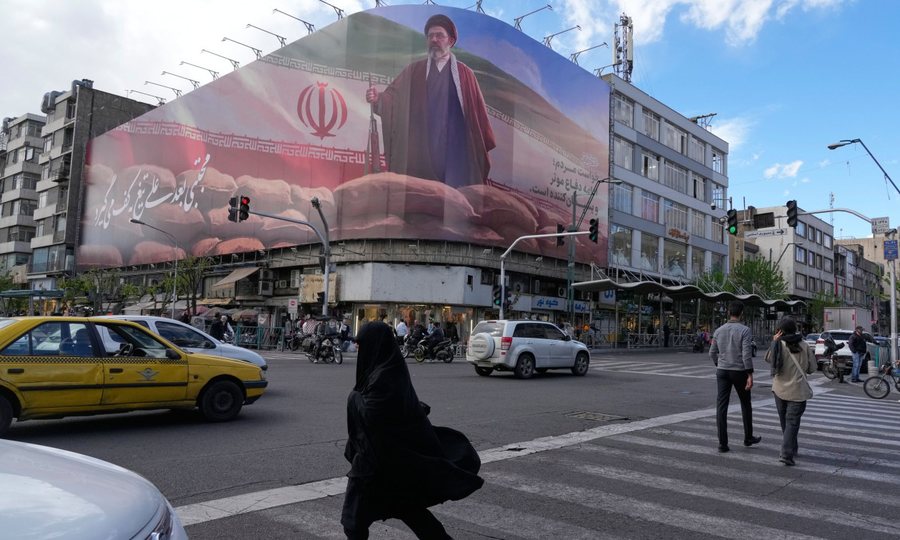
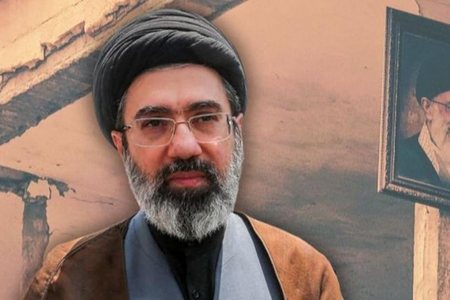
In Iran, key decision-making is no longer in the hands of the supreme leader, but rather a group of Revolutionary Guard generals. According to reports in The New York Times, Mojtaba Khamenei has a limited role and relies on a military “council” for decisions on security, war and diplomacy.
The elimination of Ayatollah Ali Khamenei marked the beginning of a new form of collective leadership in Iran, with an increased role for the Revolutionary Guard.
When Ayatollah Ali Khamenei ruled Iran as supreme leader, he exercised complete authority over all decisions about war, peace, and negotiations with the United States. His son and successor does not play the same role.
He is no longer the supreme leader he has been since the 1979 revolution, as the Revolutionary Guards (Pasdarans) now have de facto power in Iran. This is reported by The New York Times in an extensive article, which confirms information in recent weeks about the new hierarchy in Tehran.
The reporting also appears to have influenced US President Donald Trump, who in a tweet spoke of an "internal conflict between hardliners and moderates."
Ayatollah Mojtaba Khamenei is an enigmatic figure, who has not appeared publicly and his voice has not been heard since taking office in March. In his place, a strong group of Revolutionary Guard commanders and figures associated with them constitute the main decision-making core on matters of security, war and diplomacy.
“Mojtaba runs the country like a chairman of a board,” declared Abdolreza Davari, a politician and former senior advisor to Mahmoud Ahmadinejad, who knows Khamenei.
"He relies heavily on the advice and guidance of the members of this council, and they all make decisions together. The generals are the members of this council," he added in a telephone interview from Tehran.
This description of the new power structure in Iran is based on interviews with six senior Iranian officials, two former officials, two members of the Revolutionary Guard, a senior cleric and others with knowledge of the inner workings of the regime. All spoke on condition of anonymity due to the sensitivity of the issue, according to the report.
Mojtaba Khamenei, elected by a council of clerics as the new supreme leader, has been in isolation since airstrikes by US and Israeli forces on February 28 on the compound where he lived, including his family members. His father, wife and son were killed.
Access to him is very limited and he is under constant medical supervision due to injuries sustained from the bombings.
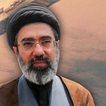
According to sources, Khamenei has undergone three surgeries on his legs and is expected to be fitted with a prosthesis. He also had surgery on his hand.
His face and lips have suffered severe burns, making it difficult for him to speak, and he is expected to need plastic surgery, according to the quoted officials.
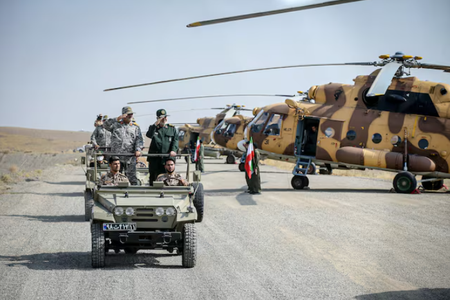
As a result, key decisions in Iran are now made by a group of Revolutionary Guard commanders and figures close to the regime. President Masoud Pezeshkian is not part of this circle and has been limited to a largely ceremonial role, mainly on domestic matters.
Even Foreign Minister Abbas Araghchi no longer holds the central role as a negotiator, having been overshadowed by the speaker of parliament, Mohammad Ghalibaf, according to the same report by the American newspaper. / Pamphlet


Lini një Përgjigje