


 Shkruar nga Pamfleti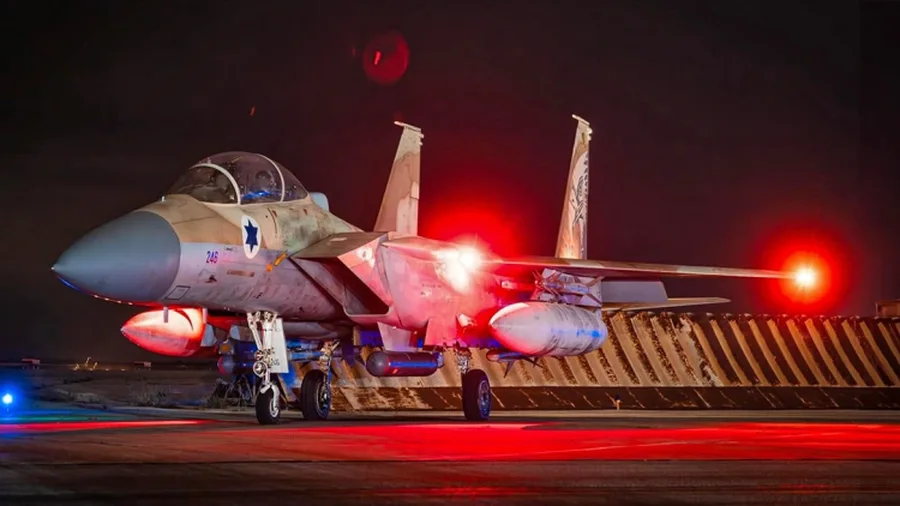
The prospect of a major regional war in the Middle East looms as Benjamin Netanyahu's war cabinet convenes today to decide Israel's response to Iran's drone and missile attack.
Netanyahu's ministers voted at midnight to entrust that decision to the small war cabinet, made up of Netanyahu, Defense Minister Yoav Gallad and Benny Ganz, a Netanyahu rival who joined the government as minister without portfolio after the Hamas attack on October 7.
These three will decide the next step, with the fate of the region now in their hands.
Israel has repelled the first major wave of Iranian drones and missiles fired at it, but the standoff is not yet over, Israeli Defense Minister Yoav Gallad said in a taped statement today.
Before the war cabinet meeting, Netanyahu and Biden spoke by phone for 25 minutes, during which, according to some reports in the Israeli media, the US president called for restraint.

What will happen now according to international experts?
Defense experts spoke to CNN about whether and how Israel might respond to Iran's attacks.
Michael Oren, Israel's former ambassador to the United States, told CNN that "the rules have to change" after Saturday night's attack.
"That will largely depend on the extent of the damage caused by this first wave of Iranian drones and cruise missiles," Oren said.
"But in any case, we are in the Middle East and pressure and deterrence are very important here. I don't think Israel can be hit like this on such a massive scale and not respond in a meaningful way."
Eyal Hulata, Israel's former national security adviser, condemned Iran's actions and said military retaliation was not the only available response that should happen, adding that further international sanctions against Iran could be possible.
"Nothing like this has happened before. This is Iran that crosses every dividing line. But it is not enough to ask what Israel should do, but also what the international community should do when Iran does something so unimaginable," said Hulata.
For years, Iran has been subject to a series of international sanctions, which have damaged the country's economy. But they have had limited impact on changing the administration's approach to Israel and the wider Middle East.
The US announced sanctions on Iran in February - targeting a range of malign Iranian initiatives, including cyber warfare and its drone programmes.
99% of the 300 missiles from Iran were captured
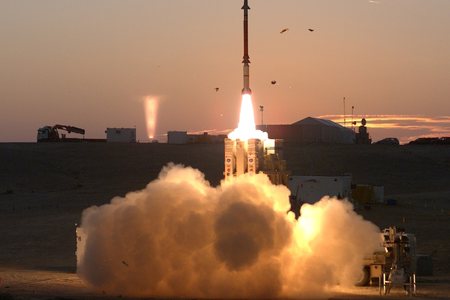
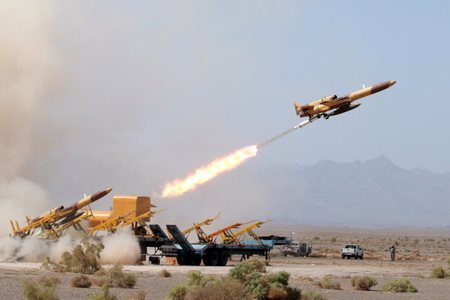
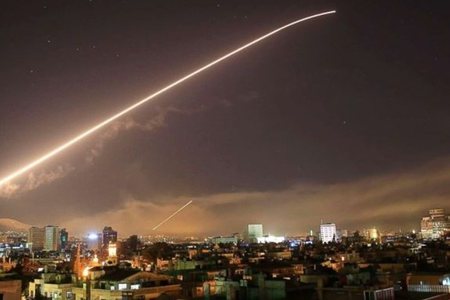
The Israeli military said Iran fired more than 300 drones and missiles at Israel overnight, 99 percent of which were shot down, adding that the armed forces remained fully operational and were discussing options moving forward. A southern military base suffered minor damage.
In the face of the expected Iranian attack, US officials had assumed just such an outcome: that Iranian missiles would land in the desert and cause no significant casualties. In that case, the officials predicted, Washington would push hard against a hasty Israeli response.
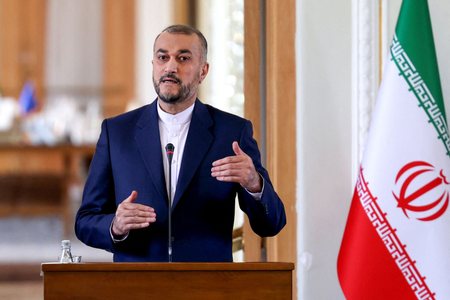
Iran is clearly hoping for such a muted response. In a message sent through its mission to the UN, Tehran hopefully suggested that in the wake of its retaliation: "The matter can be considered closed."
Both Biden and the Iranians are aware that Netanyahu would ideally like to destroy Iran's nuclear facilities, which he has long seen as an existential threat to Israel. Reducing them to rubble would be very difficult without US help, but it is likely that he and other Israeli hawks will try to seize this opportunity to fulfill this ambition.
NBC News reported Saturday night that some senior government officials are "concerned that Israel might do something quickly in response to Iran's attacks without thinking about the potential consequences down the line."
Government officials are well aware that Netanyahu has an incentive to continue hostilities, as it prevents the collapse of his coalition and new elections.
While the damage to Israel was minimal, Israeli officials may argue that this was not thanks to Tehran, but to the reliability of Israeli air defenses and its allies, mainly the US, Britain reports The Guardian.
In the short term, Washington can be comforted by some signs that any Israeli response will at least not be immediate.
Israel has called for a UN Security Council meeting on the attack, which will take place at 4pm New York time on Sunday. It would be surprising if a counterattack was launched before this meeting.
Another possible sign that silence might be the answer was Gallant's conversation with his American counterpart, Lloyd Austin, after the attacks. According to the Israeli Minister of Defense, Gallant, the defense structure is prepared for any further attack attempts against the State of Israel.
A third positive sign early Sunday was an assurance from an Israeli official quoted by the New York Times that "Israel's response will be coordinated with its allies."



Lini një Përgjigje