


 Shkruar nga Pamfleti
Turkey has the second-largest F-16 fleet in NATO and the third-largest on the planet. Israel has the world's second-largest F-16 fleet, a large F-15 fleet, and a growing fleet of fifth-generation F-35s, two formidable types of fighter jets that Turkey lacks.
Recent Israeli airstrikes against air bases in central Syria have led some Syria analysts to speculate that Israel is signaling its firm opposition to Turkey establishing a military presence in Syria. True or not, one thing is absolutely clear: Turkey will have a difficult task challenging Israeli air superiority over Syria, notes a report by the American media outlet Forbes.
The Israeli military announced separate strikes on the Tiyas or T-4 airbase and Palmyra airport in central Syria on March 21 and 25, respectively. Initial reports indicated that the first strike wounded two Syrian soldiers. The Israeli military claimed to have struck "residual military capabilities" of the former regime of President Bashar al-Assad at the bases, and the air force released footage of the strikes, along with simultaneous strikes targeting Hamas in the Gaza Strip and Hezbollah in Lebanon.
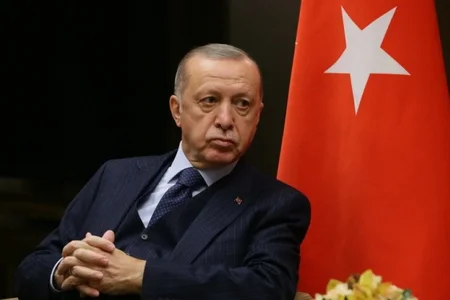
Analysts interpreted the attacks as a warning against the new Syrian government in Damascus, led by interim President Ahmed al-Sarrah, and its backer, Turkey. Reuters reported in February that Sarrah was expected to discuss a Syria-Turkey defense pact that would include the establishment of Turkish air bases — likely at T-4 and Palmyra — during his first meeting with Turkish President Recep Tayyip Erdogan that month.
There is no indication that Turkey will deploy forces or aircraft to central Syria in the near future. However, the Syria-based North Press agency reported that Turkey has begun work on “establishing an air defense center” at the Menagh air base in northwest Syria near the Turkish border, possibly to help Syria monitor its airspace again.
Following the fall of the Assad regime on December 8, Israel rapidly expanded its presence in southern Syria and destroyed large amounts of the former regime's strategic military arsenal. It has denounced the Sarrah government and suggested it would take action against it to protect Syria's minority Druze community.
Israel is also wary of Turkey, which has close ties to Syria, expanding and consolidating its military presence in the country after the fall of Assad. Israeli Prime Minister Benjamin Netanyahu held a security meeting on March 23 to discuss Turkey’s involvement in Israel’s northern neighbor. Moreover, Reuters reported in February that Israel was actively pressuring the US not to pressure Russia to withdraw from Syria, arguing that the much-reduced Russian military presence in Syria serves as a necessary shield against further Turkish expansion there.
Since 2016, when Turkey launched its first cross-border operation into Syria during the civil war, the Turkish military and Syrian militia representatives have controlled significant parts of northern Syria, much of which they have taken from their Kurdish rivals. Its representatives recently captured Menag, which had previously been controlled by Kurdish forces since 2016, after the fall of the Assad regime. Turkey’s reported activity there may indicate that it is gradually helping Damascus restore some surveillance and air defense capabilities. However, this is likely to be limited and unlikely to challenge Israel’s air superiority over most of Syria.
Israel will undoubtedly protest any Turkish deployment to T-4 or Palmyra, especially if it involves the deployment of F-16s or ground-based air defenses. Even if Turkey were to attempt such a deployment in cooperation with Damascus, Ankara—despite its air force and capable air defenses—would find it difficult to disrupt or prevent Israeli flights into Syria for many reasons.
Turkey has the second-largest F-16 fleet in NATO and the third-largest on the planet. Israel has the world's second-largest F-16 fleet, a large F-15 fleet, and a growing fleet of fifth-generation F-35s, two formidable types of fighter jets that Turkey lacks.
Any attempt by Ankara to help Syria build new air defenses is likely to encounter many of the same obstacles that Russia and Iran have encountered over the past decade.
Russia beefed up its air defenses in Syria in late 2015 after Turkey shot down a Russian Su-24 bomber that briefly violated its airspace, deploying long-range and strategically important S-400 Triumf air defense systems. The move disheartened Turkey. Even when ties thawed the following year, Turkey always sought Russian permission before launching cross-border attacks against Syrian Kurds in 2016, 2018 and 2019.
This did not happen with Israel. While Netanyahu immediately established a mechanism for de-escalation with the Russian military shortly after the latter’s intervention in the Syrian conflict in September 2015, the Russian presence never prevented Israel’s frequent airstrikes against Iranian-aligned elements in the country.
Në vitin 2018, Rusia fajësoi Izraelin për një incident në të cilin një raketë anti-ajrore siriane S-200 shkatërroi një transport ushtarak rus ndërsa synonte avionët luftarakë izraelitë, duke vrarë të gjithë 15 personelin rus në bord. Moska u përgjigj me zemërim duke dërguar një tjetër S-300 nominalisht sirian me qëllimin e deklaruar për të ndihmuar Damaskun të përmirësojë mbrojtjen e tij ajrore.
Irani premtoi disa herë gjatë konfliktit sirian se do të ndihmonte Asadin të rivendoste mbrojtjen ajrore dhe të pengonte inkursionet e përsëritura izraelite në hapësirën ajrore. Forcat Ajrore izraelite shkatërruan menjëherë një sistem me rreze të mesme Tor të prodhimit rus që forcat iraniane u përpoqën ta instalonin në T-4 në 2018. Përpjekjet më të fundit për të vendosur sisteme strategjike të prodhuara nga Irani, si Bavar-373, nuk kanë qenë të suksesshme. Me rënien e Asadit, forcat iraniane u dëbuan nga vendi. Rusia gjithashtu ka tërhequr S-400-të e saj.
Të dyja këto zhvillime shërbyen për të forcuar epërsinë ajrore izraelite mbi vendin e shkatërruar nga lufta.
Turqia ka mbrojtje ajrore të rëndësishme, të cilat aktualisht po i integron në sistemin e saj kombëtar me shumë shtresa, kupolë çeliku, por këto nuk janë aq të avancuara apo të afta sa ajo e Izraelit. Turqia kishte vendosur më parë sisteme me rreze të mesme Hawk-23 të prodhuar nga SHBA në provincën veriperëndimore të Sirisë Idlib në vitin 2020 gjatë përleshjeve me ushtrinë e Asadit. Ankaraja mori S-400 nga Rusia në vitin 2019, por nuk i ka vënë në shërbim. Ndryshe nga anëtarët e tjerë të NATO-s, ajo kurrë nuk mori sistemin amerikan MIM-104 Patriot. Në skenarin e pamundur që Turqia të vendosë S-400 në Siri, ndoshta si një përpjekje për të kënaqur kërkesat e SHBA-së që ato të çmontohen ose largohen nga territori turk, ata nuk kanë gjasa të pengojnë inkursionet izraelite në hapësirën ajrore, ose të paktën ato të kryera nga F-35.
Në ndërhyrjen e mëparshme të Turqisë në Libi në vitin 2020, ajo kishte vendosur raketa Hawk së bashku me sistemet vendase me rreze të shkurtër veprimi Hisar dhe armët kundërajrore Korkut. Sisteme të tilla mund të rezultojnë të prekshme ndaj sulmeve me raketa të lëshuara nga ajri nga distanca. Izraeli ka gjuajtur mijëra municione si këto kundër objektivave të shumta të lidhura me Iranin në të gjithë Sirinë që nga viti 2013. Gjatë sulmeve ajrore të 26 tetorit 2024 kundër Iranit, Izraeli demonstroi efektivitetin e raketave balistike të lëshuara nga ajri në goditjen e objektivave të largët, duke përfshirë S-300 iranian.
In the air, the Turkish air force would also face disadvantages in any attempt to provoke its Israeli counterpart over Syria. Although formidable, its F-16 fleet is smaller than Israel’s and lacks stealth fighters. Turkey hopes to increase its air combat capabilities with the purchase of the Eurofighter Typhoon and the long-range Meteor air-to-air missile. However, any delivery of these formidable aircraft and weapons is, at least, several years away. And by the time Ankara receives them, Israel will already have more F-35s and more advanced F-15s in the field. Just last year, Israel signed multi-billion dollar deals for 25 more F-35s — increasing its fleet of fifth-generation fighters to 75 aircraft — and 25 new F-15EX aircraft.
For these reasons, it is believed that Turkey will not soon make a serious attempt to directly challenge Israel's long-standing air superiority over its southern neighbor. / Adapted from Pamphlet by Forbes /



Lini një Përgjigje