


 Shkruar nga Pamfleti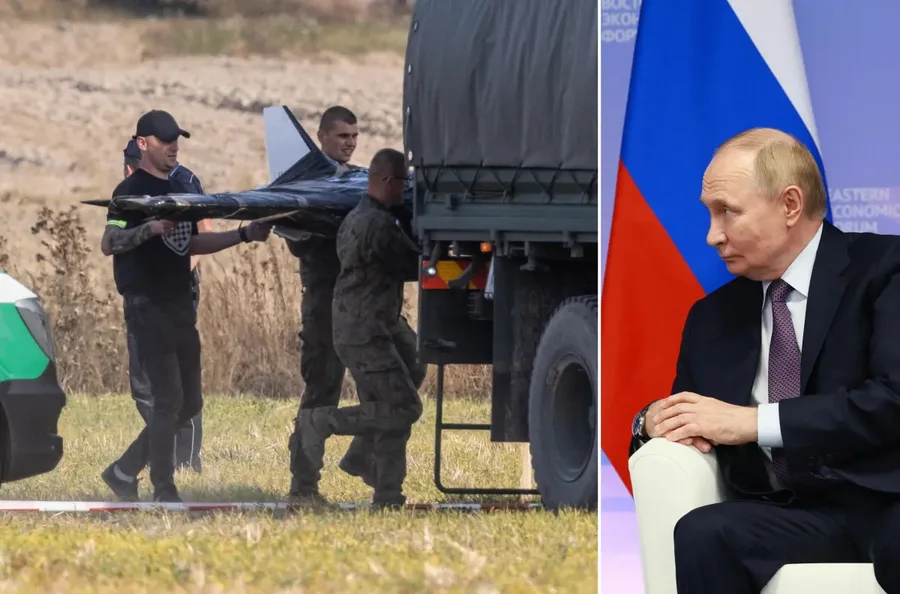
Russian drones and missiles continue to violate NATO skies: Poland, the Baltic states, Romania and Moldova report intrusions. Alarm is rising in Brussels: Risk of unprecedented escalation...
Vladimir Putin continues to test NATO's limits. The drone attacks on Polish territory, which have raised alarm within the Atlantic Alliance, are the latest in a long series of attacks.
Before the drone attacks on Warsaw and its surroundings, others had been subjected to mock provocations from Moscow. Since Russia launched its full-scale invasion of Ukraine, violations of European airspace in countries bordering Ukraine have multiplied, culminating in recent flights over Poland.
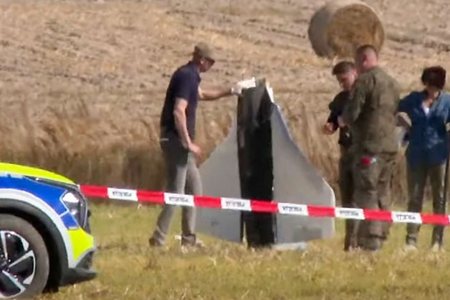
The attack on Polish soil came on a difficult night for Kiev, hit by a massive drone attack. There are already many questions about this Russian "cross-border" invasion, especially whether it was simply accidental, as claimed in a statement by Belarus, a strong ally of Moscow, or an opportunity for Moscow to test NATO's response.
What is certain is that every time Russian weapons or aircraft breach NATO's perimeter, the fear of an escalating conflict grows. It is no coincidence that Polish Prime Minister Donald Tusk has spoken of the greatest danger since 1945. Italian President Sergio Mattarella has even spoken of tensions similar to those that led to World War I in 1914.
For all these reasons, any breach creates growing alarm, especially as there is a sense of escalation. Looking back on the last three years, we are reminded of the sense of unease felt by many European governments and within the Atlantic Alliance.
Poland in the spotlight
Before last night, the first alert in Poland had been issued in November 2022. At that time, two people were killed in an area near the border with Ukraine by what appeared to be a Russian missile. Subsequent investigations determined that the incident was actually caused by a missile from a Ukrainian missile shield that went off course after being fired to intercept a Russian missile.
Two years later, in March 2024, a Russian cruise missile briefly violated Warsaw's airspace near the town of Oserdow, along the border with Ukraine. The missile's passage prompted Poland to send fighter jets, but the alert was lifted after the missile returned to Ukraine to hit its target.
Less than two weeks ago, the New York Times reported, Russian drones crossed Polish airspace twice. According to sources in Warsaw, the airstrikes involved about a dozen drones.
Suspicious flights over the Baltic countries
Between June and July, the alarm was also raised in Lithuania. The government in Vilnius reported that Russian drones, potentially carrying explosives, had violated its airspace twice. In July, in particular, a Gerbera drone, which had entered from Belarus, was spotted not far from the capital, and its remains were found on August 1 near a military training camp. Nida Grunskiene, one of the prosecutors responsible for investigating the incident, explained that the drone “carried an explosive device and was successfully neutralized by specialists from the Lithuanian armed forces.” A year earlier, it was the turn of another Baltic country, Latvia. Government sources in Riga explained that a drone similar to the Iranian Shaheds had crashed in the border areas with Russia.
The situation is a bit different for Estonia. Over the summer, two drones were shot down along the border, but they were not Russian planes, but Ukrainian ones heading towards Russia. After identifying the wreckage, the Tallinn government condemned Russia, explaining that the crash on Estonian soil was caused by Russian military jamming operations.
Russian drone over the Danube
Another country that experienced the Russian threat was Romania. In September 2023, the government in Bucharest confirmed that a Russian drone had been shot down in an area around the Danube River after entering from Ukraine. At the time, Romania condemned the violation of its sovereignty, calling it a serious interference.
The violation of Romania’s territorial sovereignty occurred during a heated phase of Russia’s offensive in Ukraine. Moscow was making extensive use of drones to strike the Danube Delta. Russian forces intended to target Ukrainian grain export ports to prevent the country from exporting agricultural products along its western Black Sea coast. A year later, in September, Bucharest confirmed the discovery of further Russian drone debris, once again condemning the incidents.
Shadow over Moldova
Although not part of NATO, there is another neighbor of Ukraine that has found itself in a similar situation, Moldova.
In October 2022, the remains of a Russian missile shot down by Ukrainian air defense systems fell near a village. Before this incident, Russia had been using Moldovan airspace as a gateway to launch drone and missile attacks against Ukrainian territory. /Adapted from Il Giornale/







Lini një Përgjigje