


 Shkruar nga Pamfleti
From Ukraine funding to Iran and Russia, repeated deadlocks are reopening the debate on lifting the veto in EU decision-making...
Europe's mounting foreign policy failures, from difficulties financing Ukraine to a fragmented response to war with Iran, are prompting calls for a profound reform of the way the bloc conducts diplomacy.
The EU's inability to make unified decisions, such as unlocking a €90 billion loan for Kiev, imposing sanctions on violent settlers in the West Bank and implementing measures targeting Russia, highlights a systemic paralysis, nine EU diplomats, officials, lawmakers and experts told Politico.
It is not just the domestic process at stake: with the conflict escalating in the Middle East, Russia's war in Ukraine continuing without a solution, and transatlantic relations under pressure, diplomats say the EU risks being marginalized at a time when geopolitical decisions are moving faster than its system can handle.
Discontent with the stalemate is becoming public, as a growing group of countries, led by Germany and Sweden, are pushing to significantly limit, or remove altogether, the national veto that allows a single capital to block action.
"We must abolish the principle of unanimity in the EU for foreign and security policy before the end of this legislative term, so that we are better able to act internationally and behave like a mature actor ," German Foreign Minister Johann Wadephul said on Saturday, according to the German media group Funke.
He added, "All the experience we have gained in recent weeks with aid for Ukraine and sanctions against Russia shows this."
Last month, Swedish Prime Minister Ulf Kristersson said that discussions about using qualified majority voting in foreign policy decisions would be "returned" among leaders.
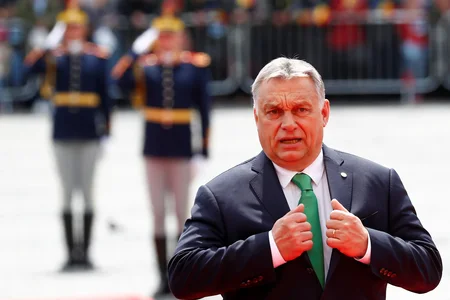
The push comes as Hungary, less than a week before the April 12 election, has repeatedly blocked major decisions, including a 90 billion euro loan for Kiev, raising concerns in other capitals that EU foreign policy outcomes could be held hostage by domestic politics. Even if Prime Minister Viktor Orbán loses power, diplomats warn that the underlying problem remains, because unanimity allows any government to take on the same blocking role.
“Ka probleme serioze në mënyrën si marrim vendime”, tha për Politico ligjvënësi socialist spanjoll Nacho Sánchez Amor, anëtar i Komisionit për Punët e Jashtme në Parlamentin Evropian, duke shtuar “çdo muaj del një çështje e re që e thekson këtë prirje. Duhet të reagojmë”.
Një grup tjetër, ku përfshihen Franca, Belgjika dhe vende më të vogla anëtare, që kanë frikë se mund të mbivendosen nga vendet e mëdha, po mbron me vendosmëri të drejtën e vetos, duke argumentuar se ajo është thelbësore për interesin e tyre kombëtar.
“Të hapësh tani një debat për rregullat e unanimitetit evropian, mendoj se do të ishte mënyra më e shpejtë për ta futur BE-në në telashe të vërteta,” u tha gazetarëve në Bruksel muajin e kaluar kryeministri belg Bart De Wever.
Njëqind lule çelin
Një pikë gëzon pothuajse dakordësi të plotë në kryeqytetet evropiane: sistemi nuk po funksionon.
“Shikoni sanksionet ndaj kolonëve në Bregun Perëndimor, është një katastrofë e plotë,” tha një zyrtar i lartë i BE-së me njohuri mbi çështjen, duke iu referuar planeve të mbështetura gjerësisht për vendosjen e sanksioneve ndaj kolonëve ekstremistë izraelitë, por të bllokuara nga Hungaria.
“Kemi 26 vende nga 27 në favor, madje edhe Gjermania është pro, por nuk mund të bëjmë asgjë për shkak të njërit”.
Ashtu si të tjerët në këtë artikull, zyrtari kërkoi anonimat për të folur lirshëm, pasi diskutimet janë konfidenciale.
Tensionet e fundit institucionale e kanë forcuar ndjesinë e humbjes së drejtimit. Presidentja e Komisionit Evropian Ursula von der Leyen dhe diplomatja e lartë e BE-së Kaja Kallas janë përplasur për atë se kush duhet të marrë drejtimin në politikën e jashtme, ndërsa ministri i Jashtëm francez Jean-Noël Barrot e paralajmëroi shefen e Komisionit të respektojë kufijtë e rolit të saj gjatë një takimi të ambasadorëve të BE-së muajin e kaluar.
Por diplomatët dhe zyrtarët thonë se këto beteja kompetencash janë simptomë, jo shkak.
Në prapaskenë, diskutimet kanë nisur tashmë. Po zhvillohen shkëmbime “joformale, në nivel të lartë” mes vendeve të mëdha anëtare për të shqyrtuar zgjidhje të mundshme, përfshirë dhënien e një roli më të madh politikës së jashtme në takimet e Coreper-it në nivel ambasadorësh dhe reformimin e Shërbimit Evropian për Veprim të Jashtëm (EEAS) për të përmirësuar vendimmarrjen, tha diplomati.
Por, pranoi ai, “ende nuk i kemi përgjigjet.”
Problemi është vetoja, pikë
Për shumëkënd, problemi real është unanimiteti.
Një diplomat i tretë i lartë i BE-së përmendi një episod domethënës nga viti 2022, kur ministri i Jashtëm hungarez Péter Szijjártó mori pjesë në mbledhjet e Këshillit të Energjisë të BE-së, ku vendimet mund të merren me shumicë të cilësuar.
“ He was behaving like Szijjártó… attacking in all directions ,” the diplomat said. But, unlike foreign policy, in this case Budapest could be outvoted. “He was shocked. He thought he was still in the FAC,” the diplomat added, referring to the Foreign Affairs Council. “In September (when the Energy Council meetings resumed) he suddenly became Mr. Polite and Pleasant Minister.”
With French President Emmanuel Macron and German Chancellor Friedrich Merz still at odds on the issue, think tanks and political parties are moving to shape the debate.
The center-right European People's Party (EPP) has put forward proposals to reformat the EU's foreign policy architecture, calling in its 2024 manifesto for replacing the high representative for foreign policy with an "EU foreign minister, as vice-president of the European Commission," as well as the creation of a Security Council that would also include partners such as the United Kingdom, Norway, and Iceland.
Integration of the EEAS into the Commission
Stefan Lehne, a senior fellow at the Carnegie Endowment, has also argued for similar structural changes, including bringing the EEAS back within the Commission and creating a European Security Council to respond more quickly to emerging threats, including drones and missiles from Iran.
“The fact that our foreign policy structures are dysfunctional is understood by many people,” Lehne told Politico.
The idea of integrating the EEAS into the Commission has some support “especially in the office of the Commission President,” he added. But not everyone is convinced.
“I think the Commission would really like this,” a fourth EU diplomat said of the idea of bringing the EEAS into the EU executive.
While a senior EEAS official rejected it more emphatically: "people write documents, it's their right."
For Sánchez Amor, the problem has less to do with structures and more with political will.
"We should use the fact that there are so many problems in decision-making to think seriously about this: Let the Council, Parliament, Commission and the high representative come together to talk about this," he said, while warning against treaty changes.
Others see the diagnosis more simply.
“The basic problem has not changed; the basic problem of foreign policy is unanimity,” said the third senior EU diplomat. “You can create 1,000 institutions. As long as you have unanimity, it cannot function properly.” /Adapted from Politico /


Lini një Përgjigje