


 Shkruar nga Francesca Salvatore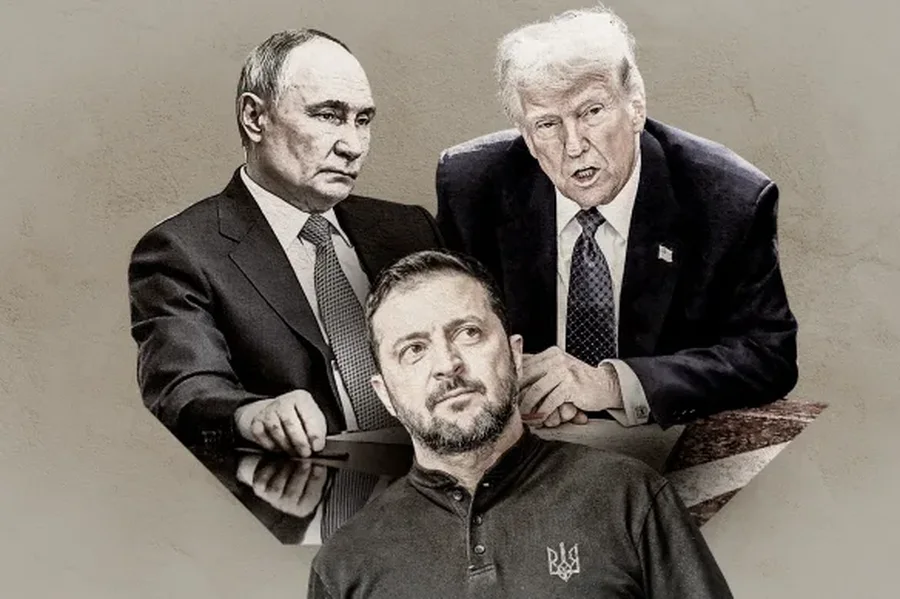
Five days before the Trump-Putin meeting in Alaska, Moscow proposes a ceasefire in exchange for Donbas and Crimea. Kiev refuses to back down, EU calls for negotiations with Ukraine. Washington seeks a quick compromise…
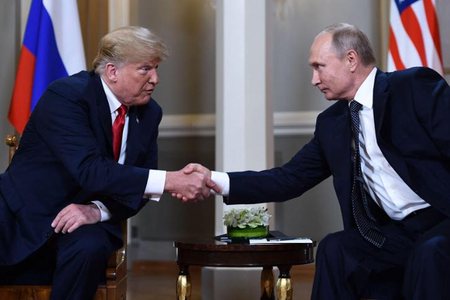
Five days before the highly anticipated summit in Alaska between Vladimir Putin and Donald Trump, international diplomacy is at its peak. The conflict in Ukraine remains in the background, with a still fragile peace process and a patchwork of different interests. Rumors emanating from Washington, Brussels and Moscow paint a complex picture, in which border demarcation, security guarantees and the timing of a ceasefire are intertwined with geopolitical calculations and domestic objectives.
Putin takes Donbass: peace or surrender?
The Kremlin’s intentions emerge from a fog of uncertainty and confidential sources. According to the Wall Street Journal, during a meeting with US envoy Steve Witkoff, Putin proposed a ceasefire in exchange for full Russian control over all of the Donetsk and Lugansk regions, the heart of Donbas. At the same time, Bloomberg reports even broader demands: Moscow wants Kiev to give up not only Donbas but also Crimea, thus formalizing past annexations, in exchange for a ceasefire and a “freeze” of parts of the southern front. Moreover, a few hours earlier, the German newspaper Bild revealed that, during the August 6 meeting with the Kremlin leader, the US special envoy misinterpreted a Russian request for a “peaceful withdrawal” of Ukrainian forces from Kherson and Zaporizhzhia, confusing it with an offer by Moscow to withdraw its troops from the same regions.
These conditions, interpreted as diplomacy when they are a disguised surrender, risk de facto sealing a Russian territorial victory under the guise of peace. The timing of the Alaska summit, announced on August 8, just as the US sanctions ultimatums expired, has fueled suspicions that Moscow has secured an informal ceasefire in exchange for this opening of negotiations.
Europe joins forces: no decision without Ukraine
In response to Moscow’s moves, European capitals have launched a coherent and forceful diplomatic line. At a meeting in Kent, chaired by British Foreign Secretary David Lammy, the leaders of France, Italy, Germany, Poland, Finland and the European Commission signed a declaration stating unequivocally that peace negotiations cannot proceed without the direct involvement of Ukraine. This could significantly complicate the much-anticipated face-to-face meeting between Washington and Moscow. They are accompanied by a clear warning: no border changes will be acceptable if imposed by force.
German Chancellor Friedrich Merz also called for Zelensky to attend the Trump-Putin summit in Alaska. "We hope and assume that the Ukrainian government, President Zelensky, will attend this meeting," he said in an interview with broadcaster ARD. The coalition also outlined a strategic plan already discussed at the London summit: continued military aid to Kiev, increased economic pressure on Moscow, security guarantees with a readiness to engage on the ground and a precondition for Ukrainian presence at all stages of the negotiations. This is a clear response to any proposal that formally or de facto excludes Kiev.
Zelensky: No surrender, only resistance
From Kiev, President Volodymyr Zelensky responded firmly. "We will not give our land to the invader," he declared, reiterating that peace cannot be negotiated through territorial concessions. He added that any unilateral negotiations risk turning into a geopolitical trap, with Kiev forced to accept solutions imposed by external powers. Similarly, Zelensky expressed gratitude to Europe for its political and diplomatic support, while stressing that the main objective remains to protect Ukrainian interests and maintain the ability to resist, even at the cost of a protracted war. The possibility of a bilateral agreement between Washington and Moscow to redraw borders without the full involvement of Kiev represents the worst-case scenario for the Ukrainian leadership.
The Ukrainian president has not been invited to Friday's meeting in Alaska between President Trump and President Putin, but "it is possible" he will attend, Matthew Whitaker, the U.S. ambassador to NATO, said in an interview with CNN. "No decision has been made yet," he added, explaining that "obviously, the decision is up to the president. There is time to make it, but it hasn't been made yet."
United States: Between Trump and what's left of Biden's legacy
Trump had promised to end the conflict within 24 hours, even at the cost of recognizing Russian territorial gains, and the Alaska summit with Putin appears to be the first test of this strategy. Trump is hinting at a direct approach, marked by pragmatic and rapid negotiations, with possible concessions in four occupied regions: Luhansk, Donetsk, Zaporizhzhia and Kherson, as well as in Crimea. This line represents a clear break with that of his predecessor, Joe Biden, who focused on long-term military and financial support for Kiev, strengthening NATO and maintaining constant economic pressure on Moscow. Washington’s current stance worries many European capitals and, above all, Kiev, which fears it will be forced into a territorial compromise in exchange for a ceasefire that may be temporary.
Meanwhile, JD Vance, in a nervous interview on Fox, declared that the deal ultimately "will not make either Russia or Ukraine happy." He explained that he did not believe that a meeting between Putin and Zelensky would be productive before the meeting with Trump, adding that ultimately, it is the US president who must bring the two sides together. He stated that the United States will talk to Ukraine and keep the dialogue open, but explained that essentially, this is an issue where the president must force Putin and Zelensky to sit down at the table.
Washington's line finds full consensus at the highest levels of NATO. "The meeting between Donald Trump and Vladimir Putin will be important because it will be a test of Putin's seriousness in ending this terrible war," NATO Secretary General Mark Rutte said in an interview with ABC, underlining that the meeting is a valid starting point, but no agreement is possible without Ukraine or without taking into account the security and independence of Kiev.
"There will be talk about territory. There will be talk about security guarantees, but also about the absolute necessity of accepting that Ukraine determines its own future, that it must be a sovereign nation," Rutte noted. /Adapted from Il Giornale/




Lini një Përgjigje