


 Shkruar nga Daniel Serwer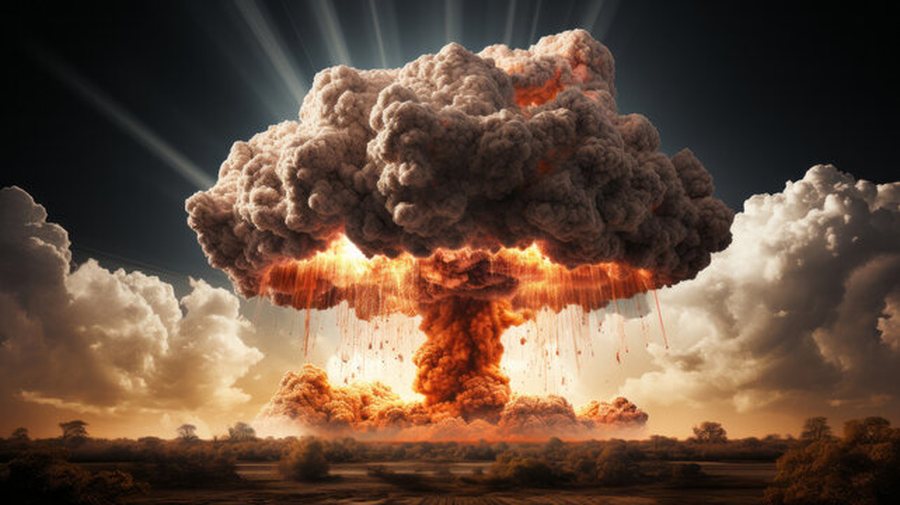
Further escalation appears irreversible.
After Hiroshima and Nagasaki, nuclear deterrence became the strongest parameter in geopolitical power projection. Nuclear weapons may ultimately be decisive in the Middle East.
Israel and Iran are now in direct confrontation
Maintaining state security and regional dominance are the main goals of the main protagonists, Israel and Iran. Since the spring they have faced each other directly. Two exchanges of missiles resulted. Further escalation appears irreversible.
Serious questions require serious answers. Where is this dynamic leading? What's next? Is there hope for an end to the escalation after next week's US presidential election? Is the global superpower willing or even capable of changing the dynamics of war in a peaceful direction?
The next American president
Candidate Donald Trump in 2018 unilaterally withdrew the US from the Iran nuclear deal. A few days ago, Trump asked Israel to attack Iran's nuclear facilities. This would force Iran to end its doctrine of strategic patience. Iran would withdraw from the Nuclear Non-Proliferation Treaty (NPT), develop the military dimension of its nuclear program and build nuclear warheads. Iranian parliamentarians are already proposing this course of action.
The other candidate, Vice President Kamala Harris, was an important voice in Washington as the current crisis in the Middle East unfolded. President Biden has struggled to prevent the spiral. His effort slowed, but it didn't stop him.
The consequences are dire
The continuation of this situation could force Israel to abandon its doctrine of nuclear obscurity. It neither confirms nor denies its nuclear weapons. Prime Minister Meir considered using nuclear weapons during the 1973 Yom Kippur War to respond to advances by the Egyptian military. Prime Minister Netanyahu may also be forced to review or threaten their use.
An Iranian decision to pursue nuclear weapons or Israeli confirmation of its nuclear capability would change the situation dramatically. Either or both would challenge the credibility of the Non-Proliferation Treaty, the IAEA and the UN Security Council. The addition of Iran to the non-member states of
the Treaty on the Non-Proliferation of Nuclear Weapons (India, Pakistan, North Korea and Israel) could undermine the global security architecture. Mushroom clouds will appear over the Middle East./ Adapt "Pamphlet" from "Peacefare"



Lini një Përgjigje