


 Shkruar nga Pamfleti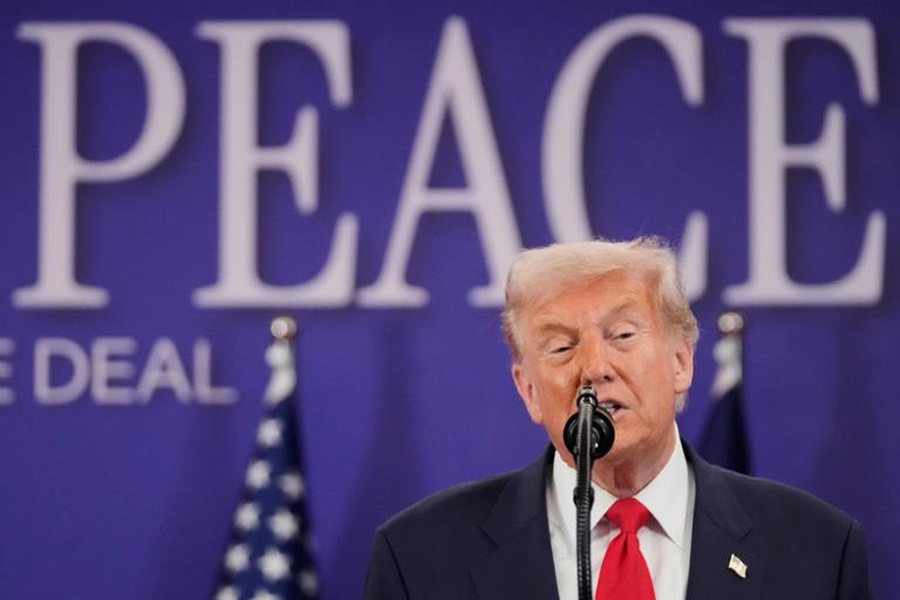
Argentine President Javier Miel has confirmed his participation in the first meeting of Donald Trump's "Peace Council" on February 19 in Washington. Romanian President Nicusor Dan and Hungarian Prime Minister Viktor Orbán have also received invitations to the meeting...
While Milei has agreed to participate, Romania's participation still depends on discussions about the format. Dan stated that his country wants to join the body, but only on condition that the statutes are revised. Orbán had signaled his willingness to participate.
Amid mounting international criticism, Donald Trump's "Peace Council" will meet for the first time in Washington on February 19. The body, rejected by many European countries as a rival to the United Nations, aims to advance the second phase of the Gaza peace process, but most Western allies are refusing to support it. As Trump gives his council a broad mandate and himself the sole right of veto, Germany called for the UN to be defended as "our peace organization."
According to the news portal Axios, the White House plans to use the meeting of senior politicians to advance the second phase of the Gaza peace process and raise funds for the reconstruction of the war-torn coastal strip. The New York Times also confirmed the meeting, citing the relevant invitation letters.
The "Peace Council", launched in Davos in January, is facing considerable international resistance. Many European countries, including Germany, reject Trump's "Peace Council" as a competitor to the United Nations. Contrary to initial expectations, its mandate is not limited to monitoring the peace process in Gaza, but includes broad powers.
Most Western allies have not joined the body because Donald Trump holds veto power over decisions and the council's charter gives it a very broad mandate. Members include Hungary, Israel, Belarus, Qatar, Saudi Arabia and Turkey.
At the end of January, Chancellor Friedrich Merz stated that membership in Trump's "Peace Council" in its current form was not possible. However, the German politician expressed a general openness to new formats for dialogue with the US. "Of course, we are prepared to consider other, new forms of cooperation with the United States of America," Merz explained.
The planned second phase of the Gaza ceasefire agreement calls for the disarmament of the Islamist group Hamas, which the Palestinian terrorist organization rejects. In addition, the "Peace Council" will create an international stabilization force to maintain order in the Gaza Strip, although its exact composition remains unclear.
Foreign Minister Johann Wadephul (CDU) also indirectly criticized the "Peace Council" recently. Without directly mentioning Trump's body, he emphasized in a meeting with his Australian counterpart Penny Wong that it was necessary to "protect the rules-based international order and the United Nations as our peace organization."




Lini një Përgjigje