


 Shkruar nga Frank Ledwidge
Kharkiv, the Soviet capital of Ukraine between 1919 and 1934, was the center of tank and military weapons production until 2022. Now dozens of its factories are out of operation.
Last week I visited Ukraine to update my knowledge on the military situation there. I had the privilege of being invited by a friend to visit Kharkiv and spent a few days there observing the situation, of course avoiding the most dangerous parts of the city, where drone and missile attacks are relatively common.
There aren't many trains to Kharkiv and if you're late booking then it's an eight-hour bus journey from the capital Kiev. Buses in Ukraine, like anywhere else, have their advantages.
For starters, there is the opportunity to see some of the small and often very poor communities along the way. These towns say much more about the country than the sophistication and relative wealth of Kiev.
It is striking that, while Kiev has no apparent shortage of men of military age on the streets, in bars and restaurants, the eastern cities and Kharkiv itself are conspicuously devoid of men. When you see men between the ages of 25 and 60 (the age at which men are subject to military conscription), they are clearly on leave from the front.
Kharkiv, the Soviet capital of Ukraine between 1919 and 1934, was the center of tank and military weapons production until 2022. Now dozens of its factories are out of operation.
With Russia about 25 miles away, there is little warning of missile or drone attacks, and it would be impossible to support any kind of production in wartime. The eastern suburbs have been devastated by artillery and bombs, and are almost uninhabited.
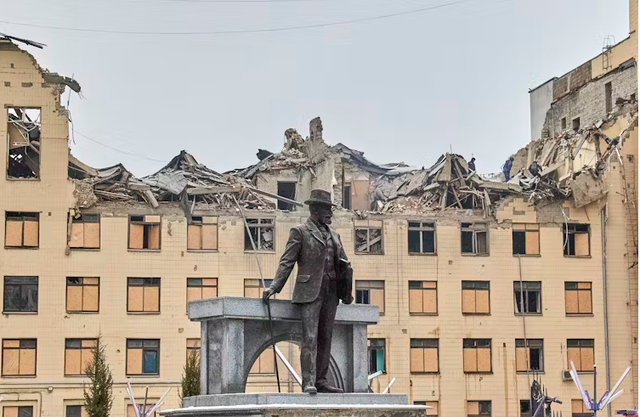
The center of Kharkiv is much more visibly damaged than the almost unscathed center of the country's capital. Many public buildings, including those around the vast central Freedom Square, have been destroyed or burned. However, throughout the city, few windows are visibly broken. Once damaged by the explosion, they are repaired almost immediately by the surprisingly efficient city authorities. The city is exceptionally clean and apparently much better run than most English cities.
Life during wartime
At first glance, life seems to go on as it does everywhere else. Shevchenko and Gorky parks are fully functional, in the summer sun with flowers in bloom and children riding their little vehicles along the litter-free paths. Something of the Soviet idyll remains, with classical music wafting through the trees, piped through loudspeakers.
The upscale Nikolsky shopping mall, off the central Sumy Prospekt, said to be the largest in Ukraine, is well-stocked, bright and bustling. At night the bars are packed. Their clientele is considered by their young counterparts in Kiev to be more or less crazy just for being there. It is fitting that Kharkiv's proud epithet "invincible" is seen on signs everywhere.
Despite all this, there is a persistent sense of emptiness. Before the full-scale war began in 2022, Kharkiv had a population of about 1.5 million. My friend, an academic, estimates that less than half remain, although there are no official figures. Perhaps a million are abroad or elsewhere in Ukraine. People worry about how many of them will return.
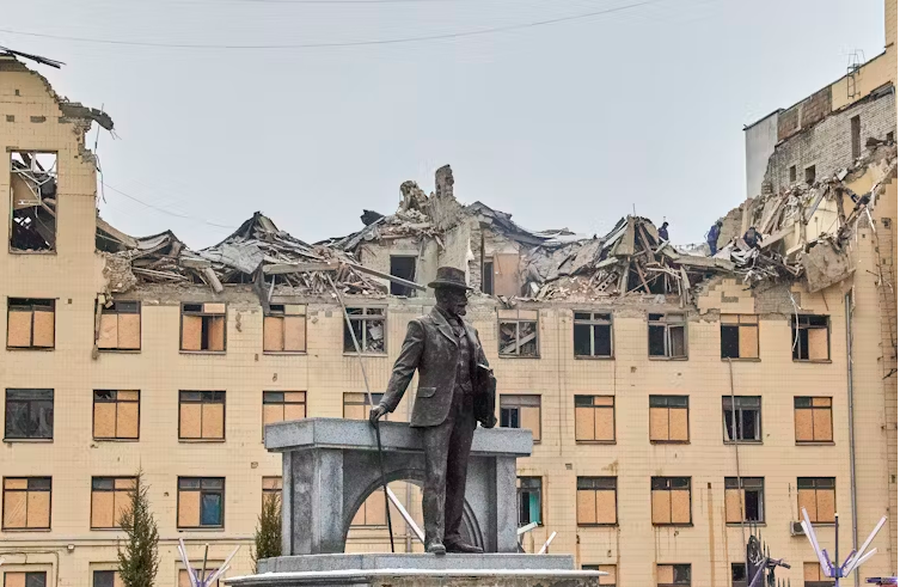
The city was Ukraine’s academic center, hosting among its nearly 30 colleges and universities the country’s oldest, the Karazin Kharkiv National University, named after its founder of the same name in 1804. This year, student enrollment is expected to be well below 100,000, down from 300,000 before the war. Previously, many students were from Asia and Africa, a tradition that stretches back to Soviet times. They have all now left and may never return.
It is thought that it is not advisable for foreigners to stay in hotels. Some of them have been targeted by the Russians on the grounds that journalists might be staying there. Foreign media and troops from the Ukrainian Foreign Legion are the only non-Ukrainians seen around now, and not very often. With so many empty apartments, there is no shortage of accommodation on offer.
Eternal war
The war is always there. There is little commercial advertising. Instead, advertisements on bus stops, billboards, and buildings promote images of leaders of various elite military corps: Azov, Kartiia (which defends Kharkiv), the Marines, the 93rd Mechanized Division.
These young generals are likely to be prominent in a post-war Ukraine. Citizens are never left in any doubt that they and their soldiers stand directly between them and the brutality of the Russian military.
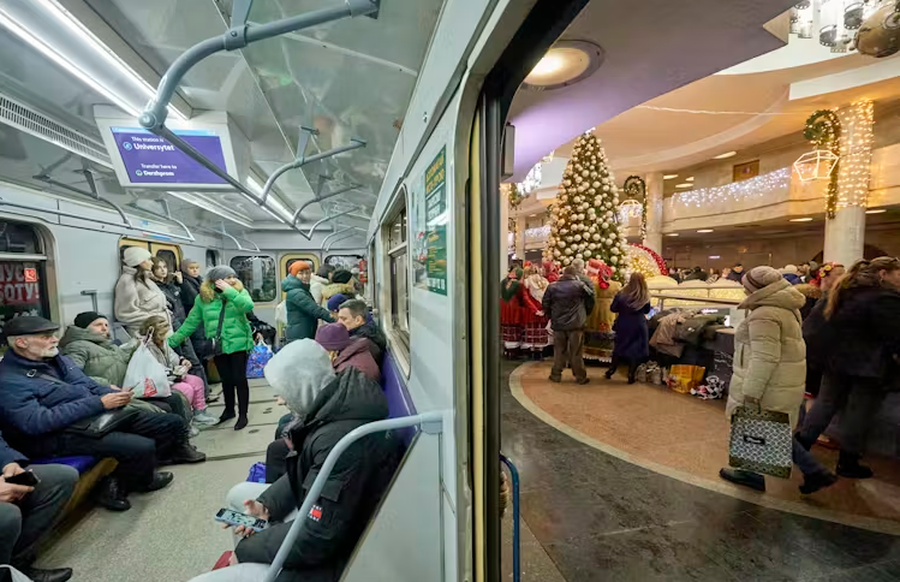
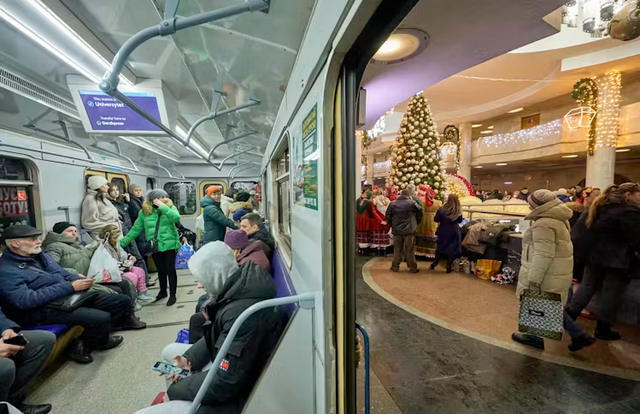
Men and women sit on an underground train in the Kharkiv metro. The metro station is decorated for Christmas.
Despite its strong ground defenses, Kharkiv has few of the air defenses that protect Kiev. Sirens wail six times a day and at all hours of the night, accompanied by a somber female voice that echoes almost supernaturally over the rooftops: “Attention, air raid alert. Please go to shelters.”
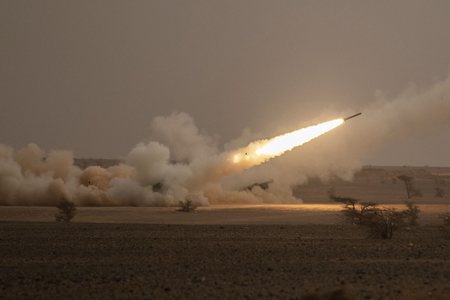
No Patriot anti-aircraft missiles fly in the sky over Kharkiv, it is simply too close to potential Russian counter-attack capabilities, which can identify and target critical missiles and radars. Rapid-fire anti-aircraft guns, which provide more encouragement than effectiveness, can be heard throughout the city at night.
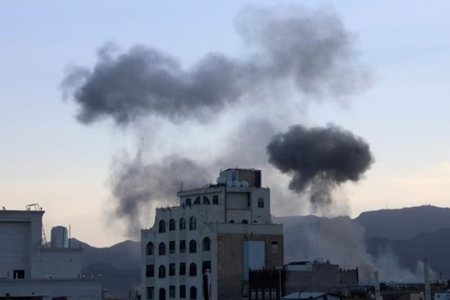
A random noise announces a drone or missile attack.
The bus returning to Kiev and west begins its journey in one of the "fortress cities" of Donetsk Oblast, or province, picking up passengers in Kharkiv.
Most are women with large bags or tired soldiers, heading home for a few days of rest away from the front, drones and artillery.
The bus winds through those ruined towns and villages again. Few get off in the capital. I am reminded once again that this, like all others, is a war for the poor. / Adapted from Theconversation/




Lini një Përgjigje