


 Shkruar nga Pamfleti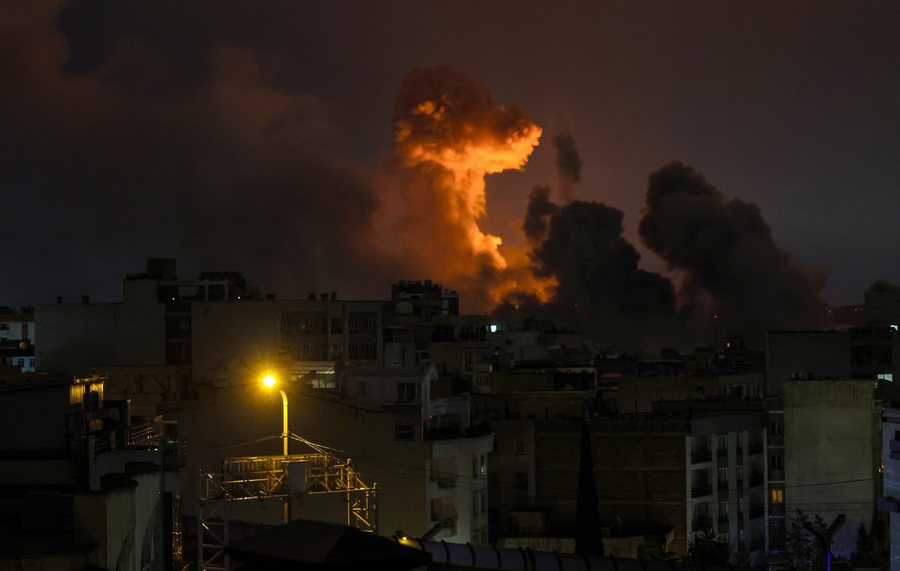
US forces conducted airstrikes on Iran for about five hours...
Tensions between the United States and Iran have escalated again, as Washington has launched a new wave of airstrikes on Iranian targets, while Tehran has responded with attacks on American interests in the region and new threats to the Strait of Hormuz.
A US official confirmed to ABC News that US forces conducted airstrikes on Iran for about five hours.
US Central Command (CENTCOM) also announced that the operation had ended, emphasizing that the goal was to further weaken Iranian capabilities to threaten civilians and commercial traffic in the Strait of Hormuz.
" These attacks will continue to impose a high cost on Iran, further impairing its ability to harm innocent civilians and merchant vessels in the Strait of Hormuz ," CENTCOM stated.
US President Donald Trump confirmed that military operations will continue.
" We will strike all Iranian capabilities in the Strait of Hormuz ," Trump declared, also warning that the Pickaxe Mountain nuclear facility could also be targeted.
On the other hand, the Islamic Revolutionary Guard Corps (IRGC) claimed to have struck US weapons depots in Bahrain and positions for US military drones in Kuwait, stating that several drones were destroyed or damaged.
In a statement, the IRGC warned that operations will continue as long as the US continues its attacks.
" Revenge and punishment of the aggressor will continue as long as the United States continues its crimes. If these attacks are repeated, they will face even more unexpected responses ," the Revolutionary Guards declared.
Tehran also warned that the conflict would directly affect global energy traffic.
" As long as the US continues its hostile actions in the region, not a drop of oil or gas will be exported from the region, and these attacks will only delay the reopening of the Strait of Hormuz ," the statement said.
Kuwait's Defense Ministry said Iranian attacks targeted a ship belonging to the Kuwaiti Navy, injuring four personnel.
She added that Iran launched a ballistic missile, five cruise missiles and 33 drones towards Kuwait on Tuesday, all of which were intercepted.
The attacks are said to have also targeted civilian infrastructure and that shrapnel has fallen in various locations across the country, causing material damage.
Meanwhile, earlier, Iran attacked two supertankers in the Strait of Hormuz, belonging to a state-owned shipping company based in Abu Dhabi. An Indian crew member was killed in the attack.
The new escalation of the conflict has returned volatility to international energy markets. According to Reuters, the price of Brent oil rose 4.3% on Monday, reaching $79.31 per barrel.
A day earlier, the US declared that it had taken full control of the Strait of Hormuz, a claim that was denied by Iran. Trump said that Washington intends to continue to administer this strategic sea route and had proposed that ships passing through it pay a 20% tariff. But he backed down shortly afterwards.
The Strait of Hormuz remains one of the world's most important energy corridors, carrying about a fifth of global oil trade. The escalating conflict has raised fears of a new energy crisis and a further expansion of the war in the Middle East.






Lini një Përgjigje