


 Shkruar nga Pamfleti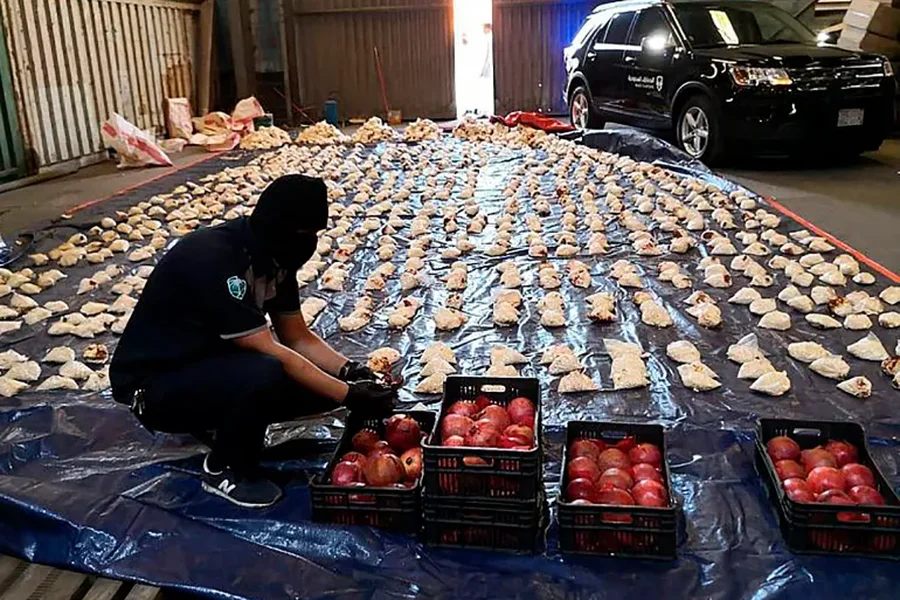
Bashar al-Assad's regime in Syria has profited enormously from the production and distribution of Captagon, a powerful drug that has earned Syria the title of "Captagon Capital".
This drug, otherwise known as "poor man's cocaine", is a mixture of amphetamine and theophylline, originally developed as a treatment for conditions such as ADHD. It became popular for its stimulant effects, which made it very useful for fighters, including those of ISIS and Hamas.
Captagon became a major source of income for the Assad regime, with profits from its sale estimated to exceed the profits of all of Mexico's drug cartels. The drug trade was overseen by Assad's inner circle, including his brother Maher al-Assad, and most of the production took place in Syria's coastal areas.
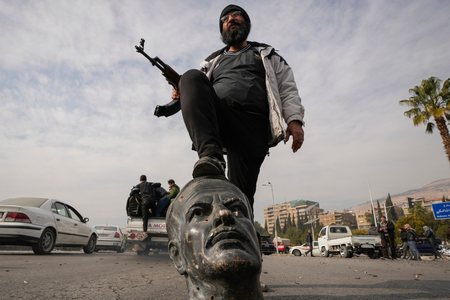
However, Captagon production has suffered a sharp decline recently, following the collapse of the Assad regime and the departure of the Assad family to Russia. With the capture of major manufacturing plants by the rebels, trade has fallen by about 90%, and most operations have shifted to small groups and smaller groups. However, experts suggest that other groups, such as Iraqi militias linked to Iran's Islamic Revolutionary Guard Corps (IRGC), could replace the Assad regime and resume this lucrative trade.
Captagon's impact in the Middle East has been huge, with Gulf states such as Saudi Arabia, Kuwait and Qatar experiencing high levels of drug use and seizures. Jordan, for example, has blocked 65 million tablets by 2022. The trade has led to international sanctions against Assad's allies, and even European countries have been affected, with large seizures in Italy.
Why does Syria produce so much Captagon?
In 2011, after a brutal government crackdown on anti-Assad protesters, Syria descended into civil war. Internationally isolated and wracked by fighting, the country plunged into an economic crisis.
Although Damascus denies any involvement in the trade, observers say drug production and smuggling have brought in billions of dollars for al-Assad, his associates and allies as they seek an economic bailout.
According to a report by the New Lines Institute, the Syrian government uses "local alliance structures with other armed groups such as Hezbollah for technical and logistical support in the production and trafficking of Captagon."
Experts say most of Captagon's global production is now in Syria, with the wealthy Gulf states as the main destination.






Lini një Përgjigje