


 Shkruar nga Matt Dathan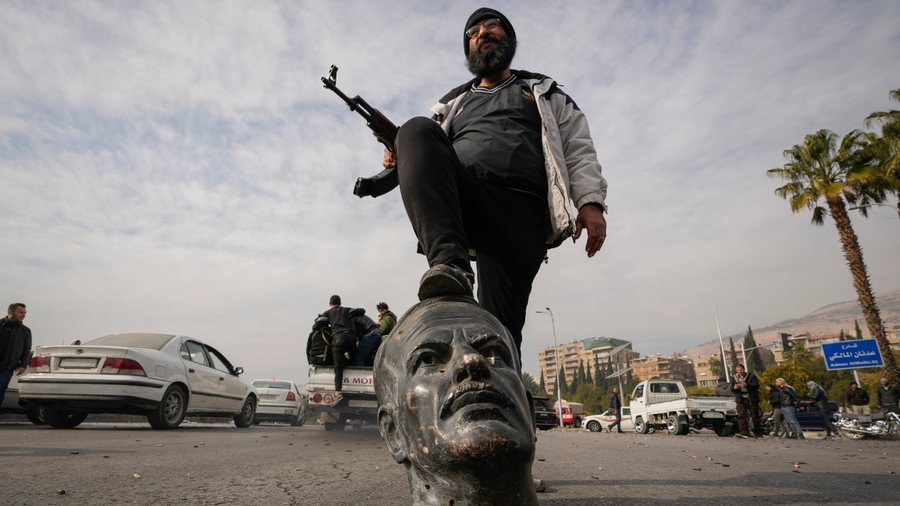
There are also dozens of British jihadists who traveled to Syria and Iraq to fight for ISIS from 2013 onwards....
The overthrow of Bashar Al Assad's regime in Syria risks creating a haven for terrorists, which could lead to a new form of the Islamic State. This is the warning made by the terrorism expert in Great Britain, Jonathan Hall. He fears that the capture of Damascus by the Hayat Tahrir Al-Sham (HTS) rebel group could lead to the release of jihadist fighters from prisons and detention camps in northeastern Syria.
British Prime Minister Keir Starmer said London welcomes the fall of the "barbaric regime" of Bashar al-Assad, but stressed that it is still too early to confirm whether his government will cooperate with the new leadership in Syria. HTS is the most powerful of the groups fighting to take control of all of Syria.
It has been a banned terrorist group in the UK since 2017 due to its historical links to Al-Qaeda. This means that any connection or support to it constitutes a criminal offense in Britain. The British government is not expected to change its approach to HTS very soon.
As he waits to see what the group's next steps will be. However, the Ministry of the Interior signals that the behavior towards it may change in the longer term, if the group shows with deeds that it has completely separated from Al-Qaeda.
Thousands of former ISIS fighters, as well as other jihadists, are imprisoned in the autonomous region in northeastern Syria controlled by the Syrian Democratic Forces (SDF), a Kurdish-led group backed by the United States. There are also dozens of British jihadists who traveled to Syria and Iraq to fight for ISIS from 2013 onwards.
Hall says: "We don't know what will happen to the prisons and detention centers in northeastern Syria that are run by the SDF. It may happen that Kurdish autonomy is preserved in this part of Syria. In any case, there will be fears that if the SDF loses control, then former Islamic State fighters who are currently in custody could form the core of a new Islamic State, or rush to join HTS and reinforce its objectives. their extremists.
I am as worried about Syria today as I was yesterday about Libya, Iraq and Afghanistan. We've all been talking about Taliban 2.0, but they turned out to be just as extremist as the first government. Just look at the way they are treating women. We should be very concerned about anyone with jihadist roots."
Richard Dearlove, who headed Britain's MI6 secret service from 1999-2004, believes the greatest danger comes from terrorists behaving as "lone wolves" who are likely to be freed and emboldened by the fall of the regime. of Assad.
"Everyone is very enthusiastic about liberating Syria from Assad, but we have all seen what happened in Iraq after the fall of Saddam's statue. Also, we saw what happened after similar euphoria in Libya. And the situation in Syria is really complex.
Much will depend on the developments of the coming months. There are some circumstances that could encourage terrorism, but at the moment people are looking at the very confusing internal politics of Syria and the multitude of groups that will compete with each other to form a government, and hope that it will be truly pluralistic.
The organizational structure of ISIS has weakened significantly. The question is whether it has the potential to foster the action of 'lone wolves' or an organized conspiracy... What is happening in Syria, like what is happening in Gaza with Hamas, will cause individuals to become radicalized to a degree such that they carry out individual attacks".
Robert Jenrick, Tory shadow justice minister and former migration minister, warned: “We should be particularly concerned about the tens of thousands of ISIS prisoners and foreign nationals currently detained in Syria. There is nothing worse for the region - and the UK - than for them to return to the battlefield or land on our shores."
Dearlove, meanwhile, predicts that UK intelligence agencies will not lift the ban on HTS until they have hard evidence of access to the Syrian government. He says: "This will depend a lot on how the internal policy will develop. HTS's declaration of not attacking institutional targets in Damascus is encouraging. Maybe he will do something different in government, but let's see what will happen". Hall adds: "There will be great care in considering removing HTS from the list of terrorist organizations. In general, such decisions are very rare. I think it is unlikely that the British government will rush to lift the ban on HTS."
In fact, since 2000, this has only happened on a few occasions. However, the Interior Ministry, which usually follows a very strict policy of not commenting on ban decisions, has signaled that it is open to the prospect of canceling this measure in the long term, noting that the group has distanced itself from Al -Caeda.
A Home Office spokesman said: "Since 2017, HTS's relationship with Al-Qaeda has changed. There is a clear separation between the two organizations. The situation on the ground in Syria is very dynamic. The safety of Syrian civilians and a political solution must be prioritized.
Usually the British government does not comment on whether a group is being considered for removal from the blacklist of terrorist organizations. Prime Minister Starmer, who visited Abu Dhabi on Sunday for talks with Middle East leaders on investment and security, said it was "too early" to discuss whether London's approach to HTS would change.
"We need to see a political solution to the crisis, and we are discussing this with regional allies. The fall of Assad is a positive development for the Syrian people. But the rejection of terrorism and violence must be guaranteed, the protection of civilians, minorities, and this can only be done through a political process".
Asked if he expects to communicate with the new regime, he said: "We have to see this as an opportunity for the future of Syria, a future that has been denied to Syrians for so long." John Sawers, another former MI6 chief, said it would be "rather ridiculous" if London refused to cooperate with HTS.
He anticipates that the Minister of the Interior will ask the intelligence agencies to review its status. He told Sky News: "When I was head of MI6 10 or 12 years ago, we analyzed and classified the Syrian opposition groups into those that we could support and those that were very close to Al-Qaeda. Tahrir Al-Sham was definitely in the latter category.
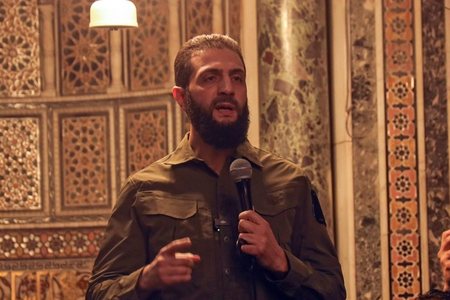
But I think its leader, Abu Mohammed Al-Jolani, has made great efforts over the last 10 years to distance himself from those terrorist groups, including Al-Qaeda. And we have seen this over the last 2 weeks. HTS has behaved as a liberation movement, and not as a terrorist organization." /Adapted "Pamphlet" from "The Times"


Lini një Përgjigje