


 Shkruar nga Pamfleti
Venezuelans are growing weary of hope as their dictator defies the might of the United States...
Christmas in Venezuela has been around since October 1. The plastic trees sprinkled with snow in the squares of the capital, Caracas, look dirty after months in the tropical heat. In September, the president, Nicolas Maduro, ordered the festivities to start early. State-owned companies did as they were told.
"Not putting up the trinkets was seen as evidence of dissent; that's how surreal this place is," says one business owner.
Maduro said he brought the date forward to promote “joy and happiness.” His real motivation was less charitable; staging a circus in an attempt to stop Venezuelans from focusing on their grim reality.
It's a trick he's done before. State television began playing Christmas carols on October 1, 2024. The country was reeling after Maduro blatantly stole the election. Many Venezuelans have since given up on politics. "I don't read the news because I don't want to worry anymore," says an elderly woman in a Caracas market, adding, "whatever has to happen, will eventually happen."
Maduro and his cronies rule against the will of the vast majority of Venezuelans. But because institutions, including the military, the courts and the electoral authority, have been taken over by the regime, the people are powerless. Thousands were imprisoned after the election was stolen, and anti-government protests are now nonexistent. But discontent runs deep. Eight in ten Venezuelans think a change of government is necessary or very necessary, according to a poll by the Andrés Bello Catholic University in Caracas.
This blockade has left millions of Venezuelans silently wondering whether change can be brought to their country from the outside. They can hardly be unaware of the arrival of the bulk of the US Navy's Fourth Fleet in the Caribbean basin, along with the USS Gerald R. Ford, the world's largest aircraft carrier.
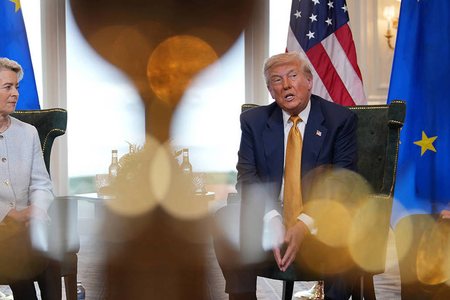
Donald Trump ka bërë premtime të paqarta të përsëritura se zoti Maduro, i etiketuar si "narkoterrorist" nga Shtetet e Bashkuara, së shpejti mund të largohet nga pushteti. Qëllimi i asaj që është quajtur "Operacioni Shtiza Jugore" është gjithashtu i paqartë. Fillimisht u shit si një operacion kundër drogës: të paktën 28 anije të dyshuara për trafik droge janë fundosur dhe 104 persona janë vrarë në sulme me raketa si në Karaibe ashtu edhe në Paqësor. Por njëkohësisht duket se është projektuar për të ushtruar presion mbi Maduron, me të cilin Trump ka folur një herë në telefon në nëntor, që të japë dorëheqjen. Shumicën e ditëve tani avionët amerikanë fluturojnë në mënyrë joshëse afër hapësirës ajrore të Venezuelës, me transponderët e tyre të lënë të ndezur, në mënyrë që të lënë shenja mbi Karaibe në aplikacionet e gjurmimit të fluturimit.
Në javët e fundit, Shtetet e Bashkuara i kanë shtuar një element të ri fushatës së tyre të presionit. Po përpiqen të ndalojnë anijet "në hije" që transportojnë naftë venezueliane. PDVSA , kompania shtetërore e naftës e Venezuelës, ka qenë subjekt i sanksioneve amerikane që nga viti 2019. Por ajo dhe ndërmjetësit e saj kanë mësuar të mbajnë eksportet e naftës në qarkullim përmes mashtrimit: anijet ndryshojnë emra rregullisht, shkëmbejnë ngarkesa në det, valëvisin flamuj të rremë dhe falsifikojnë pozicionet e tyre GPS . Rreth 40% e anijeve që tregtojnë naftë venezueliane janë vetë nën sanksione, sipas TankerTrackers.com.
Më 10 dhjetor, komandot amerikane hipën në anije dhe sekuestruan një: Skipper, një supertanker që sapo kishte marrë 1.8 milionë fuçi naftë bruto venezueliane. Ekuipazhit iu urdhërua të lundronte drejt bregdetit të Gjirit, ku pritej të konfiskohej nafta në bord. "Shtetet e Bashkuara do të vazhdojnë të ndjekin lëvizjen e paligjshme të naftës së sanksionuar që përdoret për të financuar narkoterrorizmin në rajon", tha Kristi Noem, sekretarja e sigurisë kombëtare e Shteteve të Bashkuara, në një deklaratë që u përpoq të bashkonte temat e naftës dhe drogës në një të vetme. Dërgesat e naftës nga Chevron, një firmë amerikane, mbeten të paprekura. Më 20 dhjetor u sekuestrua një anije e dytë. Anija me flamur panamez Centuries mbante gjithashtu 1.8 milionë fuçi naftë dhe kuptohej se ishte në rrugën e saj drejt një rafinerie të pavarur në Kinë. Vetë anija nuk i nënshtrohej sanksioneve, por nafta e saj vjen nga pvdsa , e cila është. Më 21 dhjetor, Maduro u ankua se vendi i tij është viktimë e piraterisë. Dhe të nesërmen erdhi lajmi se një tanker i tretë po ndiqej.
Industry insiders say the seizures, worth about $160 million, will not immediately hit the regime. It has long insisted on upfront payment for its exports, often in cryptocurrency. But the consequences for its core industry appear serious. Shippers will be reluctant to participate in a trade where the known risk is total loss. As of Dec. 17, there was evidence that Venezuela’s oil storage tanks were just days away from reaching capacity, according to Bloomberg, a news agency.
Slower oil exports could have a devastating effect on the Venezuelan economy. It has shrunk by about 75% since Maduro took office, but in recent years it has entered a kind of equilibrium, thanks largely to the informal dollarization that occurred in 2019. The IMF expects annual inflation to rise to 629% by 2026.
Trump’s plan, to the extent that it exists or can be made out to be, could be to use the oil embargo to cause an economic crash so brutal that someone close to Maduro finally acts to oust him. Or perhaps the idea is for the 63-year-old, fearing for his life, to make a deal with Trump, perhaps one that includes generous access to Venezuela’s oil resources. The United States has offered a reward for information leading to Maduro’s arrest since 2020. In August, it doubled it to $50 million. “I believe the regime’s days are numbered,” María Corina Machado, the opposition leader and Nobel Peace Prize laureate, told CBS.
And yet, despite all this drama, the atmosphere in Caracas is volatile. Not even the might of the Fourth Fleet can convince Venezuelans that this time is different. Andreina, 26, who runs a small business selling clothes online, says she has accepted that there is nothing she can do.
“I want change, but I’m too scared to protest,” she says. So how does she think this will all end? “I just hope that one day it’ll be on the news and it’ll be over.”
Too scared to protest and exhausted by the opposition’s repeated promises that the end of the regime is near, most Venezuelans simply get on with their lives. They are, for the most part, a powerless and inert audience to machinations over which they have no influence. /Adapted from The Economist /



Nuik po kuptojme se kush eshte me diktatori ne kete planet!