


 Shkruar nga Pamfleti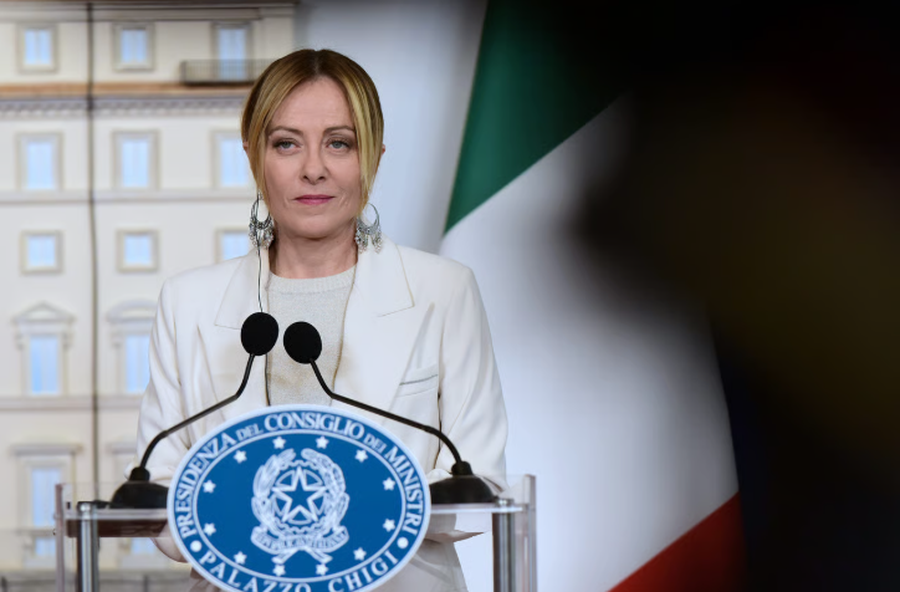
The Italian Prime Minister asks Ursula von der Leyen for more budgetary flexibility to cope with the energy crisis caused by the war with Iran and the rise in oil prices...
Italian Prime Minister Giorgia Meloni is pressing Brussels to ease European Union fiscal rules to help governments cope with the economic blow caused by the war with Iran and rising energy prices.
In a letter to European Commission President Ursula von der Leyen, first reported by the Italian newspaper Corriere della Sera on Monday, Meloni called for “extraordinary investments and measures necessary to address the energy crisis” to be exempted from the EU’s Stability and Growth Pact. That framework requires member states to keep budget deficits below 3 percent of gross domestic product.
"The crisis in the Middle East and tensions in the Strait of Hormuz, which are added to the consequences of Russian aggression in Ukraine, are already having very serious and often disproportionate consequences on energy prices, as well as on costs for families and businesses," Meloni wrote in the letter.
The Italian prime minister argued that, just as the stability pact excludes defense spending from fiscal calculations, energy-related costs should also be excluded. “We must have the political courage to recognize that today energy security is also a European strategic priority,” she stressed.
Meloni added that Rome would find it difficult to justify participating in the European SAFE program for defense financing if Brussels refuses to offer similar flexibility for energy spending. Italy wants the “national defense clause,” currently linked to defense investments, to be temporarily extended to emergency energy measures.
The Italian prime minister's appeal comes at a difficult time for Italy's public finances. Last month, the EU's statistics office confirmed that Italy's budget deficit for 2025 had breached Brussels' fiscal rules. The development followed a significant political defeat for Meloni in a referendum on justice and is expected to force the Italian government to curb spending ahead of a delicate election year, with her center-right coalition running in a near-tied position with its center-left rivals in the polls.
Since the outbreak of war with Iran on February 28, following joint US-Israeli strikes on Iranian targets, Europe has faced soaring energy prices and growing concerns about gas supplies, refinery outages and dwindling jet fuel reserves. About 20 percent of global oil supplies pass through the Strait of Hormuz.
However, Brussels has so far resisted calls for major policy changes to deal with the crisis. Earlier this year, the European Commission rejected a request from Austria, Germany, Italy, Portugal and Spain to impose an extraordinary tax on energy companies that were profiting from the war with Iran.
Even on Sunday, the Commission signaled reluctance to respond positively to Meloni's request.
In a statement to Italian media, European Commission spokesman Olof Gill said the EU had already presented governments with “a range of options” for managing the crisis. He also stressed that the bloc “is not including the National Defence Clause among these options” because it wants to remain within “a framework of responsible fiscal constraints.”


Lini një Përgjigje